
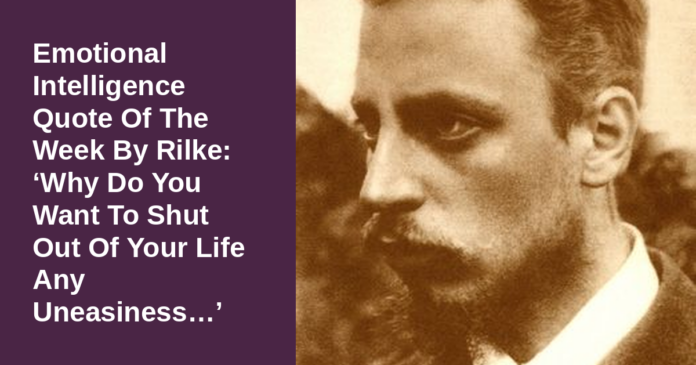
In August 1904, the poet Rainer Maria Rilke sat down in a borrowed manor house in rural Sweden and wrote a letter back to a 19-year-old military cadet named Franz Xaver Kappus. Kappus had written to him twice already, sending along his poems and, increasingly, the story of his private unraveling. This letter, the eighth in what became one of the most quoted correspondences in literature, is Rilke’s answer to a young man trying to talk himself out of his own sadness:
“Why do you want to shut out of your life any uneasiness, any misery, any depression, since after all you don’t know what work these conditions are doing inside you? Why do you want to persecute yourself with the question of where all this is coming from and where it is going? Since you know, after all, that you are in the midst of transitions and you wished for nothing so much as to change. If there is anything unhealthy in your reactions, just bear in mind that sickness is the means by which an organism frees itself from what is alien; so one must simply help it to be sick, to have its whole sickness and to break out with it, since that is the way it gets better.”
This passage from Rilke’s letter is also one of the earliest and clearest arguments for a core emotional intelligence (EI) skill: Don’t fight what you feel. Process it and learn from it.
EI & Self-Management: Processing, Not Suppressing
Rilke is describing what psychologists now call emotional suppression. Emotional suppression is the tendency to shut down, numb, or reason your way out of an uncomfortable feeling before it’s finished doing its work. Rilke’s advice pushes right back against that tendency.
Rather than shut out your uncomfortable emotions, Rilke recommends you let the sickness “have its whole sickness.” His point is that you never know how something uncomfortable or bad might help you in the long run, or as he puts it, “Just bear in mind that sickness is the means by which an organism frees itself from what is alien.” In other words, that pain of sickness, that fever, is what’s killing the virus within you.
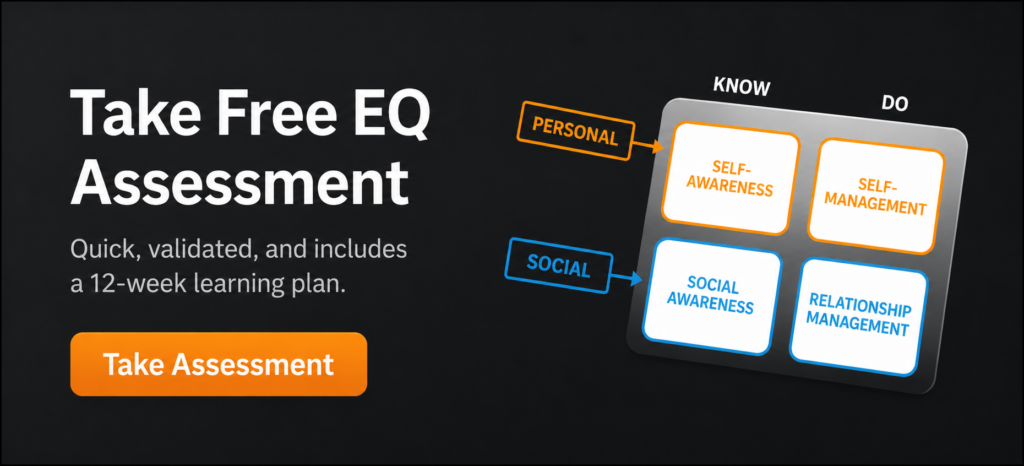
Through the lens of emotional intelligence (which of course didn’t yet exist as a concept) this is a great example of Self-Management at work. Self-management is one of the four core EI skills. In his book The New Emotional Intelligence, emotional intelligence expert Travis Bradberry writes about the importance of “scheduling out time to process your emotions.” The idea behind the strategy is to reflect on what you’re feeling and why, instead of pushing your emotion down and hoping it resolves itself on the drive home.
The research backs both Rilke and Bradberry up. In a controlled study published in Behavior Therapy, researchers had people with anxiety and mood disorders watch a distressing film after being coached to either suppress or accept their emotional response. Both groups indicated that they felt equally distressed in the moment, but afterward, the suppression group’s heart rates climbed and their negative affect lingered, while the acceptance group calmed down faster, both physiologically and emotionally.
Separately, a large body of research led by psychologist James Gross links habitual emotional suppression to higher long-term rates of depression and anxiety. Fighting the feeling doesn’t make it disappear. It just makes it more expensive to carry.
To better understand how you manage your own emotions, experts like Bradberry encourage you to take a validated emotional intelligence self-assessment.
What It Might Look Like To Apply This Strategy
Imagine a situation like the following one. Your dad just had a severe health scare, you and your spouse have been snapping at each other over nothing all week, and you lost your temper at your kid for leaving dishes in the sink. None of these events are huge on their own, but everything is piling up and your week is really starting to feel like more than just a coincidentally “bad week.” Your instinct is to power through. You can work a bit later than you need to, numb out in front of a screen, and tell everyone you’re fine.
Instead, you try Rilke’s move. You give yourself ten unhurried, undivided minutes to sit down and ask yourself, “What is this, actually? Is it fear about what might happen to my Dad, guilt about snapping at the people I love, or exhaustion that’s been building for weeks?” You don’t come to a tidy answer. You don’t even come up with a next step. You just face the question in front of you and leave feeling much better.
By diving deeper into that discomfort, you’re able to learn important things about yourself, your family, and your life. And, as the research indicates, you will actually leave that moment of reflection feeling the effects of your emotion less, not more.
Putting This Quote Into Practice
Rilke’s real insight is that discomfort is often a sign that something in you is already changing. The emotionally intelligent move isn’t to silence uneasy feelings, it’s to make room for them. Schedule the time, sit with what’s there, and let it move through you. That, as Rilke put it, is how you purge the virus from your body and actually get better.