
An email lands in your inbox, and something feels off. Maybe it’s a bit cleaner than this person usually writes, or maybe it uses one too many “not only ___, but ___” sentences. You begin to wonder, “Did they actually use AI to email me? Did they not even take the time to think about and write a response?” And, “Does this mean they didn’t even read my email?”
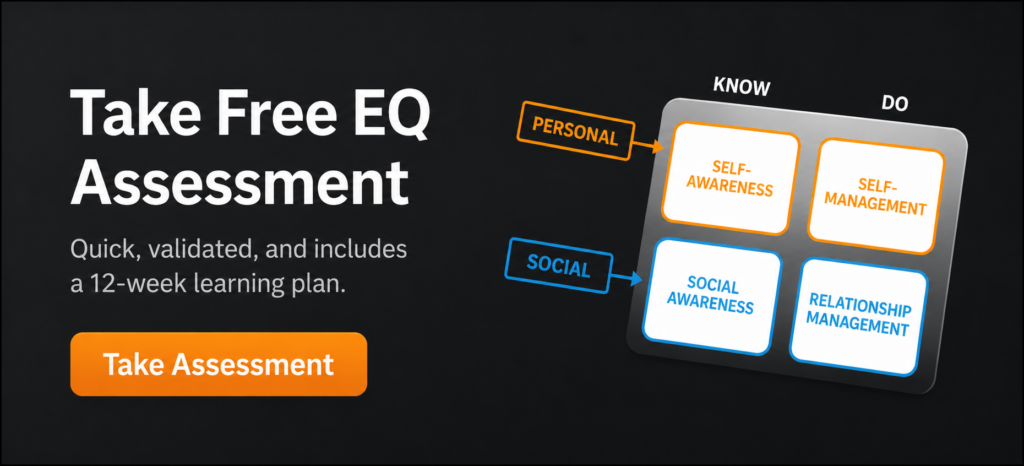
This feeling that other people are using AI to interact with you more than you’re using AI to interact with them is actually quite common. Zoe Purcell, a cognitive scientist, led a series of studies to find out what people actually believe about AI-assisted communication. Across two online studies looking at over a thousand adults, participants watched realistic scenarios staged inside familiar apps like Gmail. The scenarios ran across text, audio, and video and varied from no AI use, to subtle AI use, to heavy levels of AI enhancement.
Then they were asked two questions. How likely are you to use AI in a similar interaction? And how likely is everyone else? On a 100-point scale, participants put other people at roughly 71 and themselves at roughly 40. Purcell’s team also found that openly disclosed AI use was considered more acceptable than hidden use.
Why This Is A Matter Of Emotional Intelligence
Emotional intelligence (EI) is your ability to recognize and understand emotions in yourself and others, and to use that awareness to manage your behavior and your relationships. You can break EI down into four core skills: self-awareness, self-management, social awareness, and relationship management. To see how you score in emotional intelligence, experts recommend that you take a self-assessment that assesses each of the four core skills.
This idea that we default to distrusting other people’s communication is problematic. It signals a default to distrust and doubt, when the research shows that defaulting to trust builds faster and stronger relationships. If you zoom out beyond the idea of “is this AI or not,” you’ll see that this question is really a symptom of defaulting to distrusting other people.
In The Speed of Trust, Stephen M. R. Covey argues that trust isn’t a soft virtue but rather an economic one. When trust is high, speed goes up, and cost goes down. When trust is low, everything slows down. You then need more verification, more hedging, more fact-checking, and more second-guessing.
When you suspect everyone around you of trying to deceive you or give you less time, you put yourself at a massive disadvantage.
We Default To Distrust Because Of What’s Called Assymetric Feedback
Psychologists Detlef Fetchenhauer and David Dunning had participants decide whether to trust 56 strangers in an economic game. Participants guessed that 52% of those strangers would prove trustworthy and return the money they were given, but the actual number of people who proved trustworthy was 80%.
The reason there’s such a drastic gap between our ability to trust and the actual behavior of the people around is what’s called assymetric feedback. If you trust someone and get burned, you receive immediate feedback that you were wrong to trust. But if you withhold trust, the person n never has a chance to come through, and you never have a chance to confirm that you made the right decision. Over time, this asymmetric feedback encourages you to default to distrust.
The EI Strategy: Default To Trust By Following These Three Steps
Use these four steps next time you feel suspicious of someone.
- Catch yourself at the moment when you begin to get suspicious. Suspicion is a thought, but drawing a conclusion based on that thought is an active decision. Try to start noticing those moments where you assume something about someone (not just with AI use!).
- Apply your own standards to others. You know exactly why you would or wouldn’t use AI. Ask what you would want assumed about you if you had sent that exact message.
- Write a more generous version of the story in your head. Put together one plausible, charitable explanation for the other person’s behavior and take it seriously.
This concept extends far beyond playing the role of AI detective. It’s about noticing when you default to distrust and then beginning to redirect your thoughts toward a place of trust and curiosity.