
James Kimmel Jr. was a teenager on his family’s Pennsylvania farm when years of bullying by neighboring kids escalated far beyond pushing and shoving. They blew up his family’s mailbox, and then one night they murdered his family’s dog.
In a fit of rage a couple of nights later, Kimmel grabbed his father’s handgun, found the truck of bullies responsible, and blocked them in. He had the gun in hand and was sliding his foot out from the car door when a flash of foresight showed him two possible futures. First, he saw the revenge he wanted, and then he saw himself getting arrested or worse. He pulled his leg back into the car, shut the door, and drove home.
Now, Kimmel is a clinical professor of psychiatry at Yale School of Medicine, and he’s spent the following decades studying that moment in his life. What he and his colleagues have found is that the pull toward revenge follows the same script as addiction.
The Addiction Hiding Behind ‘Getting Even’
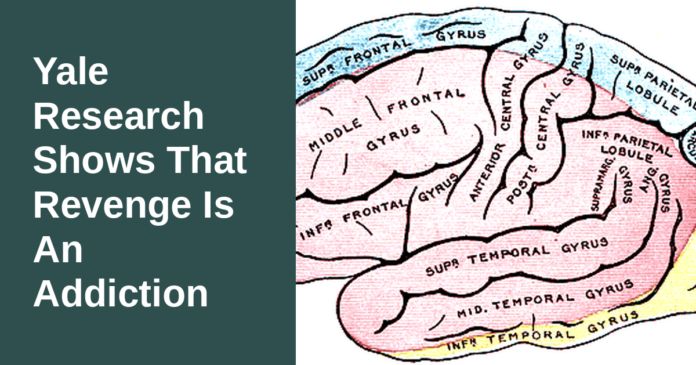
Neuroscientists have scanned the brains of people who experience a grievance and then have a chance at payback. The nucleus accumbens and dorsal striatum—the brain’s craving and reward circuitry—light up at the possibility and opportunity for retaliation. The anterior insula, the brain’s pain network, fires first and appears to cue the craving while the prefrontal cortex, which weighs costs against benefits before we act, goes quiet.
“Your brain on revenge looks like your brain on drugs,” Kimmel explained in his recent interview with Berkeley’s “The Science of Happiness” podcast. Addiction, by clinical definition, is the inability to resist an urge despite the harm it causes. By that standard, Kimmel argues, revenge qualifies.
Perhaps even more interestingly, his research shows that “forgiveness” reverses all three of these brain activities. When you forgive, you calm the pain network, shut down the craving circuitry, and bring your prefrontal cortex’s judgment back online.
The 6-Step Forgiveness Rehearsal
Kimmel’s research points to a simple forgiveness practice anyone can try, whether or not the other person ever finds out that they’ve been forgiven. It’s less about them than it is about resetting your own neural circuitry, and it takes only a few minutes. Just follow this six-step process:
1. Name the grievance that you’re stilling carrying.
2. Notice the emotional charge (i.e.,, tension, anger, hurt), but don’t cast judgment on your emotions.
3. Don’t force forgiveness. Instead, imagine what looks and feels like. Try to create an image in your head.
4. Notice the shift in how you feel, even if it’s only a flicker of relief.
5. Return to that imagined relief each time your grievance resurfaces.
6. Repeat until this process becomes a habit.
Kimmel calls this decisional forgiveness, an internal act done for your own healing. Importantly, it’s good to remember that “forgiveness” doesn’t need to happen in one moment. You can forgive in pieces over time.
Why Choosing To Forgive Is An Act Of Emotional Intelligence
Kimmel’s story is one of emotional intelligence (EI), as he learned to recognize and understand how his emotional reaction could have shaped his life (for worse, and then for better). Emotional intelligence is your ability to understand and act on your emotions and the emotions of others in order to achieve the best possible outcome.
It’s no wonder that research popularized by psychologist Travis Bradberry shows that:
- EI accounts for roughly 58% of job performance
- 90% of top performers score high in EI
- People high in EI earn close to $29,000 more per year on average
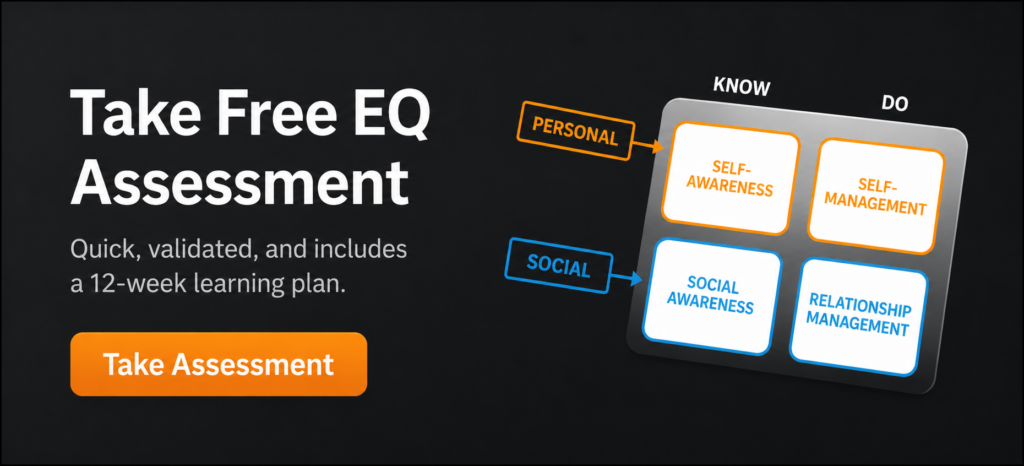
EI consists of four core skill areas: Self-awareness, self-management, social awareness, and relationship management. EI experts recommend that to understand your own emotional intelligence, you take a validated EI assessment.
To choose forgiveness instead of revenge is an ultimate act of emotional intelligence that really draws on all four of the core skills. You need self-awareness to recognize the emotions you’re feeling, self-management to decide that what you’re feeling is counter-productive and harmful to you, social awareness to empathize (even a little bit) with the other person and their decision, and relationship management to see how forgiveness will actually benefit you long-term even if the other person doesn’t deserve it.
Notice how just to explain the act of revenge versus forgiveness, we essentially walked through an entire neurobiological system built around that emotion of revenge. That should give you a glimpse into how much can be packed into one feeling. Multiply this by everything else we feel in an average week, and it’s clear why building emotional intelligence is lifelong work, not a skill you “finish learning” and move on from.
Choosing Forgiveness Over Revenge Can Save Your Life
Kimmel came within seconds of paying the ultimate price for revenge before his own prefrontal cortex caught up with him. Now, his own research suggests the rest of us don’t need to get anywhere near that edge. Rehearsing forgiveness, even by just imagining it, builds a self-awareness muscle whose payoff reaches well past any single grievance, at work or anywhere else life hands you one.