
Ultimate Guide to the EQ-i Assessment: Understanding Emotional Intelligence
As artificial intelligence reshapes every corner of work, something surprising is happening: technical knowledge and experience—once the surest paths to success—are losing their edge. The World Economic Forum predicts that 40% of core job skills will change by 2030, shifting toward adaptability, empathy, and emotional intelligence.
In other words, the future doesn’t belong to those who know the most. It belongs to those who understand themselves and connect with others.
That’s where emotional intelligence (EQ) comes in. EQ is the foundation of every “people skill” that drives performance: communication, collaboration, empathy, influence, and resilience. But before you can grow your EQ, there’s one critical step most people skip—measuring where you stand today.
Without measurement, self-awareness becomes guesswork. You might assume you’re an empathetic listener but consistently interrupt your team. Or think you’re calm under pressure but fail to notice how your stress ripples out to others.
That’s why the first step to developing emotional intelligence is taking a validated EQ assessment—a data-driven tool that reveals your strengths, blind spots, and biggest opportunities for growth. Many L&D professionals and coaches will become certified emotional intelligence practitioners so they can train and debrief an EQ assessment.
One of the most widely used and respected tools for doing this is the EQ-i assessment.
Introduction to the EQ-i Assessment
The EQ-i assessment—short for Emotional Quotient Inventory—was developed by psychologist Dr. Reuven Bar-On, one of the earliest pioneers in the science of emotional intelligence. His work, later validated through decades of research and global use, provided one of the first reliable frameworks for measuring emotional and social functioning in both personal and professional contexts.
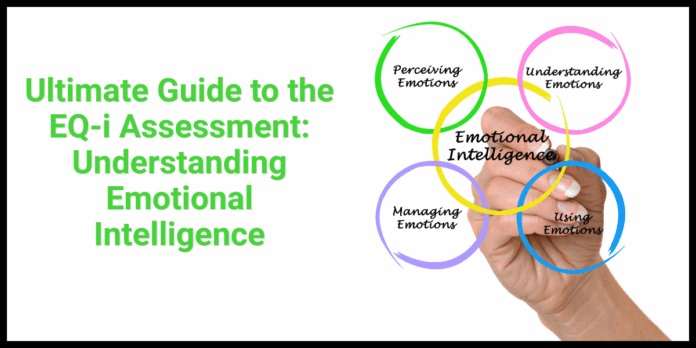
According to Bar-On’s model, emotional intelligence is made up of five core areas, each composed of 15 specific competencies that together form a holistic picture of how you perceive, understand, and manage emotions.
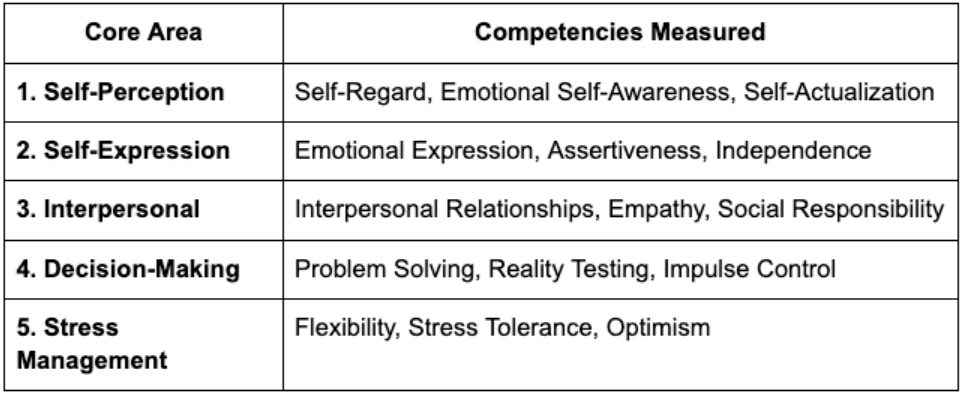
This comprehensive design helps leaders and organizations get a detailed look at how emotions influence every dimension of performance—from communication and decision-making to resilience and teamwork.
However, at LEADx, we take a different approach.
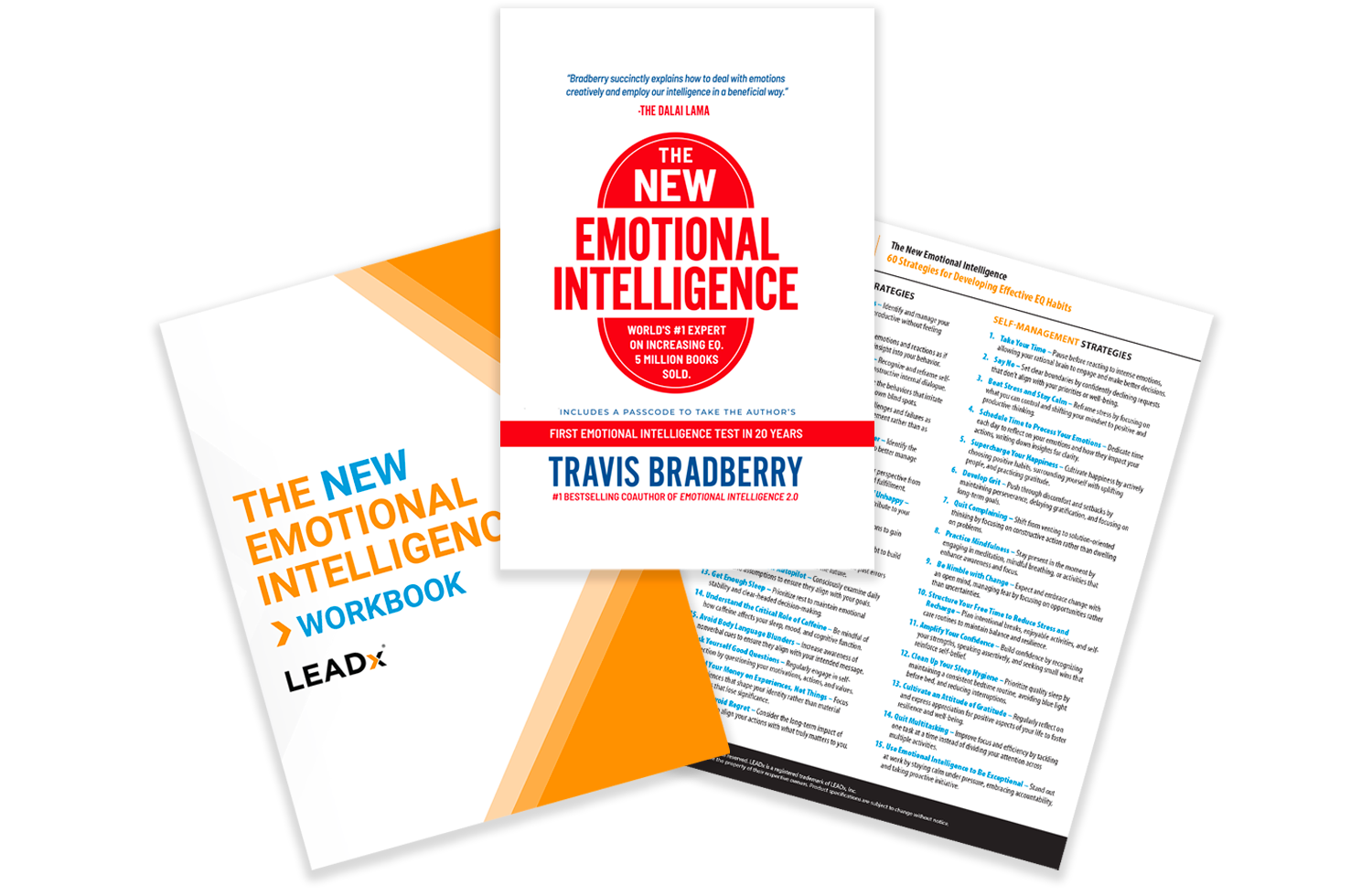
While we deeply respect Bar-On’s contribution, we’ve found that at the assessment stage, complexity can get in the way of clarity. That’s why our program, developed by Dr. Travis Bradberry, author of Emotional Intelligence 2.0 and The New Emotional Intelligence, uses a simplified and science-backed four-skill model:
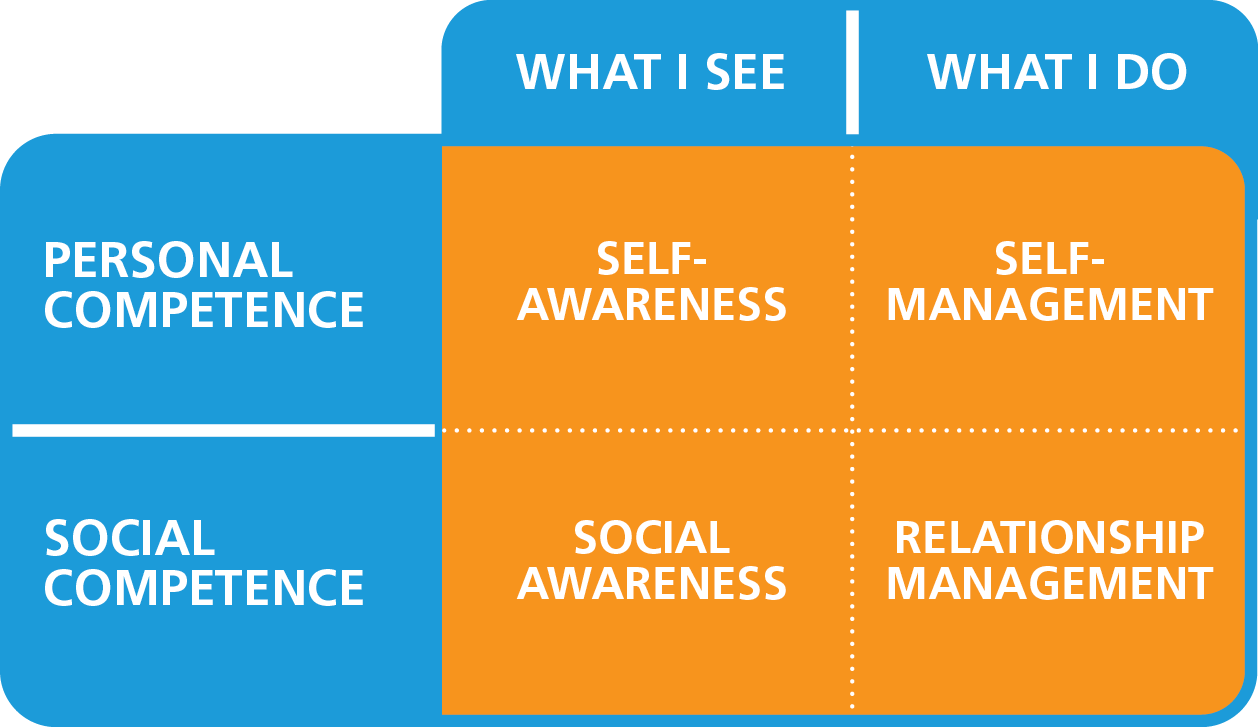
These four skills form the foundation of all emotional intelligence. By focusing on simplicity, we help leaders quickly understand their results and immediately apply what they learn to their daily work.
Rather than scoring fifteen separate competencies, the LEADx Emotional Intelligence Assessment gives you a clean snapshot of your emotional skill set and then provides specific, research-backed strategies for improvement tied to your results.
For example, if your self-awareness score is low, the system generates tailored strategies to help you recognize emotional triggers and understand their ripple effects. Many of these strategies align with Bar-On’s 15 sub-competencies but are packaged in a way that’s easier to understand and act on.
The result? A tool that’s scientifically sound and practical enough to drive lasting behavioral change.
Benefits of Emotional Intelligence
Emotional intelligence is the common denominator behind every skill that drives success at work and in life. Think of it as the golden thread running through everything you teach, coach, or lead. Once you understand emotional intelligence, it connects effortlessly to all the other leadership competencies:
- Communication
- Empathy
- Coaching
- Giving feedback
- Managing conflict
- Inspiring performance.
But the reverse isn’t always true. You can teach someone how to have an effective one-on-one meeting, but that skill won’t necessarily permeate and help you grow other key skills. It won’t then help you sustain meaningful collaboration, influence others, or drive engagement. Emotional intelligence is foundational to all of these skills, and more.
That’s why top organizations are:
- making EQ foundational to their leadership development programs.
- bringing EQ to intact teams. The model provides a shared language. One that improves how people communicate, support, and challenge each other. Entire teams start speaking in terms like self-awareness and relationship management, creating alignment and psychological safety across departments and functions. As our Head of Content Evan Watkins wrote in his first book on emotional intelligence, “When every team member can identify, name, and manage emotions in real time, collaboration stops being a personality contest and becomes a performance advantage.”
- improving their employees’ personal lives with EQ training. A growing body of research shows that emotional intelligence is strongly linked to well-being, resilience, job satisfaction, and even physical health. A meta-analysis published in Personality and Individual Differences found that individuals with higher EQ reported significantly lower stress levels, better mental health, and stronger relationships across both professional and personal domains.
Overview of the EQ-i Assessment Process
So, what does actually taking the EQ-i assessment look like? The process is simple and the insights can be profound.
The LEADx EQ Test™ was designed to measure your emotional intelligence in a scientifically valid and user-friendly way. It consists of 45 questions, takes 10 to 15 minutes to complete, and has been validated across industries for accuracy and reliability. Each question is designed to reveal how you perceive and manage emotions, both in yourself and in others.
Your responses are scored across the core emotional intelligence skills, producing a detailed report that highlights your strengths, potential blind spots, and overall EQ profile. Unlike a personality test, which simply describes who you are, an EQ assessment measures skills you can actively develop.
At LEADx, our assessment designed by Dr. Travis Bradberry uses the simplified four-skill model:
- Self-Awareness: Recognizing your emotions and their impact
- Self-Management: Regulating emotions to stay effective under pressure
- Social Awareness: Accurately reading emotions in others
- Relationship Management: Building trust, resolving conflict, and influencing outcomes
The assessment uses reverse-scored and balanced-weighted items to ensure accuracy and minimize self-bias. The result is a score that reflects how consistently you demonstrate emotionally intelligent behavior day-to-day.
Your assessment should serve as a launchpad, not a final destination. It’s the data you use to create your personal development plan, practice new habits, and track measurable progress over time. Many leaders take the assessment annually as part of their performance or coaching process to gauge growth.
In short, on the EQ Test:
- Duration: 10–15 minutes
- Format: 45 validated questions
- Model: 4 core EQ skills
- Best use: Baseline measure + ongoing growth tool
Up next, we’ll break down how to interpret your EQ-i assessment results—what each score means, how to read your feedback report, and how those insights translate into action.
How to Interpret Your EQ-i Assessment Results
Once you’ve completed the EQ-i assessment, you’ll receive a detailed feedback report showing your scores across each of the four core skills of emotional intelligence:
Self-Awareness, Self-Management, Social Awareness, and Relationship Management.
Each of these scores offers a snapshot of how you typically perceive and express emotions, manage stress, make decisions, and interact with others. But the real insight comes from how these areas work together.
For example:
- A leader might have high Self-Awareness but low Self-Management, meaning they understand their emotions but struggle to regulate them under pressure.
- Another might score high in Social Awareness but low in Relationship Management, suggesting they can read others well but haven’t yet mastered how to build trust or influence outcomes.
The key is to look beyond the individual scores and identify patterns that reveal your most significant growth opportunities.
Your report will also include a series of recommended strategies—specific, evidence-based actions tied directly to your results. These aren’t vague suggestions like “be more empathetic.” They’re concrete behaviors you can start practicing right away, such as pausing before responding during conflict, asking clarifying questions in tense discussions, or setting small reflection habits throughout the day.
Here’s a simplified way to visualize how your results connect to action:
Recommended Strategy → Improves Key Behavior → Improves Core Skill → Improves Overall Emotional Intelligence
Each strategy strengthens a specific behavior, that behavior improves one of the four core EQ skills, and those improvements together raise your overall emotional intelligence.
5 Case Study Examples of the EQ-i Assessment in the Workplace
Across industries—from hospitals to the U.S. military—organizations are realizing that emotional intelligence isn’t just a “nice-to-have.” It’s a measurable driver of performance, retention, and culture. Many of these organizations use tools like the EQ-i assessment (or its simplified four-skill variants) to give leaders a common language for growth.
Here are a few real-world examples from recent Forbes interviews:
1. NewYork-Presbyterian: Building Emotionally Intelligent Health Care Leaders
In healthcare, emotional intelligence can literally save lives. Matthew Black, Director of Leadership Development at NewYork-Presbyterian, told Forbes that his team uses emotional intelligence training to help leaders navigate the intense emotional demands of patient care and team management.
“At the end of the day,” he said, “it’s about connecting with the human being in front of you—whether that’s a patient, a nurse, or a colleague.”
By embedding EQ into its leadership programs, NYP has improved how leaders communicate under pressure, manage conflict, and foster trust in high-stakes environments. Emotional intelligence has become the connective tissue holding together technical excellence and compassionate care.
2. Cytek Biosciences: Embedding EQ from Hiring Through Training
At Cytek Biosciences, emotional intelligence is part of the employee journey from day one. Leaders there shared that they don’t just train EQ—they embed it into hiring, onboarding, and ongoing development.
“We realized the best predictor of success wasn’t IQ or experience—it was how well people managed themselves and their relationships,” their Chief People Officer Connie Wedel explained.
Using EQ assessments as part of their onboarding and coaching framework has helped Cytek create a culture where emotional awareness, feedback, and collaboration are daily habits—not one-time workshops.
3. Law Enforcement: Reducing Stress, Trauma, and Use of Force
In law enforcement, emotional intelligence is becoming a core strategy for reform. In interviews with officers and trainers across multiple agencies, including those featured in Forbes, the takeaway was clear: EQ training reduces burnout, improves communication, and even lowers the use of force.
“When officers can recognize their own emotions in the moment, they’re far more likely to de-escalate,” one police chief said.
EQ assessments and follow-up coaching are now being used to help officers manage trauma and stay grounded under pressure—skills that improve both safety and community trust.
4. U.S. Air Force: Strengthening Self-Awareness and Team Collaboration
The U.S. Air Force is leveraging emotional intelligence to enhance readiness and leadership. In an interview for Forbes entitled How Emotional Intelligence Is Reshaping Leadership in the U.S. Air Force, Senior Master Sergeant Winsome Culley described using EQ to “fill critical gaps by strengthening self-awareness, confidence, character, emotional agility, focus, empathy, and team collaboration.”
The results have been transformative: leaders who score higher on emotional intelligence metrics report stronger team cohesion, higher morale, and faster conflict resolution—all critical in high-stress, mission-driven environments.
From hospitals to the battlefield, the pattern is clear: organizations that measure and develop emotional intelligence outperform those that don’t.
The EQ-i assessment gives teams a starting point—a shared framework for understanding how emotions shape decisions, communication, and culture. And once that foundation is in place, everything else—leadership, engagement, performance—builds naturally on top.
Actionable Strategies for Improvement
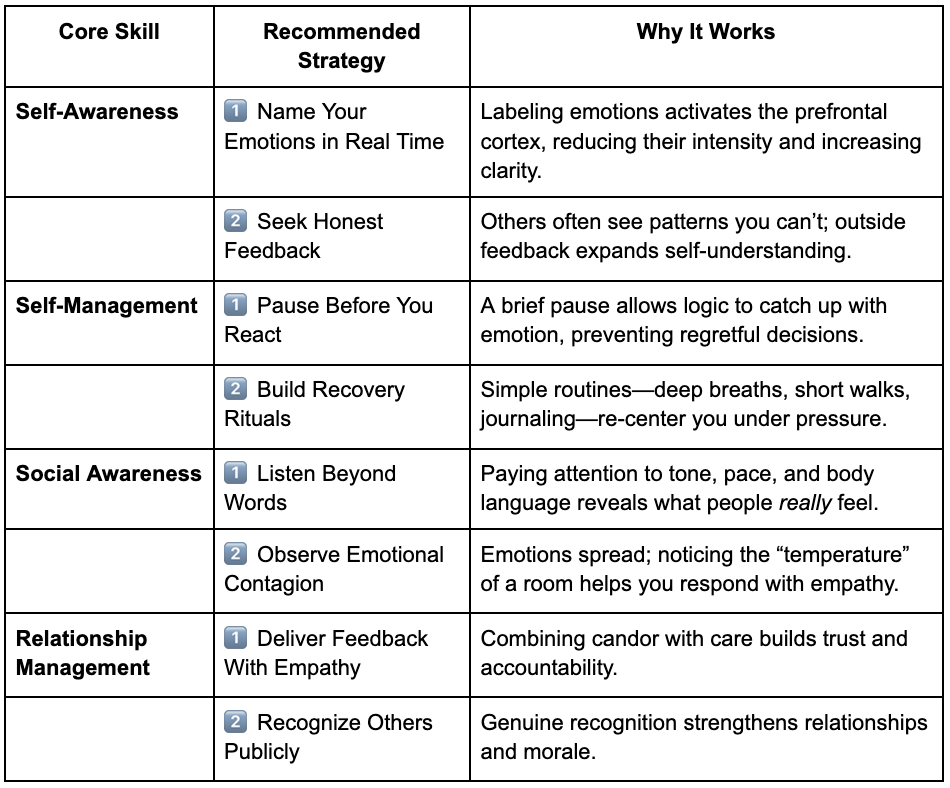
Once you’ve taken the EQ-i assessment and reviewed your results, the next step is to turn insight into action. Below are eight strategies—two for each of the four core skills of emotional intelligence—drawn from The New Emotional Intelligence curriculum at LEADx.
Each strategy is designed to be simple enough to start today, but powerful enough to create lasting change when practiced consistently.
 Self-Awareness
 Self-Awareness
The first step to growth is noticing what’s happening inside you. Practice naming emotions as they arise—“I’m frustrated,” “I’m anxious,” “I’m excited.” This small act gives you power over what once felt automatic. Then, invite feedback from trusted peers or mentors. Their perspective reveals blind spots and accelerates your self-understanding.
Self-Management
Emotional intelligence isn’t about never feeling stressed or angry—it’s about choosing your response. The simplest habit is to pause. Count to three before replying to that email or comment in a tense meeting. Pair this with recovery rituals: deep breathing, short walks, or micro-journaling moments that reset your emotional baseline. Over time, these small habits compound into resilience.
Social Awareness
Social awareness is empathy in action. Tune into nonverbal cues—the sigh, the silence, the sudden change in posture. These signals often tell you more than words do. Also pay attention to emotional contagion—how moods ripple through a team. When you sense tension spreading, your calm presence can reset the emotional tone of a room.
Relationship Management
Strong relationships are built one conversation at a time. Start by giving feedback with empathy—focus on behaviors, not character, and pair truth with care. And don’t underestimate the power of recognition. Publicly acknowledging effort or progress reinforces trust and motivates continued excellence.
When practiced consistently, these eight strategies turn your EQ-i results from a static report into a daily roadmap for growth.
For Personal or Professional Development?
At LEADx, we design our emotional intelligence assessments and workshops for professional development, helping leaders, teams, and organizations thrive. But one of the most common pieces of feedback we hear from participants in our workshops and assessments is that the lessons change their lives at home.
Marriages improve. Friendships deepen. Stress feels lighter. People communicate more clearly, listen more fully, and respond instead of react.
That’s because emotions don’t have an on/off switch. Emotions happen constantly throughout your day. Once you start to view life through the lens of the EQ framework, you start to see EQ everywhere.