
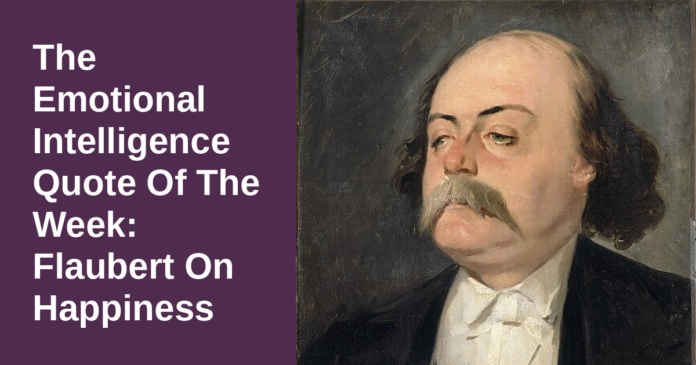
“The secret of being happy consists of knowing how to enjoy yourself—enjoy being at table, in bed, enjoy standing up, sitting down, enjoy the palest ray of sunshine, the slightest bit of landscape: in other words, love everything, so that to be happy you must already be happy. No bread without leaven.” – Gustave Flaubert, from his private notebook
Flaubert wrote that in his private notebook around 1840, which makes the future author of the masterpiece Madame Bovary about eighteen years old at the time. It wasn’t published until 1965, eighty-five years after his death.
For context, the surrounding pages in his notebook describe how he’s really struggling, aching with loneliness, writing about how happy he would be if only he loved and were loved. His quote then isn’t that of a naive teenager living it up. Instead, it comes from someone at a low point in their life, struggling to learn a new skill that he believes will make him happier.
Flaubert’s quote treats happiness not as a circumstance that comes to you but as a competency you can build with practice. And, some 200 years later, psychologists have coined a term to describe this: “savoring.”
How To Savor
When psychologists refer to savoring, they mean it similarly to how you might describe savoring your meal. It’s about deliberately directing your attention toward a good experience while it’s happening, to stretch it out, deepen it, and appreciate it.
Savoring often gets confused with two similar terms:
- Gratitude, which is thankfulness for something, usually backward-looking and often carrying a quiet comparison to how much worse things could be.
- Mindfulness, which is nonjudgmental awareness of what’s present.
Savoring differs from gratitude and mindfulness because it aims to amplify the present moment. Flaubert isn’t counting blessings, he’s absorbing himself in them to appreciate them more than usual.
Why This Is A Matter of Emotional Intelligence
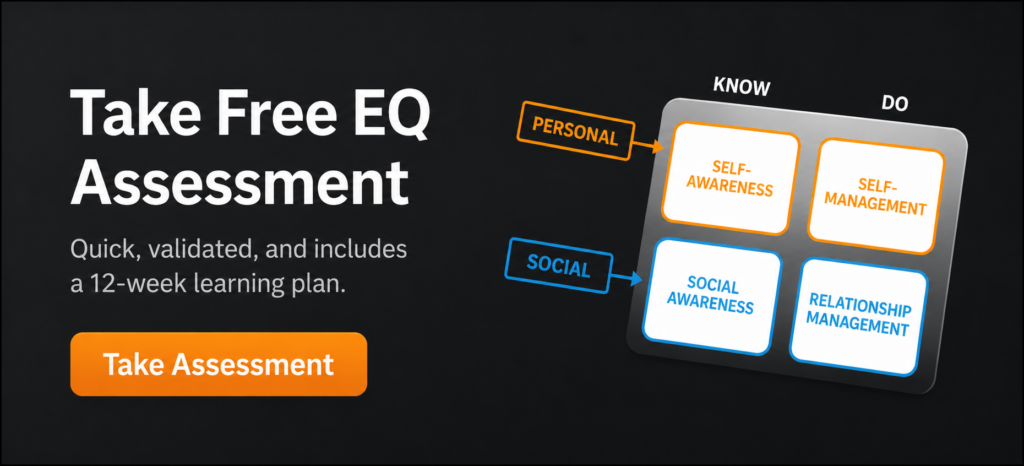
Emotional intelligence is defined by expert Dr. Travis Bradberry as “your ability to recognize, understand, and manage your own emotions, as well as the emotions of other people, in order to be more effective in your relationships and life.” EI is made up of four core skills:
- Self-Awareness, or your ability to recognize and understand your emotions
- Self-Management, or your ability to deal with and regulate your emotions
- Social Awareness, or your ability to recognize and understand the emotions of others, and your ability to empathize with others.
- Relationship Management, or your ability to use each of the aforementioned skills to build, maintain, and foster relationships with other people.
Flaubert’s “savoring” falls squarely into that second area, self-management. It’s all too easy to treat happiness like a weather report and wait for the sun, but as Flaubert points out, even that “palest ray” that’s already coming through the window can offer a lot if you teach yourself to savor it.
This concept of savoring is important to the idea of self-management, because most discussions of self-management assume the same old scenario: working through tough emotions like anger, anxiety, and overwhelm. But this only represents a fraction of what’s possible when it comes to regulating your emotions. Flaubert’s quote gets into that neglected other half. How can we regulate a good feeling to make it more intense and long-lasting? To get a sense of your own self-management, psychologists recommend that you take a validated emotional intelligence self-assessment.
Why Flaubert Said “No Bread Without Leaven”
I intentionally left the last line of this quote in, even though it typically gets cut. Flaubert writes, “There’s no bread without leaven,” leaven being the starter, a living culture of yeast and bacteria that a baker keeps alive and folds into their new dough. His point is that you can’t make a loaf of bread from flour and water alone. You need a portion of your last batch to get into the new batch. Bread makes bread.
So Flaubert is describing a mechanism where happiness begets more happiness. The psychologists Fredrickson and Joiner have tested this theory, measuring 138 people. They found that positive emotion predicted better broad-minded coping, and they also found that broad-minded coping predicted more positive emotion. In other words, the two fed each other in a positive feedback loop.
The ten seconds you spend finding a way to appreciate that pale ray of sunshine become the starter for future moments of happiness. This is a kind of unlock for self-management. Rather than focus on quelling your negative emotions, you can lean into the positive ones (no matter how small), and begin to develop a positive cycle of emotions.
Putting This Quote To Action
Flaubert was just a teenager writing to himself about a capacity he didn’t yet have, but he was right about what it would take to develop that capacity. The ability to enjoy your life is not a reward for having a good one. It’s a developable skill that produces a snowball of positivity. This week, try to find that pale ray shining through the window and give it the love and positive attention it deserves. That’s all it takes to put this strategy into effect.