
It’s all too easy to treat resilience as a character trait. “Some people are just built tougher,” we might say, but the body of research shows that this just isn’t true. So much of resilience is developable and improvable. It’s within our control.
Take, for example, this new one-year study of 1,567 Chinese high schoolers which showed that resilience may be less about toughness than it is about our conception of time.
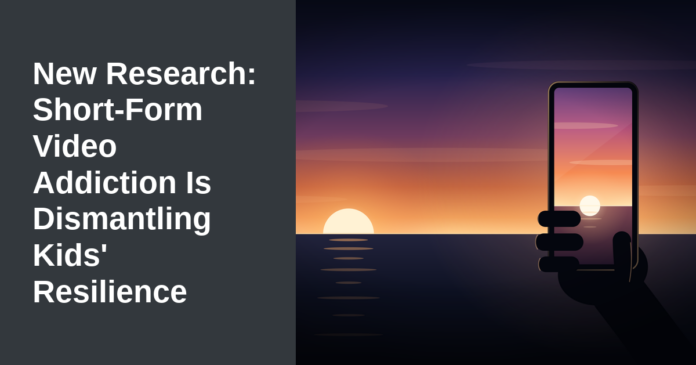
Researcher Guanxing Xiong and colleagues at South China Normal University tracked teenagers’ short-form video habits alongside their “academic buoyancy,” which is the ability to bounce back from ordinary school stress like a disappointing grade on a test or paper.
What they found was fascinating. Heavy video use predicted declining buoyancy, or diminished resilience. It did so because it shrank the students’ sense of the future. In other words, they watched so many short-term, rapid-fire videos that it actually messed up their ability to think about things long-term. This, in turn, left them unable to absorb setbacks. The paper’s title states it plainly: “no future vision, no present perseverance.”
What Happened When Researchers Watched Teens Scroll For A Year
The team surveyed the same students three times across a single year, six months apart, assessing their Temporal Self-Regulation. Temporal Self-Regulation theory says that your behavior is the result of an ongoing tension between immediate impulses and the effort long-term goals demand. For example, studying pays off in months, while watching a funny short video pays off in seconds.
The researchers suspected that an unbroken stream of algorithmic rewards might change how teenagers experience time itself, specifically their future time perspective. In other words, they believed that students who watched a lot of short-term videos (think TikTok) would have a diminished capacity to picture the future and connect present actions to long-term outcomes.
This is exactly what they found in the data. Students reporting higher video addiction at the outset showed drops in buoyancy six months and a full year later, and future time perspective carried much of that effect. The loop also ran backward: teens who began with strong buoyancy were less likely to report video addiction six months on. Fragility and scrolling feed each other, each one making the other worse.
How Emotional Intelligence Can Help You Expand Your Time Horizon
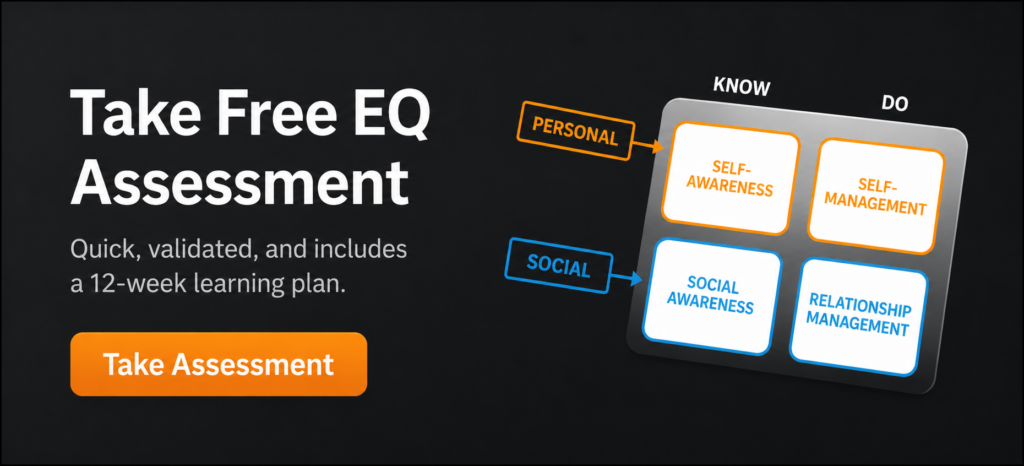
Emotional intelligence is the ability to recognize, understand, and manage your own emotions, as well as recognize and influence the emotions of those around you. It divides into four core skills: self-awareness, self-management, social awareness, and relationship management. To assess your emotional intelligence, psychologists recommend that you use a validated tool.
Xiong’s finding that your time horizon impacts your resilience can act as a powerful strategy to help you improve your self-management (the second core EI skill).
Most advice around self-management surrounds the idea of “impulse control.” You might take deep breaths, practice improving your self-talk, or take walks to regulate your mood. But by considering your time horizon and lengthening it, you can heighten your resilience by zooming out to see your current setbacks and growth and learning opportunities.
How To Expand Your Time Horizon
In drawing, your horizon line is what gives every object in your picture a sense of scale. Erase it, and the picture goes flat. A coffee cup and a mountain suddenly appear to be the same size. Something similar happens to a person with no felt future. Suddenly your immediate obstacles and your long-term goals all feel like they have the same degree of importance. But of course we know that your long-term goals are the thing that’s the most important.
To work on expanding your own time horizon, try to follow these four steps next time you face a setback:
- Choose a goal that’s roughly three years out. That way it’s specific enough to picture. Your role, your finished manuscript, your degree, and so on. By making the horizon time-bound, you should be able to envision a clear future.
- Put that goal somewhere you’ll see it often. A lock screen, an index card taped to your monitor. Scrolling through little videos wins your attention because it’s effortless, so you want to try to make your vision of your future goal as effortless as possible, too.
- When a setback hits, ask yourself one question. Does this obstacle move my three-year goal, or only today’s? Most obstacles only affect the next day or week. Recognizing that changes everything.
- Use the reach as your cue. Make your goal your phone’s background or your computer’s background. That way, when you reach for your phone to watch a video or scroll through social media, you’ll see your three-year goal first. Soon, the desire to watch a short video will actually trigger a reminder of your bigger goals.
Putting This Research Into Action
Resilience isn’t built only in the hard moment. It’s built beforehand, by keeping a future vivid enough to measure the hard moment against. So before you try to scroll less, get specific about what you want to do instead.