
Certified Emotional Intelligence Practitioner Training: 7 of the Most Popular Certifications
In an era of economic uncertainty and rapid AI advancements, companies are discovering that emotional intelligence (EQ) is more critical than ever for effective leadership and teamwork. Technical skills alone aren’t enough – leaders must navigate stress and change with empathy and resilience.
Studies show that emotionally intelligent leaders help create stability and trust, enabling teams to adapt and thrive even when the future feels unclear. As automation takes over routine tasks, the uniquely human skills of emotional awareness and connection become a key competitive advantage. In fact, the World Economic Forum identified emotional intelligence as one of the top skills for the future, noting that it’s a strong predictor of performance (accounting for as much as 58% of success) in the workplace.
So what’s the best way to build these vital people skills across an organization? Many companies turn to in-house EQ practitioners – professionals certified in emotional intelligence tools and training – to lead the charge. Having certified EQ practitioner(s) on staff means you can continually develop employees’ emotional skills through coaching, workshops, and daily practices. It’s like having an internal champion for emotional intelligence. This is especially valuable for delivering quality training and development at scale.
This article will explore:
- The benefits of becoming a certified EQ practitioner.
- How to choose the right program (including a table that breaks down popular vendors).
- Actual examples of different companies training emotional intelligence.
Why Become a Certified EQ Practitioner? Going Beyond One-Off Assessments to Build a Culture of EQ
A common approach to EQ development is for companies to certify practitioners in administering a particular EQ assessment. But there’s a problem with this approach. Simply having someone who can debrief a one-time test misses the larger point of administering that test in the first place. To truly ingrain emotional intelligence into your culture, it must become something people practice regularly. That means practicing specific, emotionally intelligent behaviors.
One-off assessments aren’t enough. To build high EQ habits, you need emotional intelligence training that is ongoing, measurable, and practical. That typically includes assessment debriefs, workshops, coaching conversations, and long-term practice and reinforcement.
Think of it this way: handing leaders a report on their EQ is a start (it builds awareness and knowledge), but real growth happens when that leader actually starts to practice new behaviors.
For this reason, the ideal EQ practitioner program should go beyond certifying you in an assessment. It should equip you to deliver workshops, coach individuals, and provide follow-up tools that reinforce new habits over time. For example, the LEADx Emotional Intelligence Practitioner certification includes a 3-day workshop curriculum and a year-long reinforcement program. Reinforcement includes:
- Daily micro-learning (exercises, videos, book summaries, and podcasts)
- Access to message with a human, ICF-certified EQ coach (to ask for help, practice role plays, or find more resources for learning)
- Unlimited assessment retests so you can track your progress whenever you want.
This blended approach ensures that after the initial training, employees continue to practice emotional intelligence skills on the job, with expert support when they need it. By contrast, many traditional certification programs focus narrowly on using their assessment and report and leave it at that.
In short, when evaluating EQ certification options, look for those that provide comprehensive training resources (not just an assessment) and plan for long-term skill application. The ultimate aim is to make EQ a daily habit.
Benefits of Becoming a Certified Emotional Intelligence Practitioner
Why invest in becoming a certified emotional intelligence practitioner? Here are some key benefits for both individuals and organizations:
- Bring World-Class EQ Expertise In-House: Gain a deep understanding of the four-box emotional intelligence model and best practices, so you can serve as your company’s subject-matter expert. Learn to deliver a proven, expert-developed curricula (for example, we developed our certification with EQ expert Dr. Travis Bradberry). This expertise lets you lead workshops and coaching sessions with confidence, rather than relying on external vendors for every workshop and debrief (this is of course cost effective too!).
- Access to Quality Tools & Ongoing Support: Certification typically grants you curriculum materials, validated assessments, and trainer guides developed by leading experts. For instance, LEADx’s program certifies you to use a scientifically validated EQ self- and 360 assessment and provides a facilitator kit with a full workshop script, assessment debrief guide, and supplemental research articles. You also get access to a team of master coaches or mentors to fall back on with questions.
- Reinforcement Resources for Lasting Impact: Rather than delivering a one-time seminar and hoping for the best, your certification should equip you with follow-through exercises and learning, as well as the ability to measure progress. At LEADx, we built out a one-year follow-through system of learning reinforcement and complimentary access to one-on-one coaching. Such reinforcement ensures the initial “aha” moments translate into real behavior change back on the job.
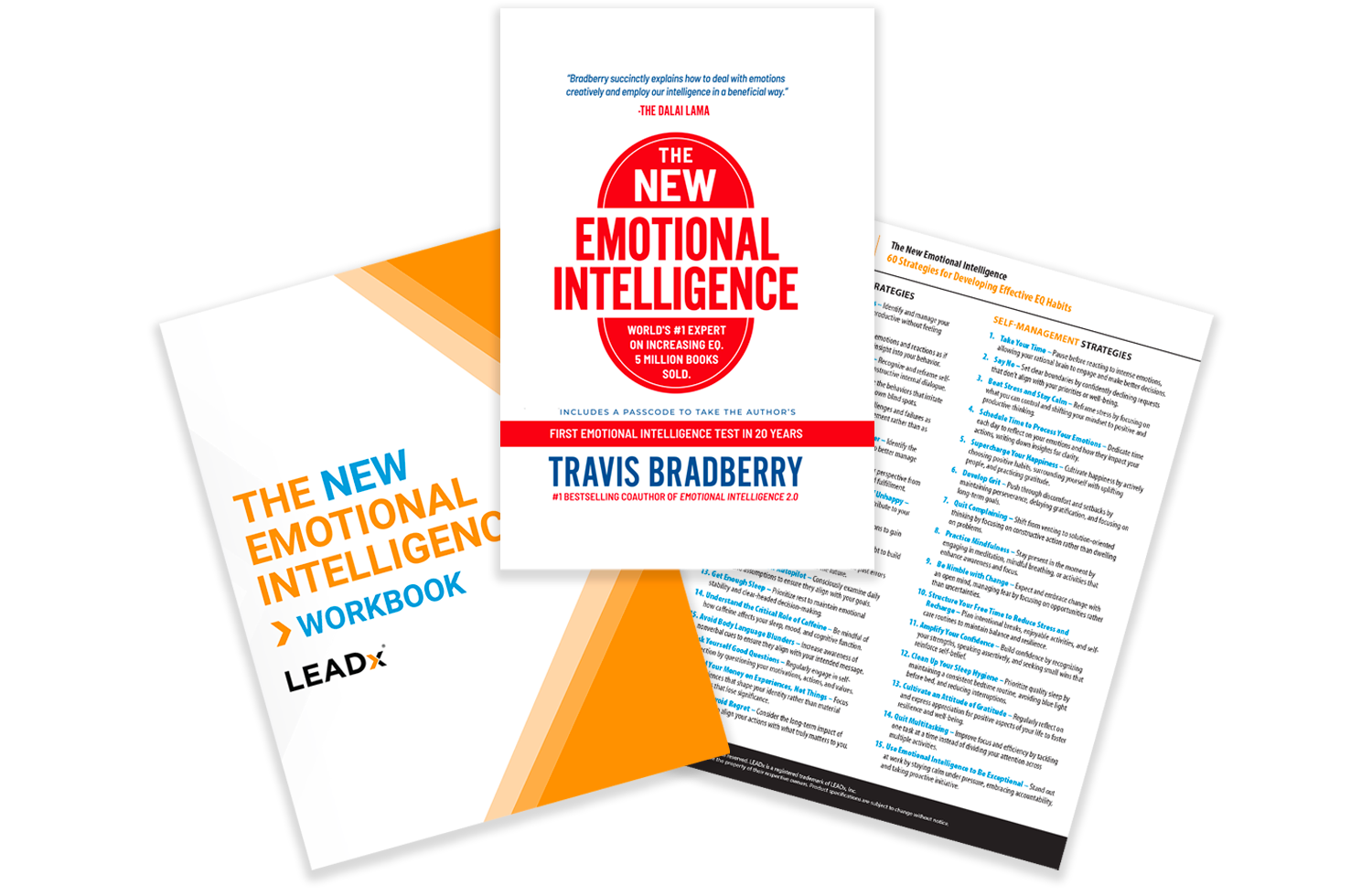
- Career Growth and Credibility: Earning an EQ practitioner certification adds a respected credential to your profile. It signals that you have been trained by and aligned with thought leaders in the field (for example, Dr. Travis Bradberry, author of The New Emotional Intelligence, or other prominent psychologists behind top EQ assessments). You can leverage this credibility to market yourself and your programs internally and externally. Within an organization, you become the go-to person for emotional intelligence. If you’re a consultant or coach, being able to say you’re certified to use a renowned EQ system (with a recognizable name behind it) can attract clients. Essentially, you get to ride on the brand reputation of the certification provider in addition to your own expertise.
- Deeper Personal Mastery of EQ: The intensive training that comes with certification equips you to teach others. It also profoundly grows your own emotional intelligence. Practitioners often report that going through an EQ certification (with practice assessments, feedback, and teachbacks) helped them become more self-aware and adaptable in their personal leadership style. You’ll internalize the concepts at a level that enables you to “walk the talk,” which boosts your effectiveness as a facilitator or coach.
Comparing Emotional Intelligence Certification Programs
Not all EQ certification trainings are created equal. Many providers offer certifications, each with different emphases – some are assessment-focused, some include workshops, some offer post-training support, etc. To help you understand the landscape, here’s a comparison of several well-known emotional intelligence certification programs (including our own at LEADx).
 Notes: All pricing is approximate and subject to change. Workshop Option indicates whether the provider offers a ready-made workshop curriculum or training session as part of the certification package. “Reinforcement tools” refers to any post-assessment or post-workshop support materials to help drive ongoing learning.
As the table suggests, the LEADx EQ Practitioner certification program is distinctive for both its quality and its consideration of reinforcement. Most vendors expect you to do all the pull-through post workshop. LEADx walks the reinforcement talk by including access to a human coach, a year of reinforcement, and unlimited assessment retests. And they do so at a lower pricepoint than the legacy vendors.
Practical Applications of EQ Practitioner Training
What can you actually do with an EQ practitioner certification inside an organization? The possibilities are extensive. Here are some practical ways companies are leveraging in-house EQ experts and training:
- Standalone EQ Workshops or Classes: As a certified practitioner, you can run emotional intelligence workshops for employees at all levels. This might be an opt-in class offered quarterly to anyone interested in emotional intelligence. The workshop setting allows participants to learn the core EQ concepts (self-awareness, self-management, social awareness, relationship management) and engage in exercises or role-plays to practice new behaviors in a safe environment. Many organizations start by holding a flagship EQ workshop (mandatory for all employees or leaders), and then offer it regularly (e.g. every few months) so new hires or newly promoted leaders can attend when needed.
- Integrated into Leadership Development: Emotional intelligence training is often woven into broader leadership programs. For example, new managers or high-potentials might go through a multi-module leadership academy that includes EQ coaching and 360-feedback as a key component. A certified EQ practitioner can administer a 360-degree EQ assessment to each leader, debrief them one-on-one on the results, and then provide ongoing coaching sessions to target growth areas. Small group coaching can work as well – where a cohort of leaders meets with the practitioner-coach to discuss challenges like handling difficult conversations or managing stress, using EQ techniques learned. This ensures that as employees step into leadership roles, they’re equipped not just with technical know-how but with crucial emotional intelligence competencies to manage teams effectively.
- Onboarding Programs with EQ Emphasis: Some forward-thinking companies are now making EQ training a standard part of onboarding for all employees. For instance, one healthcare staffing firm actually requires every new hire to take an emotional intelligence assessment and attend a workshop on EQ as part of joining the company. The message new employees get is clear: emotional intelligence is a core value here. By embedding EQ from day one, these companies foster a culture where communication, empathy, and self-awareness are emphasized from the outset. As an in-house EQ practitioner, you could collaborate with HR to design such an onboarding module – introducing newcomers to the organization’s EQ model and giving them basic tools to understand and manage emotions at work. This can pay off in better teamwork and customer service down the line, as everyone speaks the same emotional “language.”
- Targeted Programs for High-Stress Roles: Jobs that involve high pressure, safety risks, or emotional labor can especially benefit from EQ training. We’ve seen cases like law enforcement and healthcare where developing emotional intelligence is literally a lifesaver. For example, a first responder unit might engage an EQ practitioner to train officers on skills like impulse control (to stay calm and not react in anger), empathy (to better handle people in crisis), and accountability (to own up to mistakes or ask for help when needed). The training could include scenario-based role plays that simulate tense field situations, allowing officers to practice using EQ tactics to de-escalate conflicts. Similarly, nurses and doctors facing burnout can learn strategies to recognize their own stress signals and reframe their mindset in tough situations. By tailoring EQ workshops to the realities of these roles (e.g. dealing with aggressive individuals, or coping with trauma and fatigue), an internal practitioner can improve not only individual well-being but also team cohesion and service quality in these critical functions.
- Continuous Micro-Learning and Culture Initiatives: Beyond formal training sessions, certified EQ practitioners often lead ongoing culture-building initiatives. This might involve sending out a “tip of the week” related to EQ, organizing peer discussion groups around topics like empathy or resilience, or championing an internal campaign on emotional well-being. With access to reinforcement tools from your certification, you can implement things like daily mini-exercises or an EQ habit challenge that employees participate in via your company’s learning portal or an app. These bite-sized interventions keep emotional intelligence in focus year-round. Over time, such efforts can shift norms – for example, making it commonplace for colleagues to pause and name their emotions during meetings, or to give each other feedback in a more constructive, aware manner.
Real-World Results: The ROI of Emotional Intelligence Training
Emotional intelligence isn’t just a “nice-to-have” – it drives tangible improvements in organizational performance. Here are case examples across different industries that highlight the ROI of investing in EQ skills:
- U.S. Air Force – Improved Recruitment & $3M Savings: The U.S. Air Force famously used an emotional intelligence test to select its recruiters, with striking results. By hiring candidates high in EQ (especially in competencies like empathy and self-awareness), they nearly tripled the success rate of new recruiters. Annual turnover plummeted from 35% to under 5%, saving the Air Force an estimated $3 million per year in hiring and training costs. This success was so notable that it prompted the Department of Defense to recommend using EQ-based selection across all military branches.
- L’Oréal – Boosting Sales Performance: Cosmetic giant L’Oréal found that sales agents chosen for emotional competence significantly outsold their peers. On average, these high-EQ salespeople sold $91,370 more per year than those hired via the old criteria – amounting to an additional $2.5 million in revenue. Perhaps even more impressively, the EQ-selected group had 63% less turnover in their first year. In a job notorious for burnout and rejection, emotional intelligence made a clear difference in both productivity and retention of talent.
- Manufacturing Plant – Safety and Efficiency Gains: Emotional intelligence training isn’t just for white-collar environments; it’s made a mark on the factory floor, too. In one manufacturing plant, supervisors were trained in key EQ skills like active listening and helping employees solve problems collaboratively. The impact was dramatic: lost-time accidents fell by 50%, and formal grievances dropped from 15 per year to only 3. The plant also exceeded its productivity goals by $250,000 after the training. In a similar plant, an EQ-trained group of supervisors saw productivity rise 17% compared to an untrained control group. These cases underscore how improving managers’ people skills can translate into safer, more efficient operations.
- Law Enforcement – Better Conflict Outcomes: Emotional intelligence can be a lifesaver for first responders. A training program for police officers in New York focused on skills like empathy, self-awareness, and managing conflict. The officers who completed the program showed the greatest improvements across all performance measures compared to a control group. For example, trained officers achieved significantly higher case clearance rates (solving more incidents), and they even had reduced absenteeism according to a “danger-tension index” (which tracked arrests versus sick days). By learning to defuse interpersonal conflicts and remain composed under pressure, these officers were not only healthier and more present, but also more effective in serving the community.
- Employee Retention – The Boss Factor: Much of retention comes down to employees’ relationships with their managers. It bears repeating with data: a Gallup survey of over a million workers found that 75% of people who quit their jobs voluntarily did so because of issues with their boss – not the company or the role. Emotional intelligence training directly addresses this issue by helping leaders develop the empathy and social skills to make team members feel valued and supported. Companies that have rolled out EQ training for managers often see subsequent upticks in engagement and declines in turnover, because managers learn how to better recognize team accomplishments, coach through challenges, and handle emotional contagion (so their stress doesn’t spread to the team). In essence, EQ makes bosses more likable and “emotionally tuned-in,” which has a proven link to keeping good people around.
- Healthcare – Patient Experience and Nurse Burnout: In healthcare settings, emotional intelligence can literally affect patient outcomes and organizational finances. One large hospital system noticed that many items on the HCAHPS patient satisfaction survey – things like whether nurses treat patients with courtesy and respect, or whether doctors listen carefully – are rooted in emotional intelligence behaviors. In fact, looking through the HCAHPS items, it’s clear that 16 out of 25 HCAHPS survey items are directly influenced by EQ skills. By training their caregivers in EQ (for example, how to convey empathy even during busy shifts, or how to be aware of their tone and body language with patients), hospitals can improve those patient experience scores, which are tied to reimbursement rates. Additionally, hospitals have battled high nurse burnout and turnover in recent years. Emotional intelligence training has shown promise here: studies find that nurses with higher EQ handle stress better and avoid burnout – they’re significantly more effective at coping with job pressures. Higher EQ in nurses also correlates with better performance and longer tenure in their roles. In one initiative, after nurses underwent EQ workshops on self-regulation and empathy, hospitals saw more nurses expressing willingness to take on leadership positions (a sign that the training helped them feel more resilient and supported, rather than viewing promotion as an unmanageable burden). Over time, improvements in staff EQ can lead to more compassionate patient care, better teamwork on units, and hard metrics like higher patient satisfaction scores and lower staff turnover – all critical in healthcare’s bottom line.
Become a Certified EQ Practitioner – Make a Difference
Emotional intelligence is no longer optional for organizations that want to thrive – it’s a defining characteristic of high-performing teams and agile, people-centered companies. By becoming a certified EQ practitioner, you position yourself to lead this positive change. While of course we hope you get certified through LEADx, we’d rather you get certified by one of our friendly competitors than not at all!