

“I make a point to appreciate all the little things in my life. I go out and smell the air after a good, hard rain. I re-read passages from my favorite books. I hold the little treasures that somebody special gave me. These small actions help remind me that there are so many great, glorious pieces of good in the world.”
—Dolly Parton from Dream More: Celebrate the Dreamer in You
Legendary musician and actor Dolly Parton passed away on August 25 in Nashville, at 80, after a battle with cancer. Her nephew Bryan Seaver delivered the news in a video, a role she had asked him to take on years earlier.
The tributes this week described her the way you’d describe weather: sunny, warm, impossible to dislike. NPR observed that this saint treatment tended to obscure her drive and her business acumen. It obscured her daily methods, too, many of which (like the quote above) she wrote about in her 2012 book Dream More: Celebrate the Dreamer in You.
The idea behind her quote—to practice appreciating the little things—is quite simple, but rarely do people take the time to live by it.
Why This Quote Is A Matter of Emotional Intelligence
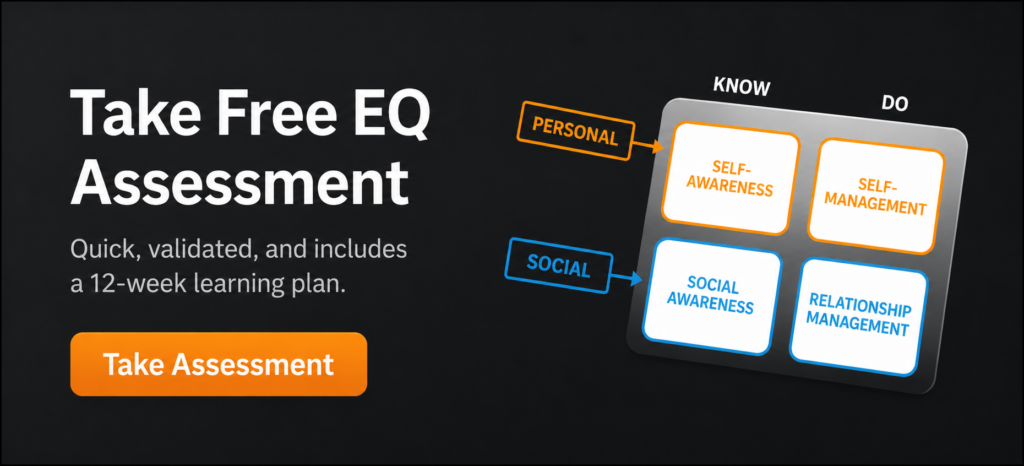
Emotional intelligence (EI) is your ability to recognize, understand, and manage your own emotions and the emotions of others in order to be more effective in your relationships, goals, and work. It can be broken down into four core skills:
- Self-Awareness is your ability to recognize and understand your emotions.
- Self-Management is your ability to regulate your emotions.
- Social Awareness is your ability to recognize and understand the emotions of others, and your ability to empathize with them.
- Relationship Management is your ability to use each of the aforementioned skills to build, maintain, and foster relationships with other people.
Experts recommend that, to get a baseline understanding of your emotional intelligence across each of these four core areas, you take a validated self-assessment.
What Parton describes in her quote about daily appreciation is a self-management practice. Each morning, to the best of her abilities, Parton creates the conditions for a positive mentality.
It’s easy to treat gratitude as a disposition, and to say that people like Parton are born happy and positive, but when you look at the degree of intentional effort she’s putting into her mentality, it’s hard to see it that way. The good news is that this means gratitude (and emotional intelligence, for that matter) is something you can practice and improve with effort. As I’ll get into in more detail in the next section, the research confirms Parton’s idea that you can improve your disposition through intentional gratitude practices.
The Research Confirms Parton’s Idea That Practicing Gratitude Can Make You Happier and More Positive
Robert Emmons and Michael McCullough ran three experiments, randomly assigning people to record either what they were grateful for, what was bothering them, or something neutral. As you might expect, the gratitude groups came out ahead on several well-being measures, including positivity.
Nancy Rothbard and Steffanie Wilk conducted research that suggests an ideal timing for your gratitude practice. After tracking call center representatives over several weeks, they found that an employee’s start-of-day mood worked as an affective prime. Those who arrived calm stayed that way. Those who arrived feeling low never climbed out, took more breaks, and gave up over ten percent in productivity.
The EI Strategy: Practice Gratitude First Thing In The Morning, Just Like Parton Did
Based on Parton’s practice and the research, here’s how you should structure your gratitude practice:
- Do it first thing in the morning. We know that the benefits of gratitude carry on through the rest of the day, so practice gratitude early.
- Pick a few different modes of gratitude, so your practice doesn’t get stale. Perhaps choose one you can smell or touch, one you can read, and one tied to a specific person (like Parton’s example).
- Do it daily. Gratitude has been shown to have a kind of lathering effect. The more you practice gratitude, the more you begin to see it in everything you do.
Putting This Quote To Action
Tomorrow morning, before you reach for your phone, practice gratitude in one of your three main ways. And remember that your gratitude practice doesn’t have to be a written journal. Parton walked outside and enjoyed the little changes in the climate and the weather, she read from her favorite books, and she kept keepsakes from friends within arm’s reach. Set up your own daily options for your gratitude practice, and make a point of engaging with them.