
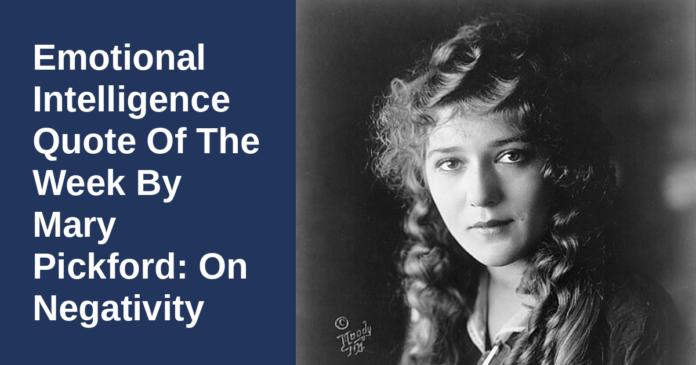
“All the water in the world cannot sink a ship unless it gets inside the ship. All the negativity in the world cannot sink a person unless it gets inside the mind.” — Mary Pickford, Why Not Try God? (1934)
Mary Pickford wrote this quote at the lowest point of her public life. She had been the most famous woman in the world: America’s Sweetheart, co-founder of United Artists, a producer who controlled her own pictures at a time when almost no woman did. Then films with sound arrived. She was the first major star to attempt a talkie, the results disappointed, and audiences turned toward newer faces like Marlene Dietrich and Mae West. Her 1933 film Secrets lost money, and she sensed her run as an actress might be coming to an end. At the same time, her marriage to Douglas Fairbanks was unraveling. Lawsuits and unkind press filled her year.
In 1934, she published a short book about what she refused to let inside. This quote comes from that book. Importantly, the quote moves the entire issue to the hull of the boat. It doesn’t focus on what’s going on outside the boat, but instead it focuses on your ability to control what gets in.
Why This Is A Matter of Emotional Intelligence
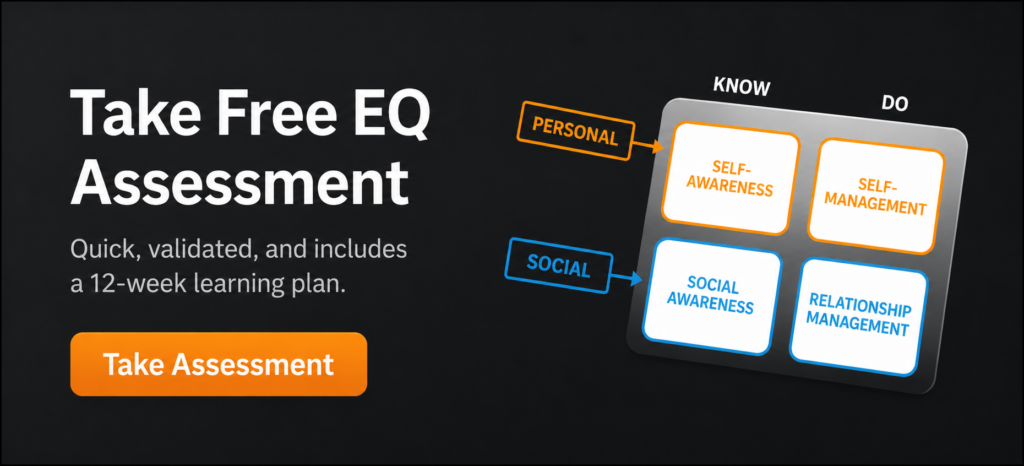
Emotional intelligence, your ability to understand and manage your emotions and the emotions of others in order to be effective in your goals and in your work, breaks into four core skills:
- Self-Awareness, or your ability to recognize and understand your emotions
- Self-Management, or your ability to deal with and regulate your emotions
- Social Awareness, or your ability to recognize and understand the emotions of others, and your ability to empathize with others.
- Relationship Management, or your ability to use each of the aforementioned skills to build, maintain, and foster relationships with other people.
Pickford’s quote falls squarely in that second area of emotional intelligence, self-management. This is your ability to choose what you do with an emotion once it shows up. Most of us attempt to “beat” our emotions with willpower, but to follow Pickford’s metaphor, willpower isn’t the hull of your ship. Willpower is bailing out the flood. It’s grueling, unwinnable work that will leave you exhausted.
Instead, by intimately knowing our values and standing up external challenges against those values, you can build a stronger ship that doesn’t let in water.
Modern Research Backs Up This Idea: You Can ‘Protect Your Ship’ By Revisiting Your Values
Dr. J. David Creswell and colleagues tested this directly. Eighty-five participants completed either a values-affirmation task or a control task before a laboratory stress challenge. The group who took the time to affirm their values showed significantly lower cortisol responses. Reflecting on what mattered to them changed their biology under pressure.
Dr. Sander Koole's team ran a similar study looking rumination as it relates to values. Across three experiments, participants received failure feedback on a bogus intelligence test. Failure drove rumination up, and rumination dropped when people could affirm an important part of themselves (a value). Critically, in the third experiment, their affirmations came before the failure and still worked to defeat rumination.
A Practical Emotional Intelligence Strategy You Can Apply: The Values Reread
Write your core values and beliefs down once. One page. Five to seven items, plain language, a sentence on why each matters. Then reread it next time you feel a negative emotion, like anxiety toward a future event or stress about a current one.
This idea is, of course, very simple at heart, but the beauty lies in the execution. For example, imagine that your brother-in-law makes a crack about how your career is non-lucrative at Thanksgiving dinner in front of your whole family, and you can’t stop replaying that moment over and over in your head. When you notice yourself starting to ruminate, you re-read your values page on the notes app in your phone, and it reminds you that you work your career as a teacher not for the money, but in order to help people and build a better future.
After a few months, the page will live in your head, and you’ll naturally stack your negative emotions up against your values.
Putting This Quote To Action
Pickford’s career as an actress did end. She lived another 45 years as a producer, philanthropist, and studio power broker, because she never let the fact that one thing was ending ruin her perspective.
Take 20 minutes this week and write out your core values, then put a five-minute reread on Sunday's calendar. Water hits every ship. The only variable you control is whether your hull is ready.