
What makes a good salesperson? Is it charisma? Being an extrovert? A relentless drive to achieve?
The answer is actually emotional intelligence (EI). Across more than 50 interviews with talent development leaders from various industries and frequently cited research, a consistent pattern emerges: salespeople with higher emotional intelligence outsell their peers, often by a significant margin.
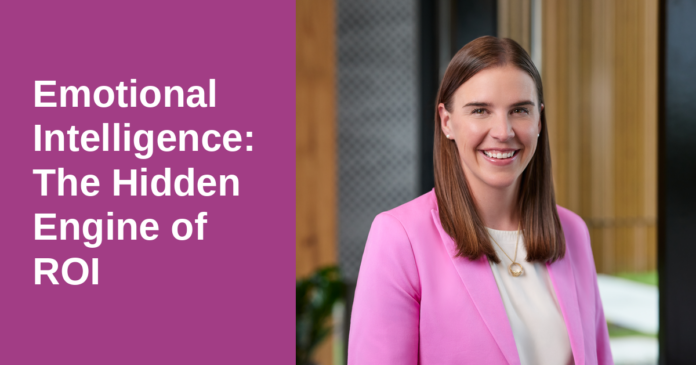
Katelin Spielmaker has seen that dynamic up close. As Director of Leader Growth Solutions at Amway, she supports Independent Business Owners (IBOs) across the U.S., Canada, and the Dominican Republic, helping them set goals, access tools and training, to ultimately grow their businesses.

Emotional Intelligence Builds Relationships
Reflective is the word that best describes Spielmaker as a leader. She brings a steady attentiveness to her work—listening closely, interpreting not only what’s said but what’s left unsaid. In a role that spans geographies and thousands of IBOs, that reflection is not passive, it’s deliberate. It allows her to cut through complexity and respond in ways that are both strategic and human.
The ability to pause, process, and then act with clarity is a defining expression of emotional intelligence, and a defining characteristic of Spielmaker’s approach.
She describes Amway as a business built on human connection.
“It’s about people. It’s about knowing what matters to others, and appreciating their unique value,” Spielmaker explained. “Emotional intelligence helps our business owners understand and manage their own internal state while paying careful attention to their teams and their customers.” This allows them to flex and focus on the other person’s needs.
But how does that show up in practice? “Listening is just the baseline. The real objective is depth: offering someone your complete, focused attention in a world full of distractions.” Spielmaker said. “Listening is, of course, critical, but so are watching and observing. When you pay deep attention to a person’s natural rhythms, you can tell when something is off. You can distinguish between the person who needs space in the morning after a hectic school drop-off and one who might welcome a higher-energy start to the day.”
Spielmaker defines leadership in similar terms. “Leadership is showing up,” she said. “Sometimes it’s feedback. Sometimes, it’s observation. Often, it’s simply being present, paying attention and following through. It’s the little things that count in this role.”
At Amway it’s all about relationship building, which then drives results. “Emotional intelligence underpins our company values: partnership, integrity, personal worth, and responsibility,” she said. “Take partnership, for example, you can’t accomplish anything in this company without partnering with other people. It all started with two friends who partnered together to start a business more than 60 years ago, so it’s just in our DNA, we’re better, our work is stronger, together.”
Emotional Intelligence Turns Conversations into Connection
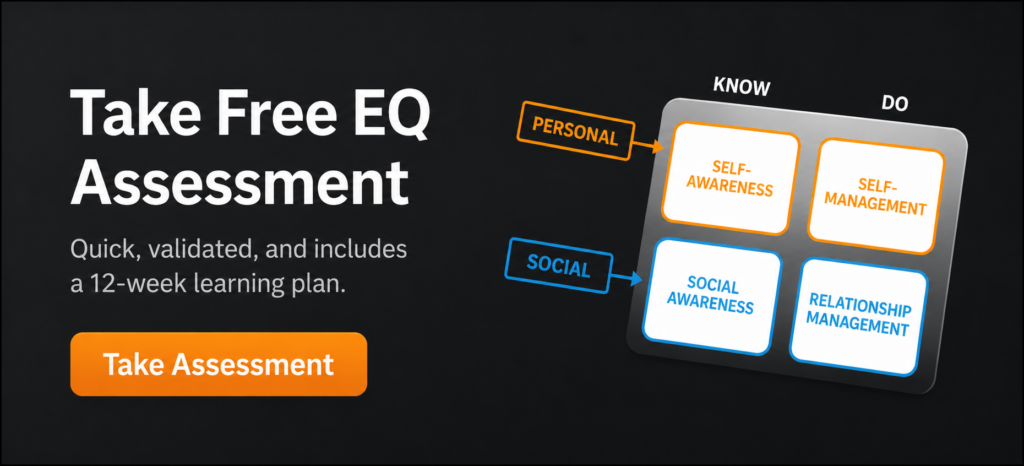
The four core skills of emotional intelligence—self-awareness, self-management, social awareness, and relationship management—aren’t abstract concepts in selling. They come to life in real time, shaping the quality of every conversation and every relationship.
Self-Awareness is the starting point: a clear-eyed understanding of what you’re bringing into the room—and how it’s landing. Am I creating space? Staying present? Listening for what the customer actually needs, or simply preparing what I want to say next?
Self-Management is what allows you to stay grounded, consistent, and intentional—regardless of how a conversation unfolds. Spielmaker notes that Amway business owners invest deeply in relationships, and that level of commitment builds both discipline and perspective over time. “People can feel the difference when you show up consistently, and that’s what builds trust over time,” she said.
Social awareness is the ability to read what isn’t said: the pause, the hesitation, the subtle shifts in energy. It’s where observation sharpens into understanding and where meaningful connection begins to take shape.
Relationship management is the multiplier. It’s knowing what matters to the other person, following through, and building trust over time—turning individual interactions into lasting relationships. As Spielmaker puts it, “This is what makes Amway distinct, and I believe what makes our average tenure so long. It’s about people. Knowing what matters to others and appreciating their unique value.”
Relationships Outlast Transactions
Spielmaker’s perspective on emotional intelligence took shape long before she had a name for it. She grew up as “a daughter of a coach” and “a daughter of entrepreneurs,” surrounded by teamwork, accountability, encouragement, and competitive sports. As a college athlete, she learned that ability alone is rarely enough. “Talent will only get you so far,” she said, “What drives lasting success is the way teams build trust, take ownership, and consistently encourage each other to go further.”
One poignant example came from her grandmother, a generous woman with a distinct spark, who sold real estate until she was 91. Spielmaker remembers watching her build relationships that extended far beyond a single transaction. “She stayed a part of people’s lives,” Spielmaker said.
Her grandmother’s final sale was to a third-generation family connection. “It showed me the power of nurturing relationships and how that can actually drive and sustain a business.
That experience shaped how Spielmaker thinks about EQ today. She said she never thought of those early lessons as “emotional intelligence” at the time. They were simply modeled for her “in every single step” and in the defining moments of her life.
EI Drives ROI
And the impact is evident in the numbers. Frequently cited L’Oréal research shows that sales representatives selected for specific emotional intelligence competencies sold $91,370 more annually than those selected through the company’s prior process, contributing to a $2.56 million net revenue increase. These high-EI reps also demonstrated 63% lower first-year turnover, underscoring not only stronger performance, but greater retention and stability within the sales force.
The message is clear for talent development: emotional intelligence should be treated as a core capability for building trust, resilience, and long-term growth. That means embedding EI into hiring, onboarding, coaching, and manager development, then translating the four core skills of emotional intelligence – self-awareness, self-management, social awareness, and relationship management – into observable sales behaviors. The most effective programs will teach sellers to listen deeply, regulate themselves under pressure, notice what customers are not saying, and build relationships that extend beyond the transaction.