
According to the LEADx Leadership Development Benchmark Report 2025, the majority of leadership development teams still aren’t achieving behavior change in their leadership development programs. While over 52% of L&D professionals believe more than half of their training is applied on the job, the majority don’t even measure behavior change, and 48% see less than half of their learning initiatives stick.
This “knowing-doing gap” is the industry’s oldest wound. Content is delivered, but learning never truly takes hold.
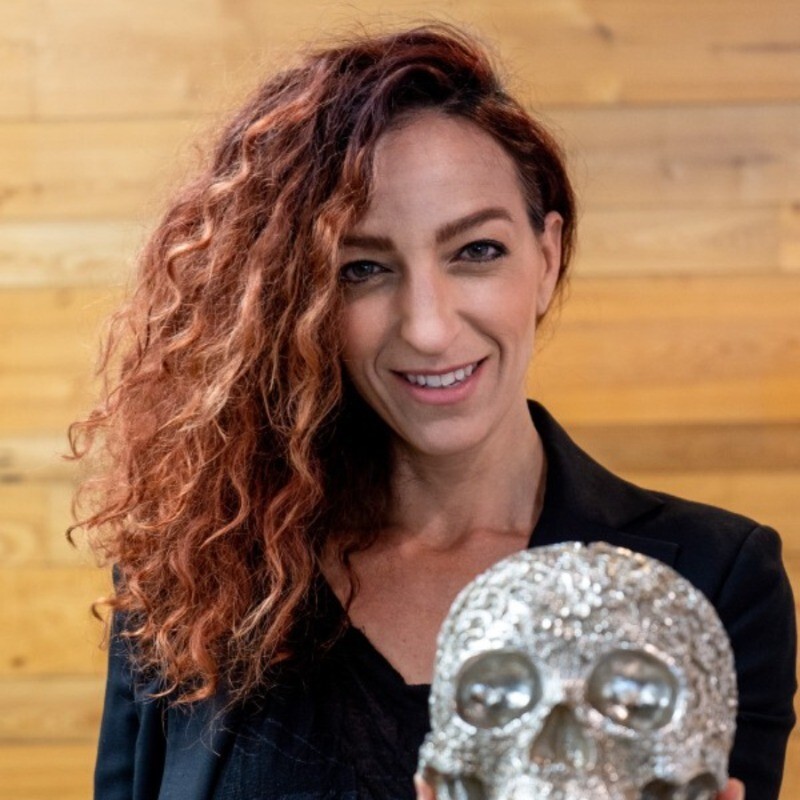
And that’s why I sat down with learning scientist, Lauren Waldman, to learn more about what it takes to design learning that creates those transferable memories that organizations are really after. Lauren Waldman is the founder of Learning Pirate, and she studies and applies cognitive neuroscience to design learning experiences that are grounded in how the brain processes, stores, and uses information.
Stop Chasing Learning Trends and Start Adhering to Learning Science
In an industry obsessed with rapid upskilling and “one-hour transformations,” Waldman is blunt about the limits of our brains. “Learning isn’t rapid,” she told me. “If you’re talking about real transformation—behavior, ability, skill—there’s nothing quick about that.”
“Somewhere between childhood curiosity and corporate life, we stopped upgrading our ability to learn,” she wrote in a recent article for Dirty Word magazine. Instead of learning how the brain forms, stores, retrieves, and applies information, L&D teams chase trends: microlearning, gamification layers, slick UX, and the newest AI tool.
“L&D teams are asking people to change rapidly in ways that violate how memory and focus actually work,” she said. “That’s why the results aren’t there.”
Build Learning Around The Brain
Waldman’s work is grounded in neuroscience rather than instructional mythology. She breaks down cognitive overload not as a metaphor but as a literal biological bottleneck. “Your sensory memory lasts milliseconds to two seconds,” she told me. “Working memory? Fifteen to thirty seconds if you’re lucky.” If you rehearse information, you might stretch working memory to a minute. But after that, the system collapses. “The three key learning areas are focus, repetition, and time,” she said. “Most corporate learning allows for none of the three.”
Her point becomes obvious when you consider the timeline that learning actually occurs on:
- Sensory memory → milliseconds to seconds
- Working memory → seconds
- Long-term memory → days to weeks
The irony, of course, is that many organizations desire long-term memory, yet expect people to change their behavior after a 60-minute keynote. “No one learns a new habit in an hour,” she said. “It’s not how the brain encodes and stores memory.”
Redesign Every Presentation Through The Lens Of The Brain
Most people think Lauren’s keynotes work because they’re fun. The 90s playlists. The game-show elements. The moments when she turns a thousand-person room into an experimental lab.
But fun isn’t her goal. It’s the delivery mechanism for focused attention. “I’m responsible for helping guide someone’s brain to attend, to focus,” she said. “So the question becomes: What do I want them to focus on, and how am I going to get them there?”
Her design decisions reflect that:
- Black-and-white slides until she wants to highlight something.
- Strict limits on competing sensory inputs.
- Interactive elements that narrow—not widen—attentional demands.
- Strategic humor for emotional salience.
She teaches designers to think like sensory architects. “We have all these stimulus features. Color, motion, texture, contrast,” she said. “If you use them intentionally, you guide attention. If you overuse them, you force the brain to triage.”
“You’re a Sherpa of your learner’s brain,” she told me. “Guide them. Be explicit.”
Two Science-Backed Moves L&D Teams Can Make Today
Waldman knows most L&D teams don’t have time to earn four neuroscience certifications or decode lab research for hours each week. So she recommends two moves anyone can implement quickly.
1. Get granular with the senses. Strip away unnecessary sensory noise. “Break down vision into everything you could be seeing. Break down hearing into everything you could be hearing. And then stop making the brain triage any of it.”
2. Design for focus, not aesthetics. “Slides don’t need to look perfect,” she said. “They need to guide attention. If someone said, ‘Focus on this word right now,’ most adults would be grateful. Make those decisions for them.”
Both principles are simple, but both require a mindset shift: moving from content-first design to brain-first design. And that’s the shift she believes the entire industry needs to make to evolve our profession, increase the value of the work we do, and actually help mass populations of employees learn.
The Science Is Clear. The Question Is Whether We’ll Use It.
Waldman waited more than a decade to see “learning how to learn” become mainstream. It took a surge of AI tools—and rising anxiety about cognitive offloading—for the industry to finally pay attention.
She recently wrote, “The brain is not a bonus feature. It’s the seat that’s been empty for far too long.” She’s right. We’ve built learning programs around tools, formats, calendars, and content libraries. We’ve rarely built them around the single organ that’s responsible for learning in the first place.
The door to evidence-based, science-aligned learning is now wide open. The only question, as Waldman puts it, is the one the entire L&D industry needs to answer: “Will we walk through it? Or will we let history repeat itself one more time?”