
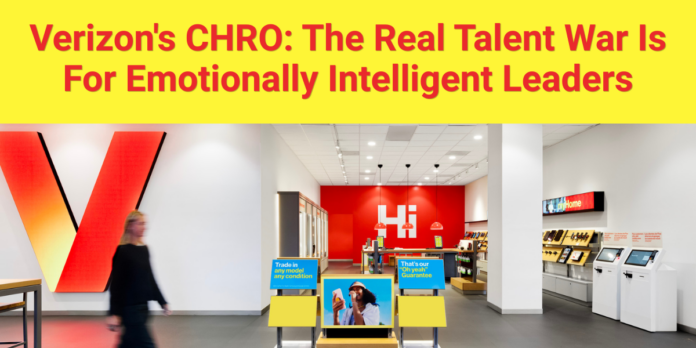
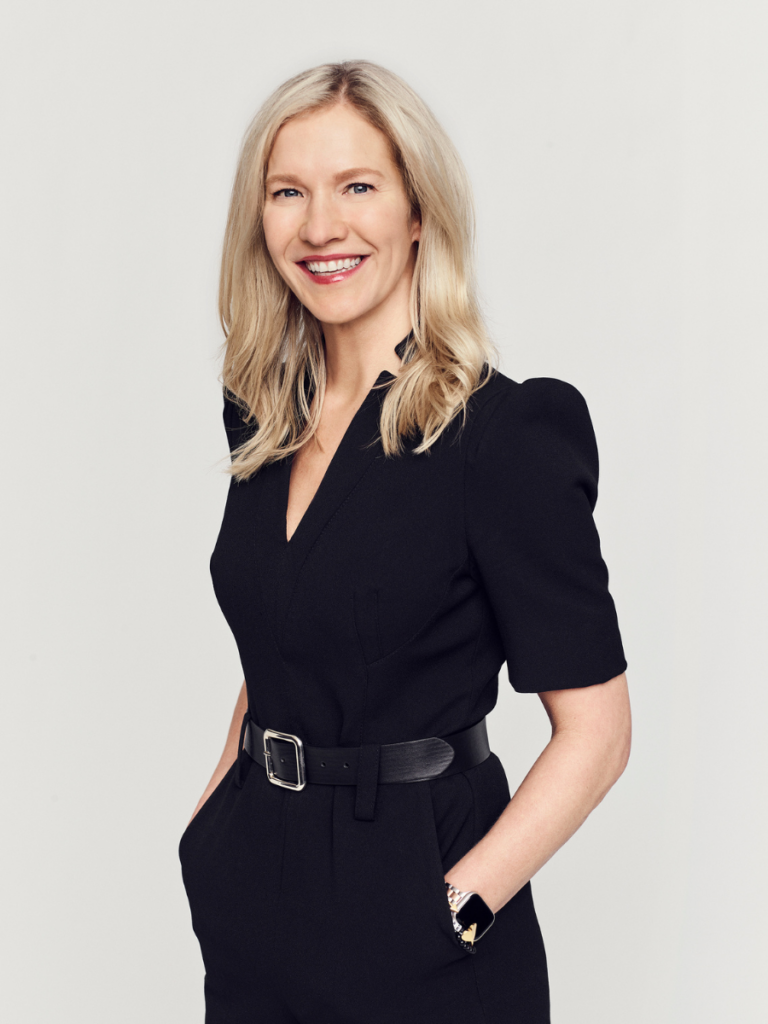
At a time when AI and EQ are constantly being put at odds, it’s refreshing to interview Sam Hammock, the CHRO of Verizon. She’s at the forefront of both—AI and EQ—and her unique perspective shapes her strategy.
“I’m very rarely looking for tech skills at the leadership level,” she explained in our interview. “It’s the human skills I’m looking for. That’s where there’s a real talent war.” Her point is that at the leadership level, technical skills are table stakes. And often, the differentiator is emotional intelligence.
Across more than 50 interviews with L&D leaders, few executives have had such depth of perspective on the leadership implications of AI. Here’s what Hammock shared about Verizon’s people strategy for the AI Era.
AI Creates Capacity for Higher-Leverage Work
Hammock sees a massive opportunity with AI, both right now and in the future. “I truly do believe that AI, in the broadest sense, will be the greatest technological advancement in my generation,” she said. “And I do absolutely believe it is going to change our lives.”
For Hammock, the opportunity with AI expands beyond speed and efficiency to capacity. “How do we enable our V Teamers to have more time to do the human things in their job?” she asked. “We are seeing technical skills being automated through LLMs and through agents, and I think we’re just at the tip of the iceberg with the potential for automation.”
Hammock envisions V Teamers with more time and energy to devote to the types of specialized and interactive work that AI can’t replicate. “Humans are critical to our future and our workforce. As AI evolves, it’s important to continue recognizing the unique role people play in driving innovation, creativity, and growth. While AI can eliminate tasks, and that’s something to celebrate, we also have an opportunity to keep developing new skills and prepare for the roles of the future,” she said.
That is where EQ enters the picture. Not as a counterweight to AI, but as the capability that helps leaders create trust, exercise good judgment, and stay agile so they can keep up with the rapidly changing AI tools and innovate.
Verizon’s ‘Culture OS’ Turns Their Values Into An Operating System
Since Hammock joined Verizon in 2020, she has built out an internal cultural framework called Culture OS.
Hammock pointed out how at many organizations their goals, priorities, vision statements, and values become disconnected from the actual day-to-day work. “For us, our Culture OS pulls all of those components together,” she said. “It’s the one centerpiece that the rest of our ecosystem on talent and work connects to.”
What makes the model notable is that it shows up everywhere. “Culture OS is built into our performance management system,” she said. “It is built into our training and leadership development programs. It is built into our talent assessment work. And even into compensation.” This operationalizes their culture and avoids the “poster on a wall culture” that many other companies struggle with.
Verizon’s Talent GPS Makes Career Growth Visible And Actionable
If Culture OS is the system, Talent GPS is a lever to help employees path out and develop their careers.
When Hammock joined in 2020, Verizon’s employee data was too fragmented to support workforce planning or meaningful development at scale. So she led a cleanup effort, consolidating 60,000 job codes down to 2,100 across a workforce of more than 100,000 people.
Core to their Talent GPS strategy is transparency and actionability. “Organizations owe transparency to their employees,” she said. “If we’re going to tell you there’s career growth, we should be able to tell you where all the jobs are, how many of those jobs there are, where the jobs are located, and what skills and experience it takes to get that job.”
Verizon then uses assessments and AI to personalize development plans, helping employees see pathways, skill gaps, and adjacent opportunities.
Psychological Safety Drives AI Adoption (Not Activity Tracking)
“When you think about AI adoption,” Hammock said, “you need psychological safety. And I believe carrots and recognition work better for creating that environment of trust.”
That’s a useful counterpoint to the growing trend among companies like Deloitte who announced they’re tracking usage, monitoring logins, and tying those activity metrics to opportunities for advancement.
Hammock’s instinct is to favor reward and recognition, visible experimentation, and peer learning. At Verizon, this includes spaces where employees share prompts, swap use cases, and help one another in Slack channels. “You have to remove the fear,” she said. “We adopt a mindset of ‘If nothing’s breaking, we’re not being bold enough.’”
Verizon’s “AI Unlocked” academy spans both technical content and the cultural, leadership, and EQ side of the transition. It includes interviews with Verizon’s CEO and senior leaders on the future of the company and the leadership values that matter most as we move into the AI Era. The demand was so high at launch that it crashed their website.
The Best Leaders Will Use AI To Create More Human Value
Hammock’s most important insight may be her simplest one: “AI is how we’re going to work, and EQ is going to be the why. Why we show up for our people and our customers.”
This brings us back to her opening line. The real talent war is not for leaders who merely understand and use the latest technology. It’s for leaders who can create clarity, care, courage, and connection at a time when the technology keeps shifting and growing.