
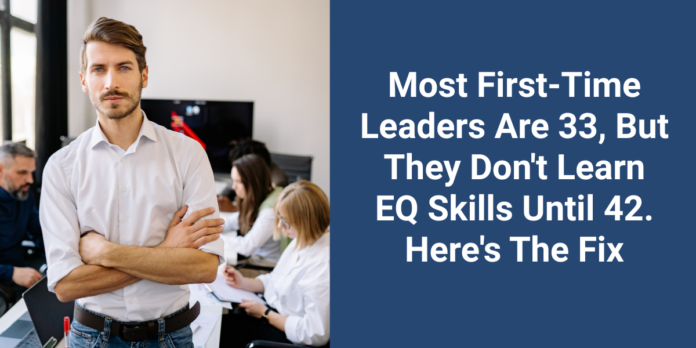
When Madison Artist first became a people leader, she experienced firsthand one of the most rampant problems faced by new leaders. She now led people, but her former company offered no formal leadership training.
“One day I was promoted, and suddenly I was leading people with no real idea what I was doing,” she said. Her experience aligns with the data, which shows that even though the average person becomes a people leader around age 33, the average leader doesn’t get formal leadership training until the ripe age of 42.
Left to her own devices, Artist looked to the best leaders she had worked with as models. And she noticed something interesting: The leaders she admired weren’t always the smartest in the room. They were the ones who made people feel safe. “There was just something about my favorite leaders,” she said. “You felt like you could speak up. You felt safe on their teams.”
At the time, she couldn’t name that “something.” She just knew it mattered. Now, Artist is the Director of Learning & Development at LifeStance Health, where she’s building that “something” intentionally through emotional intelligence (EQ). She leads what she calls a “small but mighty” L&D team, she’s a certified EQ coach, and just began her PhD in organizational leadership, focused specifically on how leaders create inclusion through observable, teachable behaviors.
That emphasis—what leaders do, not just what they intend—now shapes how EQ is taught at LifeStance.

Why Emotional Intelligence Matters at LifeStance Health
As a comprehensive mental health provider, LifeStance operates at an enormous scale. They employ nearly 8,000 clinicians who delivered approximately 9 million patient visits in 2025.
Artist sees emotional intelligence as directly connected to staff effectiveness. “Emotionally intelligent leaders can build more psychologically safe and engaged teams,” she explained, “And because many leaders at LifeStance also deliver patient care themselves, the ripple effects extend all the way down to patient care.”
How LifeStance Teaches EQ: Two Workshops, Two Lenses
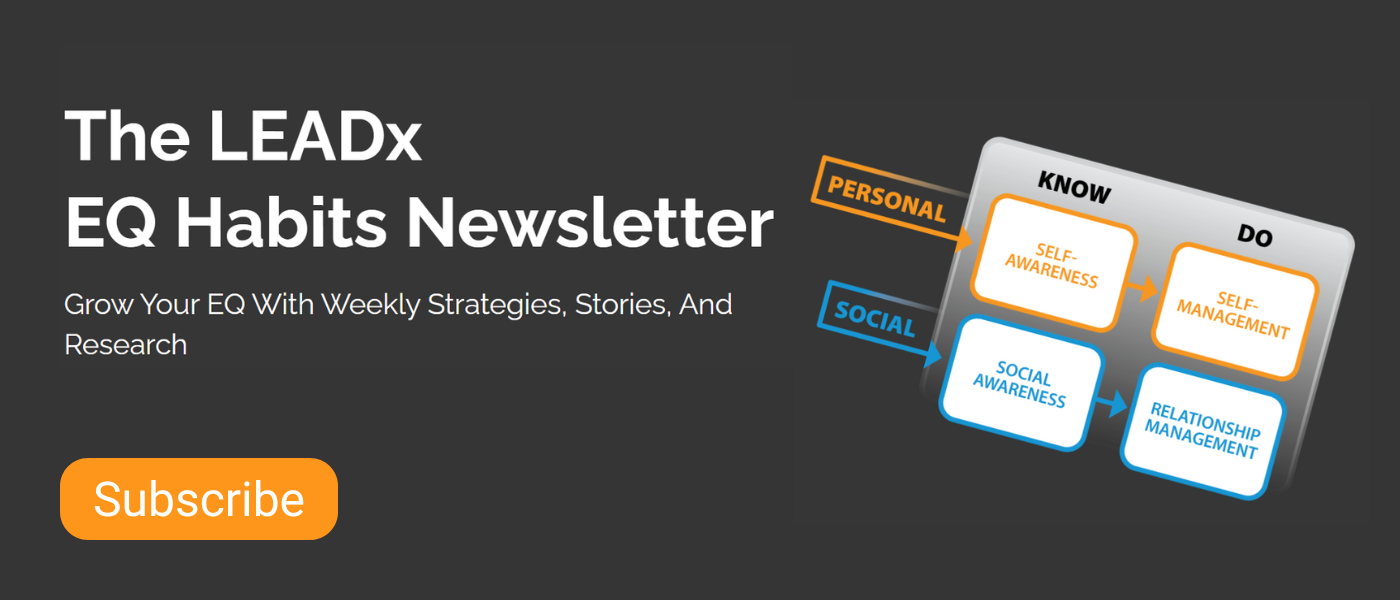
The program is structured around two workshops. The first focuses inward, on self-awareness and self-management. The second shifts outward, toward social awareness and relationship management.
The Inward Lens: Self-Awareness and Self-Management. The first workshop is built on a simple premise: emotional intelligence starts with how you show up—especially under stress. “It all starts with how we manage ourselves,” Artist said. “As leaders, and really just as individuals.”
The session is highly experiential. Leaders engage in reflection activities and worksheets that push them to revisit moments when they didn’t respond well. The goal is to get specific and behavioral. “What were the emotions at play?” they ask participants. “What took you in the wrong direction?”
One of her most effective exercises is something she calls an emotional “fire drill.” The metaphor reframes self-management as preparation rather than willpower. “When we’re kids, we do fire drills so we know how to get out in an emergency,” she said. “Your brain works the same way. You can create a fire drill for yourself.” Leaders are asked to map out, in advance, what they’ll do the next time they feel triggered—what actions they’ll take and where their “stopgaps” will be.
The Outward Lens: Social Awareness and Relationship Management. The second workshop shifts from the internal world to the interpersonal one.
Artist’s team demystifies empathy, which many leaders experience as vague or intangible. “How do we actually develop empathy as a skill?” she asked. “Because for a lot of people, it feels really abstract.”
This session expands into group dynamics. “How do we talk about what’s happening in the room?” she said. “That undercurrent of mood and emotion. And then how do we use that awareness to manage relationships more effectively?”
This workshop is discussion-heavy, built around case studies and even movie clips. Leaders practice reading situations, naming what’s happening emotionally, and identifying alternative responses. The goal is to build a habit of asking better questions about what’s driving behavior.
Making EQ Stick Without Overengineering It
Launching an EQ workshop is relatively easy. Making it stick is harder. “One of the keys,” Artist said, “is that EQ training can’t be standalone.”
She’s designed their overarching leadership program so that EQ is a “golden thread” that runs through each of their foundational leadership skills. Think feedback, coaching, and difficult conversations, which all hinge on that foundation of emotional intelligence.
In difficult conversations training, for example, she encourages leaders to start by checking in with themselves. “You need to understand where you’re coming from,” she said. “What emotions are at play? What typically takes you in the wrong direction?” They also point out that if you’re emotionally elevated, you might not be ready for the conversation yet. “You want to be calm, cool, and collected before you go into a tough conversation,” Artist said.
LifeStance’s approach to EQ training fits into a broader shift in how smart organizations are thinking about leadership development. In conversations with over 40 L&D leaders, they indicated that they’re increasingly treating EQ as a core leadership capability. One that underpins key behaviors like feedback, coaching, and inclusion.
Advice for L&D Teams Launching EQ Training
When asked what advice she’d give someone launching their first EQ program, Artist recommended that L&D leaders avoid trying to do too much. “EQ is a big topic,” she pointed out. “And people get overwhelmed. They feel like they have to teach everything about EQ.”
That instinct, she argues, can cause leaders to disengage. The learning starts to feel abstract instead of actionable.
Her recommendation is to start with self-awareness—the one piece leaders can actually control—and build. “Start with that foundational piece,” she said. “It gives your leaders the Lego blocks to build everything else.”