
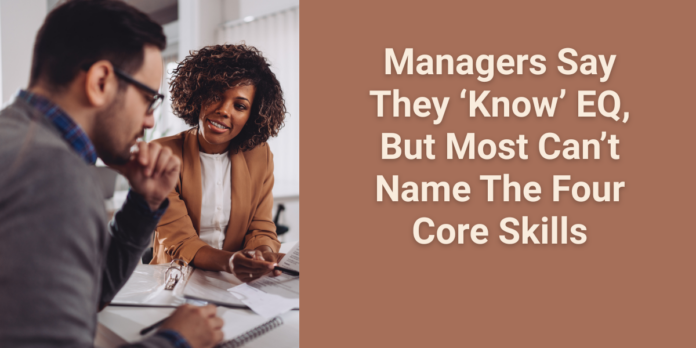
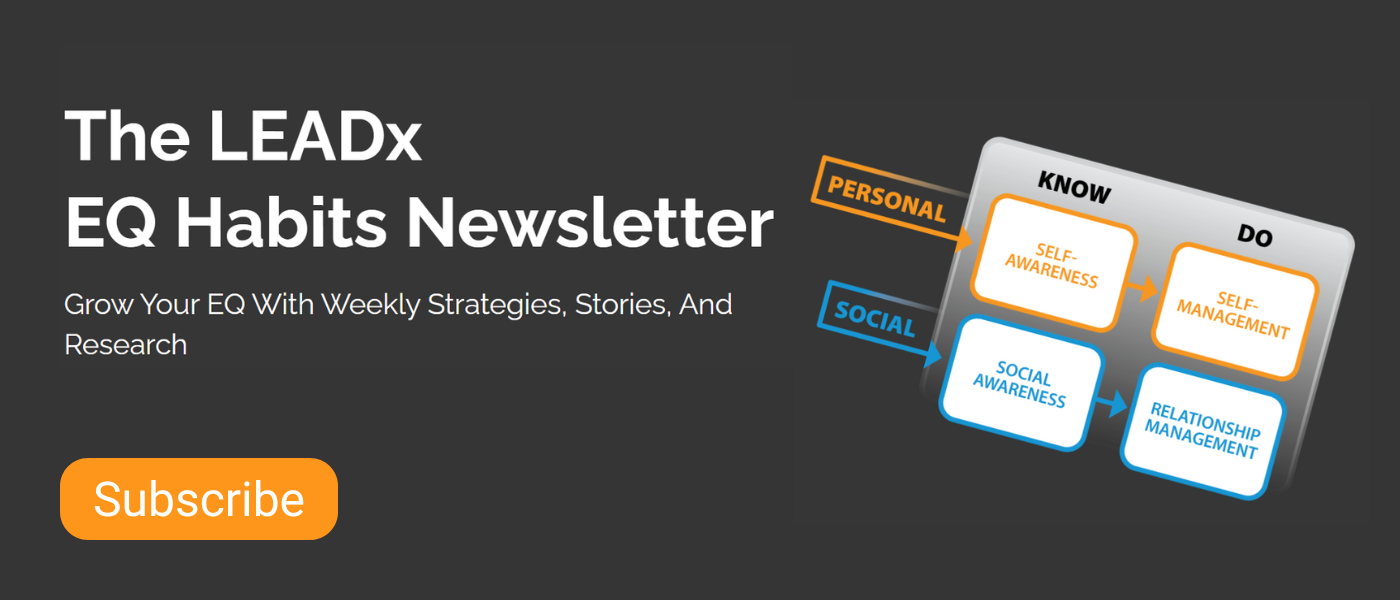
Ask a room full of managers whether they’ve heard of emotional intelligence, and nearly every hand will go up. Ask them to name the four core skills that make up emotional intelligence, and the room goes quiet.
Gary Dawson sees this disconnect first-hand all the time. Dawson is Director of Learning and Development at the Employers Association of the NorthEast (EANE), where he oversees public and onsite training for nearly 1,000 member organizations across industries ranging from manufacturing to healthcare to financial services.
He works with emerging leaders, first-time managers, and seasoned supervisors, and despite that range of experience, this pattern repeats. “Most of these leaders, across every level, have never had any kind of formal EQ training,” he told me.
That gap is more common than you might think, showing up in the majority of my recent series of 40 interviews with L&D leaders responsible for training emotional intelligence.
To Dawson and his team at EANE, the real problem is sequence. Companies want their managers to get better at conflict management, accountability, and communication, and they often move directly to these specific skills. But this often starts training off too far downstream. As he put it, “All of these other skills, like conflict management, accountability, and communication, land much better when they’re built on a foundational understanding of emotional intelligence.”

Conflict Management, Accountability, and Communication All Get Easier with a Foundation of EQ
EANE’s most requested topics for leadership development are conflict management, accountability, and communication. In their training, Dawson and his team tie each of these back to emotional intelligence.
Conflict: Conflict, he pointed out, gets easier once leaders understand their own triggers. With self-awareness and self-management, a manager can stay steady instead of reactive, stay curious instead of judgmental, and stay collaborative instead of combative. Social awareness and relationship management can help leaders build a safe, trusting environment where conflict will be thoughtful and healthy.
Accountability: A surprising number of managers avoid hard conversations not because they don’t know they need to have them, but because they’re uncomfortable with the emotions that the conflict will dredge up. Self-awareness and self-management can help managers work with and through those emotions. Empathy and relationship building skills can help leaders deliver feedback or tough news in a sensitive and clear way.
Communication: Communication improves drastically when leaders stop assuming that every employee receives a message the same way, and once leaders start to understand the intricacies of each of their direct reports. For this reason, Dawson’s team at EANE trains managers to get to know their team members deeply—their different communication styles, levels of emotional maturity, and levels of awareness.
EQ can be applied in this way to many other skills beyond these three. That’s its practical power. And that’s why it works so well as a foundational skill.
AI Can Write The ‘Emotionally Intelligent’ Response, But Can It Build the Relationship?
Like many learning leaders, Dawson sees potential for AI to remove administrative friction, speed up routine work, and free people to spend more time on higher-value conversations.
One thing that concerns him about AI when it comes to emotional intelligence, is social-emotional offloading. “It would be easy to ask one of the LLMs to come up with your answer to a Slack message or an email, and to ask the LLM to make your writing emotionally intelligent,” he said. “But then you don’t have to worry about what it really means to understand the other person’s needs, to understand the context of the conversation, and to build those relationships.”
In the same way that people have been saying AI use often results in cognitive offloading (dumping off your critical and creative thinking onto an LLM), it’s likely that many are engaging in social-emotional offloading (dumping off their emotional and relational thinking). As with cognitive offloading, this can come at great cost. The best leaders will be those who can pick and choose how, when, and why to use AI.
‘Business Etiquette’ for Gen Z
One of the more interesting signals EANE has seen is an increased demand for their business etiquette training. This comes mostly from companies looking to develop younger Gen Z employees. The development program covers skills like reading the room, networking, speaking comfortably in meetings, and approaching an internal conversation differently from a client-facing one.
As they do with conflict, accountability, and communication, EANE likes to train EQ as foundational to their business etiquette program. Equipped with those social-emotional skills, it becomes much easier for young employees to develop their ability to read the room, network, and speak comfortably.
Great EQ Programs Bring Lived Experience
Dawson’s career started in in real estate, and L&D “happened by happy accident” after he was asked to help train new agents. He immediately saw that he had a knack for training and that he loved doing it. And that initial experience still shapes how he thinks about facilitating programs.
Dawson believes business experience gives trainers credibility, practical judgment, and, maybe most importantly, stories. I can tell you about concepts all day long,” he said. “But if I don’t have relevant stories that match the theory, that you can relate to as an attendee, it’s just a lecture.”
That’s Dawson’s core message, and it’s a timely one. If organizations want stronger accountability, better communication, healthier conflict, and more thoughtful use of AI, they should start with emotional intelligence.