
The Chief People Officer at Bristol Myers Squibb, Amanda Poole, just returned from presenting at a CHRO conference. For six hours, the conversation never left AI: How AI will change HR, how AI will reshape work, how AI will alter productivity, planning, and workforce strategy. By the time Amanda Poole took the stage, the room had heard every version of the same message: AI is coming fast, and leaders need to be ready.
Poole didn’t disagree, but she reframed the conversation, saying, “AI is transformative. It will do so much and bring so much. But do you know what AI can’t do and doesn’t do? It can’t care.”
That line gets at a central leadership question many organizations are now facing. AI can summarize, automate, analyze, and accelerate. But it can’t make people feel seen. It can’t create trust on a team, coach a struggling manager through a hard conversation, or make complex human decisions under pressure.
Across more than 40 interviews with Learning & Development leaders, nearly every leader has stated that L&D is optimally suited to fill one of AI’s biggest gaps—the need for enduring human skills.
The more powerful AI becomes, Poole pointed out, the more valuable care, connection, and emotional intelligence will also become. “People want to do good work, they want to be valued for their work, and they want to know that we care about them and see them,” she said.

BMS’s Top 3 Skills for the Future of Work
Poole believes three skills will matter most in the AI Era: curiosity, resilience, and connection.
First is intellectual curiosity. This is your ability to think in “three different worlds.” “The world of possibility, the world of decisions, and the world of data.” This requires a blend of disciplined curiosity and unafraid creativity.
Second is resilience. “We certainly don’t know what’s coming, but what will it look like to demonstrate resilience, to be agile, to navigate change?” Poole said.
Third is connection. “Can you still work within a team and bring out the best of yourself and the best of your team?” she asked. “To do this, you need to understand other people’s work. You need to be able to do systems thinking, seeing how work gets done and how the ecosystem needs to operate.”
Curiosity, resilience, and connectedness all tie closely together with emotional intelligence. Consider, for example, how:
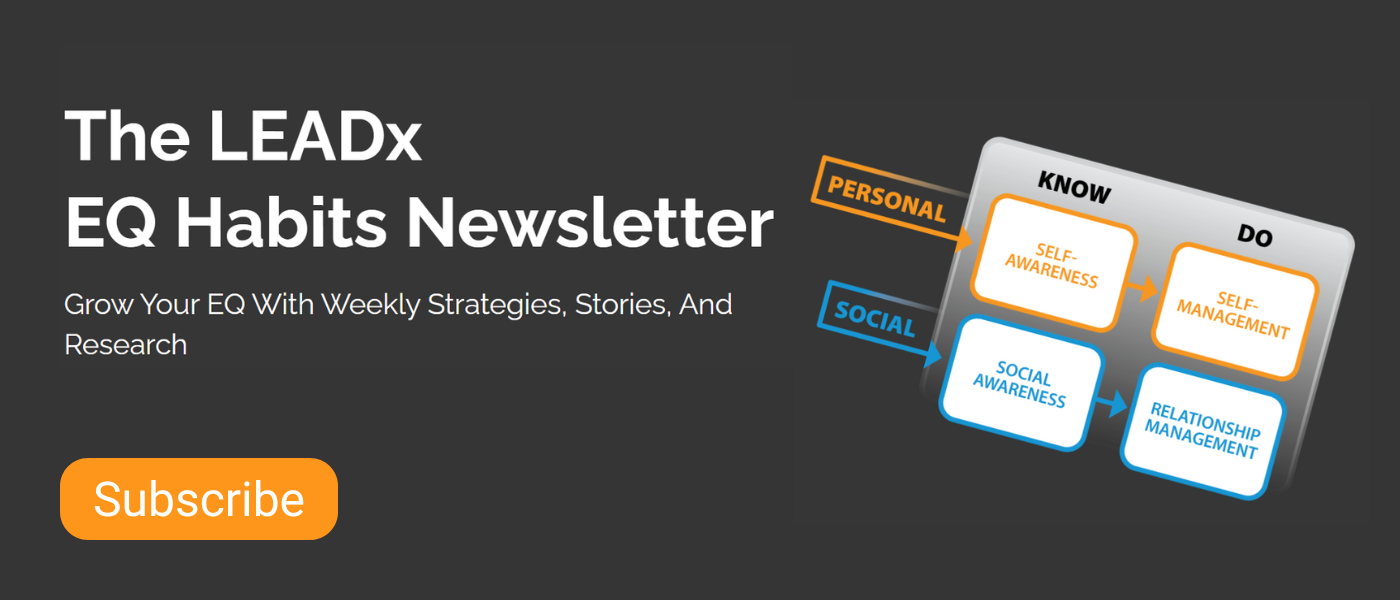
- you can’t practice curiosity if you’re closed off and judgmental (low self-awareness, low social awareness)
- you can’t be agile and resilient in times of change if you can’t recognize the emotions change stirs up (self-awareness) and manage those emotions (self-management).
- you can’t build connection with your team members without awareness of their tendencies and feelings (social awareness) or the expression of care and trust (relationship management)
How EQ And Personality Work in Unison
One of the more distinctive things Poole shared was Bristol Myers Squibb’s “Valuably Quiet” program. The idea emerged from a reality many science-based organizations know well: not every high contributor is loud, fast-talking, or outwardly expressive. “We’ve got all sorts of extroverts, but boy, do we have a lot of introverts, too,” Poole said.
Poole’s team wanted to explore the idea that impactful contribution can look different from different people. One example Poole shared was “passion.” In many workplaces, passion gets coded by the degree of a person’s expression. The person who speaks first, speaks often, and visibly energizes a room can be seen as more engaged. But Poole is explicit that “passion looks different for introverts and extroverts.”
That is where emotional intelligence comes in. Socially aware leaders can learn the natural tendencies of team members and start to look for “passion” in different ways from different people. Rather than try to turn introverts into extroverts, or extroverts into introverts, the emotionally intelligent leader will tap into the inherent strengths and styles of each type. This leads to more balanced, inclusive, and creative teamwork.
The BMS Manager Excellence Program Operationalizes Emotional Intelligence
Earlier in Poole’s career, she moved out of HR and into the commercial side of the business. That experience, she pointed out, was transformative because it showed her what management really means. In field-based roles, “you effectively are the company,” she said.
That lesson now sits at the center of Bristol Myers Squibb’s manager development strategy. The company’s Manager Excellence program, or MAX, helps develop roughly 6,000 managers under the premise that if the company is going to navigate change, it needs strong managers.
To strengthen their managers, they first set a clear definition of what great management looks like. Whether you’ve been a manager for three weeks or 30 years, the baseline standards for “great” are the same. What sits inside that baseline is unmistakably emotional intelligence in practice: self-awareness, empathy, listening, coaching, psychological safety, and the ability to give feedback well.
The MAX training program is a six-month journey with ongoing coaching. Poole noted that the coaching conversations delve deep into EQ work.
BMS’s Brain Health Program: ‘Work Hard, Recover Harder’
As AI accelerates work, many leaders feel pressure to move faster and to take on more work. BMS is betting on a different idea: performance now depends not just on output, but on recovery.
“If we want to be leaders in brain health, it needs to start with us, and it needs to acknowledge brain health as a component of well-being,” Poole said. “We’ve translated this demand for brain health into a new mantra, which is ‘Work hard, recover harder.’ The work we do is hard, and the pace, especially with AI, will not change. The answer isn’t to work harder, it’s to purposely create the space to recover harder.”
Under the “Work hard, recover harder” mantra, recovery will become BMS’s differentiator, a way to “unlock and unleash a new level of performance at BMS.”
Enduring Human Skills Like EQ Can’t Be Replaced
The practical lesson for other leaders and other organizations is clear: don’t let AI become an excuse to neglect the human layer of performance. Build curiosity, resilience, and connection into how you hire and develop talent. Train managers to turn those skills into visible behaviors, and make recovery part of performance, not a reward for surviving it.
Because when the room spends six hours talking about AI, the smartest leader may still be the one willing to stand up and remind everyone what the technology is lacking: care.