
When the Chief of Security at the University of Charleston, Eric Smith, first heard about emotional intelligence training for law enforcement in the 90’s, he dismissed it outright. Like many officers of his generation, he mocked training programs like Verbal Judo, which emphasized communication and de-escalation over tactics. “I was a resistor,” he admits. But something caught his attention: colleagues who embraced those methods got results. They were calmer under pressure, better at building trust, and often more effective in the field.
 Smith began to reconsider the value of emotional intelligence, and the rest was history from there. As he dug into Daniel Goleman’s work, read the research, and eventually began applying EQ skills on the job, he saw a dramatic shift in his performance. What he had once dismissed as “soft” turned out to be the foundation of effective policing. And he’s not alone in seeing the value of EQ in law enforcement. A 2021 international review of law enforcement studies found that the evidence points to a strong connection between emotional intelligence, officer performance, and community trust.
Today, as Chief of Security at the University of Charleston and a doctoral researcher, Smith facilitates emotional intelligence training to law enforcement officers, first responders, and healthcare professionals. To learn more about his work in emotional intelligence training, I had the opportunity to sit down with him for an interview.

Where Frontline Experience Meets Research
Smith’s career has spanned some of the most emotionally charged corners of law enforcement. He spent years investigating narcotics, reopening dozens of cold-case homicides, and later leading intelligence work in digital forensics. Along the way, he saw firsthand how composure, empathy, and relationship-building often determined whether cases were solved and whether trust with families and communities could be sustained. Now, as Chief of Security at the University of Charleston and a doctoral candidate in Executive Leadership, he has paired his frontline lessons with academic rigor. His research and training focus on how emotional intelligence equips officers to manage stress, improve judgment, and strengthen leadership. In short, Smith is uniquely positioned to understand—and to teach—how EQ and law enforcement intersect.
Why Emotional Intelligence Is Critical in Law Enforcement
Policing, Smith argues, is fundamentally emotional work. “You arrive on scenes that are just pure chaos. It’s the worst day for somebody a lot of times,” he explains. Officers must regulate their own reactions while engaging people in moments of grief, fear, or anger. When they don’t, poor judgment follows—rudeness complaints, excessive force, and even national headlines.
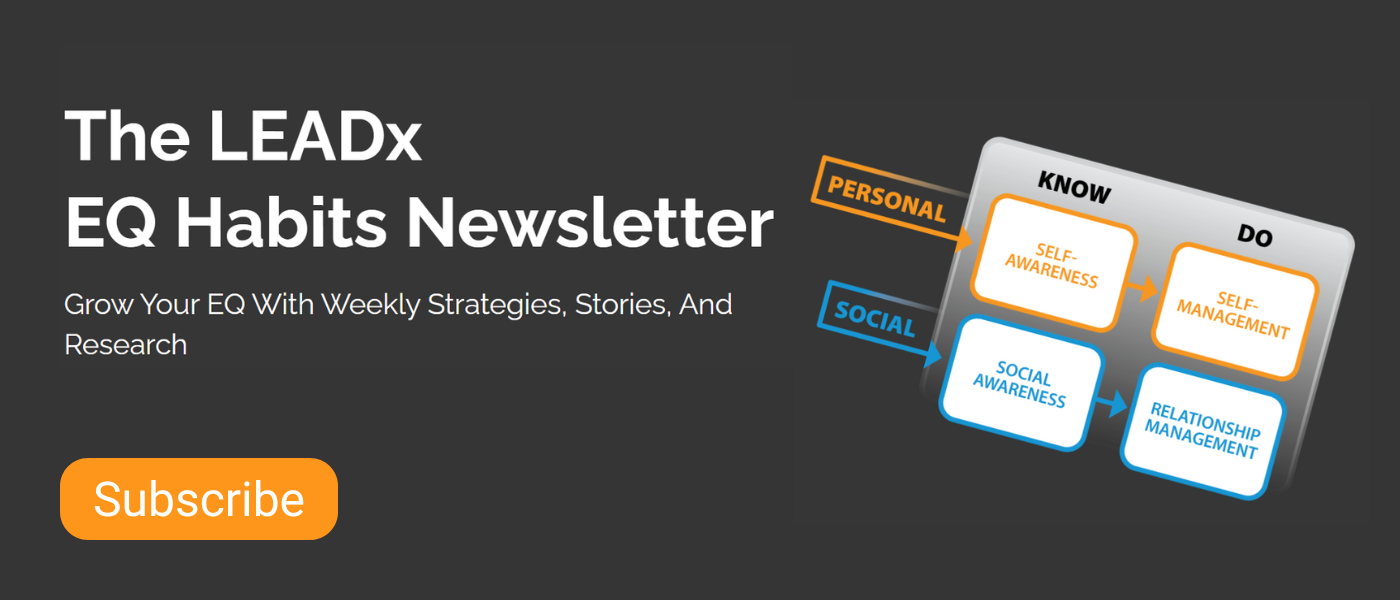
Emotional intelligence provides the tools to interrupt that cycle. Self-awareness and self-management help officers recognize when they’re becoming “emotionally hijacked.” That way, they can pause and be more effective in their response. Social awareness and relationship management, meanwhile, build empathy and trust and help officers to interact with those people who are in the midst of “the worst day of their life.”
Smith was a reservoir of practical, powerful stories. In cold-case homicide interviews, for example, empathy for grieving families often makes the difference between stonewalled conversations and meaningful breakthroughs and advocacy. Or in routine campus traffic stops, adjusting tone and pacing can prevent serious escalation. And across the board, officers with stronger EQ are better at building informant networks, de-escalating tense scenes, and sustaining long-term careers without succumbing to burnout.
Smith’s Research on EQ, Compassion Fatigue, and Moral Injury
Smith’s doctoral research focuses on one of the most pressing but least understood challenges in policing: moral injury. Moral injury is defined as “trauma rooted not in direct violence, but in shame or guilt over actions taken or not taken.” For example, firefighters often experience moral injury after failing to get someone out of a burning building, despite doing everything in their power.
His guiding question became: Do emotionally intelligent leaders help mitigate the effects of moral injury and PTSD in first responders? To find out, his research will explore how EQ-driven leadership—leaders who demonstrate empathy, ethical treatment, and servant leadership—can buffer the psychological toll of a career that exposes first responders to hundreds of critical incidents.
EQ Drives Bottom Line Results: Decreased Disciplinary Actions and Personnel Conflicts
In partnership with the West Virginia Division of Corrections, Smith trained over 230 sergeants in a single year, followed by sessions for lieutenants, captains, and wardens. Feedback from administrators noted a clear decrease in disciplinary actions and personnel conflicts after the program rolled out.
EQ training has also found resonance outside corrections. Nurses and healthcare workers—who face similar daily exposure to crisis, trauma, and compassion fatigue—have embraced Smith’s workshops. In February, a leadership conference he led drew a standing-room crowd, with many participants lining up afterward to share stories of personal transformation.
“The consistency across these fields is telling,” Smith said. “Whether you’re a correctional officer, a nurse, or a patrol sergeant, the ability to manage your emotions and build trust under stress isn’t a luxury; it’s a professional necessity.”
The Future of EQ in Law Enforcement: Embedded in the Academy
For Smith, the future of emotional intelligence in policing is clear: it belongs at the core of training, not the margins. “I think it should be a fundamental class in any academy,” he said. New recruits should begin with an EQ assessment, receive coaching throughout their 15-week academy, and close with a personal development plan. “That’s your long-term sustainment plan for the emotional intelligence of your officers,” he explained, “and it will help stop misconduct and rudeness complaints before they start.”
His closing advice to every officer is simple but profound: “EQ is going to make you a better police officer. It makes you look professional; it helps you relate to people in every aspect, in every way.” In Smith’s view, emotional intelligence isn’t a “nice to have” or a passing trend. It’s the foundation of effective leadership and the future of smart, sustainable policing.