
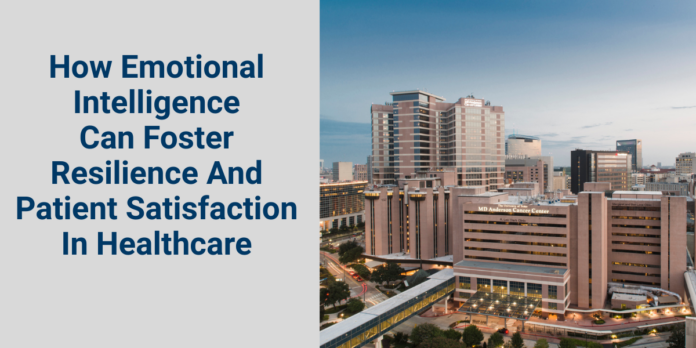
When a patient stood on stage during The University of Texas MD Anderson Cancer Center’s annual State of the Institution address, she told thousands of employees how a clinical trial saved her life. Then she embraced the doctor who led it. This moment embodied the fact that behind every breakthrough in cancer care lies the quiet power of empathy between a patient and their caregivers.
Research over the last 30 years has long been showing all the different ways that emotional intelligence skills impact bottom-line care. Stronger patient relationships, lower burnout, better teamwork, and improved well-being have all been linked closely with emotional intelligence skills. And across over 20 interviews with L&D professionals, healthcare leaders have told me a story that aligns with this research. EQ training has led to improvements in patient care and staff well-being.
At MD Anderson, emotional intelligence training and leadership development are delivered at scale to 27,000 employees, measured, studied, and the results are publicly published in peer-reviewed journals. Cathy Schaefer, the Executive Director of the MD Anderson Leadership Institute, helps to lead this endeavor. “It’s just as important how you do your job as what you do,” Schaefer pointed out. With this in mind, EQ is included in the organization’s competency model, evaluated in annual reviews, and revisited at every level of leadership, from executives to clinicians to students.
Establishing EQ as a Core Competency: From Hiring to Performance Reviews
At MD Anderson, emotional intelligence is one of the organization’s core competencies. As such, it’s incorporated into both the hiring process and annual performance reviews for every employee.
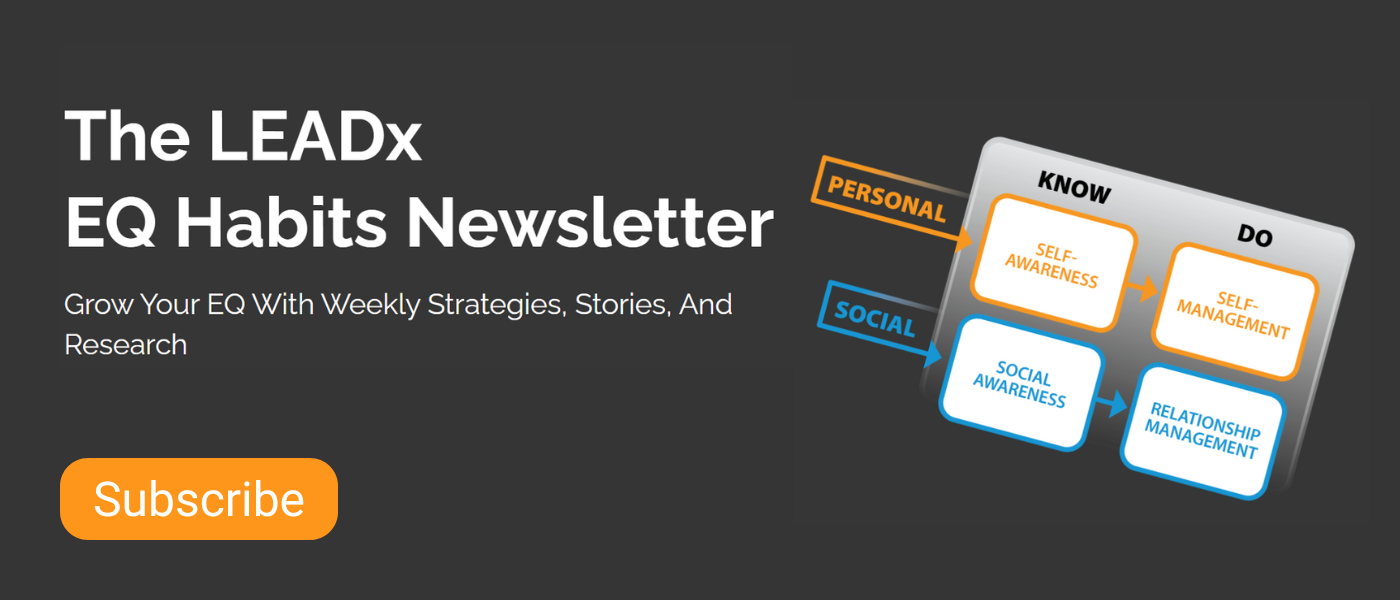
“Emotional intelligence is incredibly intentional,” Schaefer explained. “We have the best and brightest in technical expertise, but it’s just as important how we communicate, collaborate, and lead.” Every employee receives yearly feedback on key EQ behaviors such as self-awareness, communication, and coachability. Then, they reflect on how to apply those same skills in new and more complex ways as their responsibilities expand.
How MD Anderson Scales Leadership Development
Teaching development to a handful of leaders is one thing. Scaling it to more than 27,000 employees is something else entirely. The Leadership Institute team runs a multi-tiered system:
- Core: Each employee begins with Core programming, a series of courses that builds foundational EQ and communication skills.
- Discover: The Discover track is self-led and open to any employee ready to grow their influence.
- Accelerate: The Accelerate track is cohort-based and reserved for individuals nominated by their leaders.
The programs go well beyond traditional workshops. Participants complete self- and 360-degree assessments aligned with MD Anderson’s competency model, pair with mentors or coaches, and apply leadership practices in real time within their teams.
To drive learner engagement and participation, the team operates under a “pull, not push” approach. And they leverage a powerful incentive to help “pull.” Completing either Discover or Accelerate counts as one year of supervisory experience. It’s an official MD Anderson recognized credential that helps employees qualify for internal promotions.
“It’s one of the most motivating things we’ve done,” Schaefer said. “We worked with our compensation team to make sure that completing the program would truly open doors.” The results speak for themselves: participation continues to grow, and employees who complete the programs show higher engagement, retention and promotion rates.
Coaching and Mentoring Bring Emotional Intelligence to Life
Since emotional intelligence is by nature interactive, MD Anderson leans on mentoring and coaching as two of the most powerful ways to hone and deepen core EQ skills through human connection.
Through a partnership with Rice University’s CoachRICE program, nearly 250 internal leaders have been certified as coaches, creating one of the largest in-house coaching networks in healthcare. “It’s a real win-win,” Schaefer said. “Our internal coaches build their own skills and certifications, while employees at every level have access to the kind of support that accelerates growth.”
The Leadership Institute also supports mentoring circles that range from professional development to more personal connections. They have groups built around running, soccer, knitting, and even Pokémon Go. “People find belonging in these circles,” she says. “They start building trust and practicing empathy in natural, everyday ways.”
The goal across coaching and mentoring, Schaefer explained, is to make leadership development part of the social fabric of the organization.
Measuring Impact throughout the Employee Journey
MD Anderson evaluates EQ at three key points throughout every employee’s journey: during hiring and onboarding, in annual performance reviews, and through recurring assessments tied to each of their leadership programs. This longitudinal approach lets employees see their growth over time and identify new areas within the emotional intelligence model to focus in on and develop as their roles evolve.
“Data keeps us honest,” Schaefer said. “It shows us whether what we’re doing is really helping people grow.”
The numbers suggest it is. Through a combination of self- and 360-degree assessments, engagement surveys, and turnover data, the Leadership Institute team has demonstrated that employees who participate in MD Anderson’s leadership programs show measurable gains in engagement, leader performance, and retention.
MD Anderson publishes peer-reviewed studies that show the success of their leadership development efforts:
- Team Effectiveness: One study found that structured leadership development programs with coaching embedded in healthcare settings significantly improved team performance, collaboration, and communication. This shows that developing leaders’ interpersonal and EQ-related skills drives measurable gains in team effectiveness.
- Reinforcement & Transfer: Another study demonstrated that when participants receive post-program reinforcement, they’re more likely to apply what they learned, transferring their knowledge back to the job.
- Mentoring: One study found that formal mentoring programs reduced burnout rates and improved job satisfaction among healthcare professionals, highlighting mentoring as a key emotional intelligence strategy for resilience and retention.
- Patient Care: One study reported that service excellence and communication training led to higher patient-experience scores, linking emotionally intelligent leadership behaviors to measurable improvements in patient care quality.
Leadership development at MD Anderson is shaping more effective, resilient leaders, and at the same time it’s improving the way care is delivered.
Embedded Emotional Intelligence: Measured, Reinforced, and Trained in an Ongoing Fashion
For leadership development professionals, MD Anderson’s approach offers a clear lesson: Emotional intelligence scales at its very best when it’s measured, reinforced, and embedded into every stage of the employee journey.