
Dr. Jiaying Zhao was in a faculty meeting when a colleague approached her with an unusual question about her work. “Can we make climate action feel happy instead of miserable?” her colleague asked.
“That gave me a lightbulb moment,” Zhao recounted on a recent episode of The Science of Happiness, the Greater Good Science Center’s podcast. Her colleague, Dr. Elizabeth Dunn, is a psychology professor at the University of British Columbia (UBC), specializing in the psychology of happiness. Zhao, also a UBC psychology professor, studies the drivers behind behavior change.
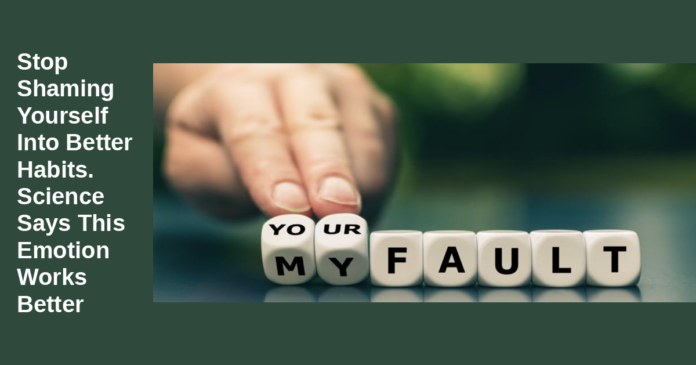
Their brief interaction actually sparked a deep collaboration where the two of them produced a new book, Leave the Lights On. In their book, they point out that positive emotions like joy are much more effective at making new habits stick than negative emotions like guilt or shame.
Why Shame Fails and Why Joy Works
Most behavior-change efforts run on “don’ts.” Don't eat too much red meat, don't skip leg day, and don't leave the lights on. The problem with this approach is that the negative emotions associated with failure may grab your attention, but that doesn’t mean that they help you solidify a new habit.
What Zhao and Dunn have found is that positive emotions like joy do help you build long-term habits. Zhao points to the first principle of behavior change, operant conditioning. In operant conditioning, when a behavior makes us feel better, “we are more likely to do it, repeat it, and do more of it,” she explained.
Dunn discovered this pattern organically in her own life. First, she noticed it in her cycling commute. Whenever she biked to work, she arrived in a better mood than when she fought her way through traffic. Then she saw it in her interactions with a previous boyfriend who, like her, was a passionate climate advocate. He would often shame her about little behaviors that were bad for the environment. For example, whenever she left a room without turning off the lights, her boyfriend would shoot her a judgmental look. She pointed out that while this did create a lot of tension and shame, it didn’t change her behavior. Zhao, whom colleagues endearingly refer to as “the human carbon calculator,” also pointed out that even if you left your lights on for the rest of your life that only maps out to the equivalent carbon emissions of 13 hamburgers.
“When people get really focused on moralizing, it's easy to lose sight of the real impact of our actions,” Dunn said. She pointed out how when moralizing is too rampant, all actions and ideas become a referendum on who you are rather than a rational look at what works.
In a recent study, Zhao found that people are much more likely to take positive actions when told to do more of a behavior as opposed to being told to stop doing a behavior. Her favorite example: “Instead of saying, ‘Eat less meat,' we say, ‘Eat more plants.'” Importantly, people who approached habit-building in this way felt happier during the process.
Dunn and Zhao’s Strategy Is A Matter Of Emotional Intelligence
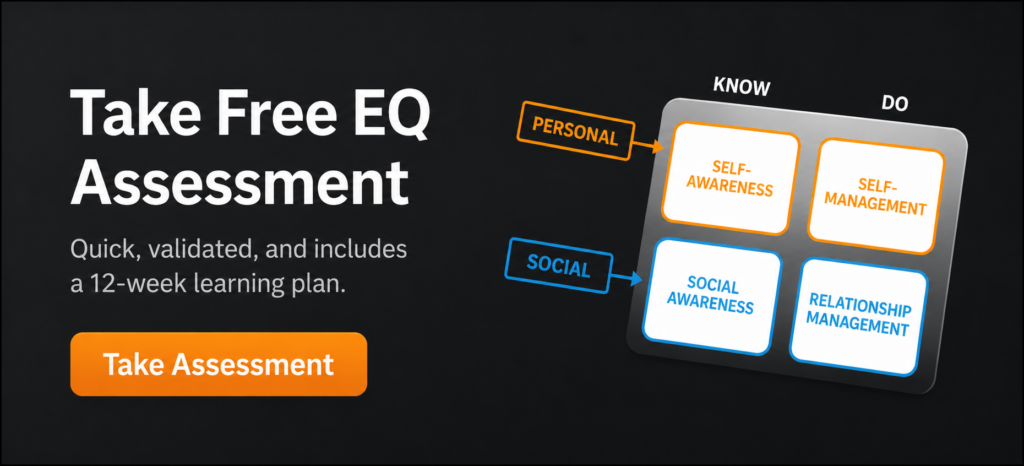
What Dunn and Zhao are doing is really an example of emotional intelligence (EI) applied to habit formation. Emotional intelligence is your ability to recognize and understand emotions in yourself and others, and your ability to use that awareness to be more effective in your relationships, work, and goals. The EI model consists of four core skills—self-awareness, self-management, social awareness, and relationship management. To get a good sense for your own emotional intelligence and self-management abilities, experts recommend that you take a validated emotional intelligence assessment.
Zhao and Dunn’s positive emotion strategy fits best into self-management, which is your ability to regulate your emotions and act on them in a way that will lead to constructive outcomes. By choosing which emotions to lean into, you can encourage your emotions to work in your favor instead of against you.
It’s tempting to think of habits as a matter of rigid discipline, but the research suggests that you should instead treat your habits as first and foremost, emotional. If a habit feels like punishment, your willpower will be fighting an uphill battle. Instead, find a way to engineer genuine positive feelings into the behavior, like Dunn cycling to work instead of braving a traffic-heavy commute. That way, your habit starts to sustain itself as your body and brain crave those good feelings.
To put this into practice, you can apply Dunn and Zhao’s method to any habit you're building. Just follow five quick steps:
- Pick one habit you want to change or start.
- Add, don't subtract. Ask what you can do more of, not less of. Meaning, don’t define your habit as something you “shouldn’t do.” Instead, define it as something you should. For example, don’t say “Stop eating meat with every meal.” Say, “Start eating more vegetables.”
- Notice the payoff. Pay attention to positive emotions that come up as you implement your new habit. Write them down if it helps.
- Remove friction. For example, Zhao “feng shuis” her fridge, moving perishables to the front where she'll see them. The result being that she hasn’t wasted a single piece of food from her fridge.
- Share it. “If I really enjoy something, I may wanna share it with others,” Dunn said. Joy recruits allies.
Putting These Ideas Into Practice
It’s easy to feel like you’re “lacking discipline” when you fail to reach your goals, but the thing you actually need is an emotional reward. Take the habit you've been forcing—the workout, the writing hour, the weekly one-on-ones—and ask Dunn's question. “How could this feel happy instead of miserable?” Answer that, and your new habit will seemingly slide right into your life.