
When Rod Branch, the author of Week Minded, 52 Reflections on Leading and Living, graduated from his Master’s in Global HR Management at age 59, a friend took him to lunch to celebrate.
Over sandwiches, his friend, a CFO, leaned back and asked a simple question: “If you could write on the back of a matchbook what you learned in graduate school, what would you write?”
Branch didn’t hesitate.
“Caring.”
The CFO laughed. Two years of school, countless hours, tuition, and late-night studying, and the takeaway was caring?
Branch leaned forward. “Let me give you an example,” he said. “What if we allowed you to hire your daughter as your assistant? She’s sitting right outside your office. What would you do to make her successful?”
The CFO didn’t hesitate. He’d introduce her to the right people. He’d have her desk set up on day one. He’d create a 30-60-90 day plan. He’d invest in her development.
“Okay,” Branch replied. “What about the accounting assistant three cubicles down? Do you know her last name? Her career goals? What she wants next?”
The CFO paused.
“What’s the only difference in how you’d treat those two people?” Branch asked. “It’s how much you care.”
In Branch’s book Week Minded and in his work as the CHRO at ARCXIS, care is the foundation from which everything else grows. “If you get caring right,” he said, “the rest of leadership gets a whole lot easier.”
This care-based approach produces measurable results at ARCXIS. Over the past few years, the company reduced its injury rate by 70% and its workers’ compensation claims by 90%. This is consistent with what I’ve heard repeatedly across more than 40 interviews with L&D leaders. Thoughtful training in EQ skills generates hard results. Research in manufacturing, for example, has shown that EQ training reduces safety incidents and improves productivity.
Here’s more on how Branch brings caring to life in his book and in his work as CHRO.
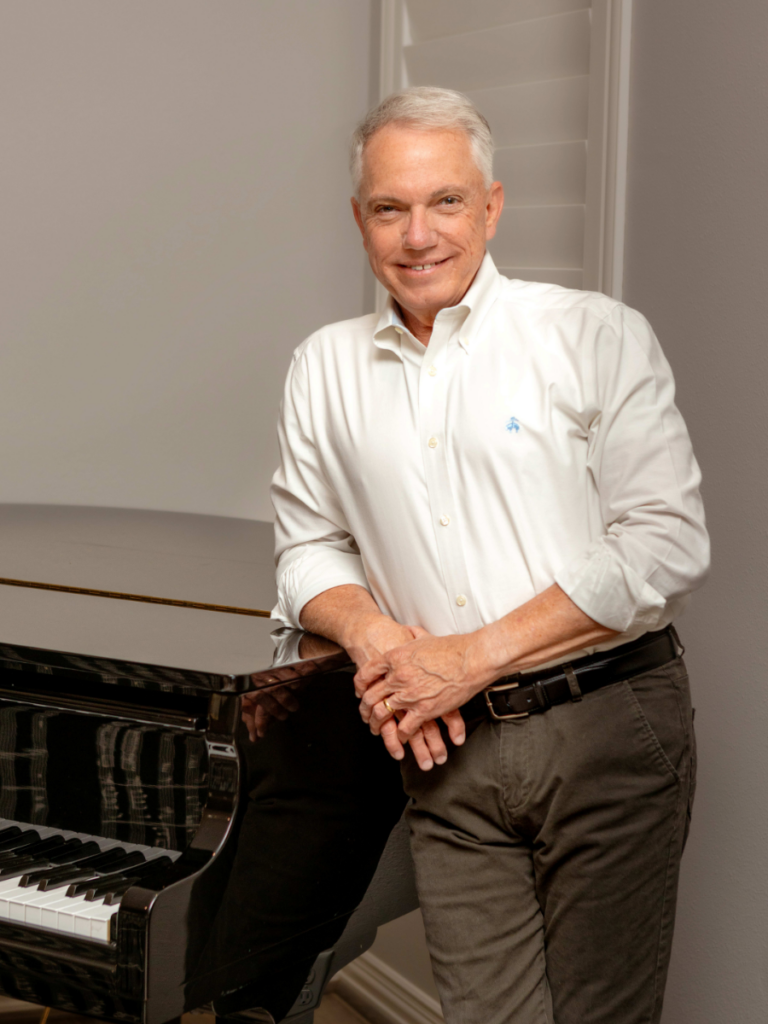
The Philosophy Behind The Practice: Week Minded
After returning to graduate school in his late fifties, Branch began posting vulnerable stories on LinkedIn—lessons from his career as an Arctic engineer, a Washington lobbyist, and now a CHRO.
Eventually, he looked up and realized he had 20 stories. Then 30. Then 52. The format of his new book is one story per week, each ending with a lesson and a journal prompt.
“We tumble through life. We have things we’re good at and things we like. We have struggles. And the struggles teach us something,” Branch said. “I’m not nostalgic about the struggles; I’m nostalgic about what the struggles teach us.”
The philosophy of caring, reflection, and storytelling that propels his book also informs how he develops leaders at ARCXIS.
The Leadership Model: Heart, Head, Team, Work, Results
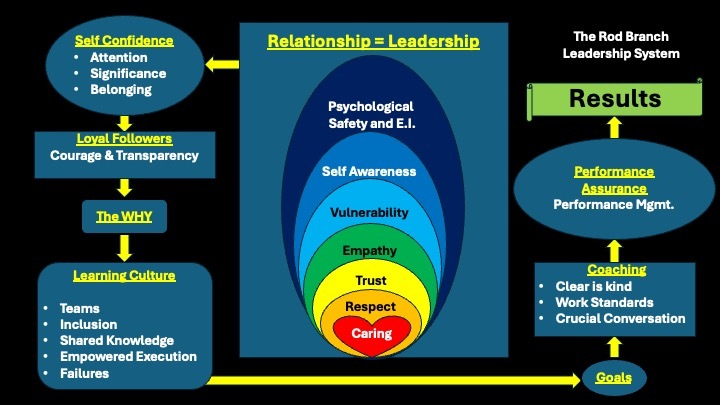
Branch’s leadership framework follows a clear progression: the heart, the head, the team, the work, and finally, the results.
Emotional intelligence shows up throughout, but especially in the first part, the “Heart.” This part of the framework is all about psychological safety. Participants learn about caring, trust, empathy, vulnerability, self-awareness, and relationship building. “We don’t explicitly label this part as emotional intelligence,” Branch explained. “But it’s certainly present throughout.”
ARCXIS operates in 27 states, providing engineering and inspections for residential homebuilders. Its 800 employees include field inspectors who spend long days alone in trucks and homes. Many have no formal education beyond high school. Others hold MBAs. It’s truly a mixed cohort.
Their leadership development program is open to everyone. They attend monthly live virtual sessions—kept to 45 minutes out of respect for field demands—along with optional book clubs and journaling exercises.
The training is story-driven and practice-driven. Real field scenarios, mistake-sharing, and problem-solving with peers.
Core to their leadership development are Marcus Buckingham’s four questions, inspired by strengths-based research:
- What did you like about your job last week?
- What did you not like?
- What are you struggling with right now?
- What does support look like from me?
“If you ask those four questions regularly as a manager,” Branch said, “you’ll know pretty quickly if someone’s disengaged.”
AI Can’t Replace The Human Touch
ARCXIS has built and adopted AI to speed up a number of administrative tasks, but Branch draws a firm line in what it can and can’t replace.
One example Branch shared was how many drivers and construction workers at ARCXIS find themselves alone for long periods of time. For example, it’s not uncommon for someone to be working alone on a site in Phoenix as the temperature gets hotter and hotter. Without intentional human connection, isolation can creep in and lead to disengagement or even depression. “You can get a text from AI that says, ‘Are you drinking enough water?’” Branch said. “But it lacks the emotion and depth of a real person who has worked in a house on a hot day, calling you to check in and ask, ‘How’s the heat out there in Arizona?’”
As AI continues to improve our work and alleviate administrative load, that will only increase the need for enduring, irreplaceable human skills like caring, connection, and emotional intelligence.
Caring Is Practical, Not Just Sentimental
After his entire Hall of Fame career, reporters asked Peyton Manning what was the most important thing he learned throughout his career. “Manning didn’t say anything about rings or trophies or even football. He said ‘relationships,’” Branch said.
Branch clearly feels the same way. In his book, Week Minded, and in his leadership development work at ARCXIS, caring and building connections drive real results. These enduring human skills form the foundation of retention, engagement, safety, and much more. And as Branch’s receipts suggest, when you train your people to care, you often train much more than you expected.