
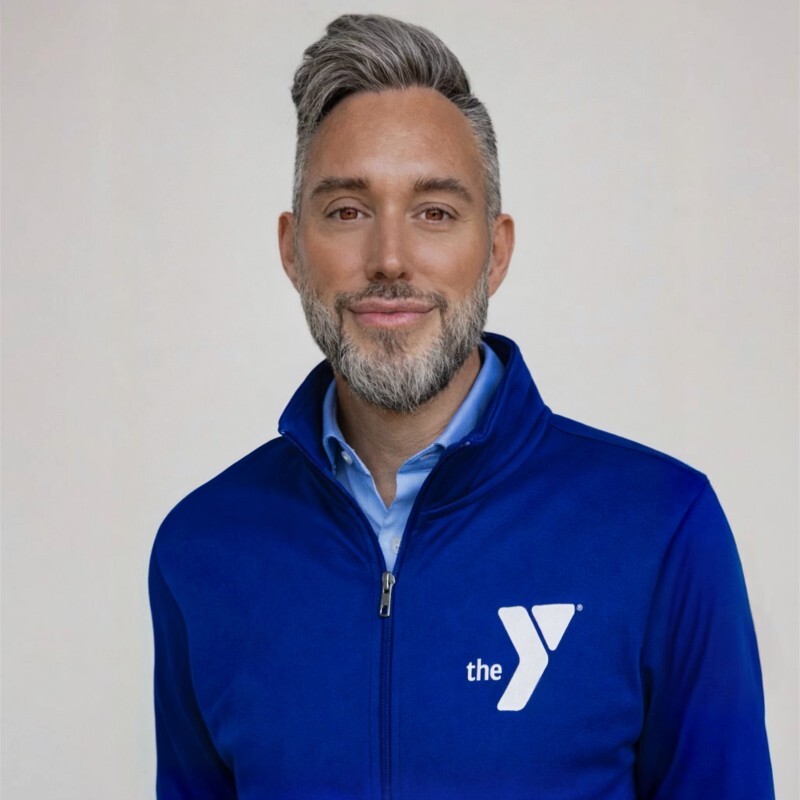
“A joke that we have at the YMCA is that when you tell people you work at the YMCA, nobody ever says they hate the YMCA,” said Kevin Patterson, the Chief People and Culture Officer of the YMCA.
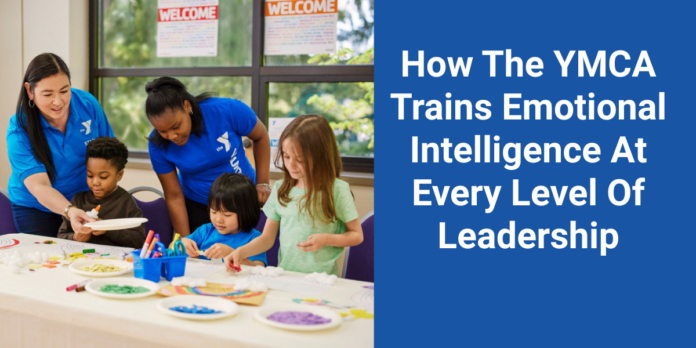
Patterson calls it a joke, but the saying gets at something deeper. Most Americans have their own positive YMCA story, whether it’s swim lessons, after-school programs, summer camp, youth sports, their family gym, or a place an older relative goes to spend quality time with their friends. Because of the Y’s commitment to making its communities better, each and every branch is beloved by its people.
The YMCA is in the relationship business, which makes emotional intelligence an operational part of everything they do. “We believe that happy employees make happy customers, and happy customers create happy communities. So, we teach our employees how to use their emotions to get the best out of others, to diffuse charged situations, to collaborate, and to create stronger relationships,” Patterson explained.
The Y is celebrating 175 years in the United States, and more than 2,600 Ys now serve 17.4 million people in 10,000 communities, including more than 6 million children and teens.
Across more than 40 interviews with L&D leaders, a pattern keeps surfacing: emotional intelligence matters most in organizations where relationships are the product. Few organizations fit that description better than the YMCA.
EQ at Scale: Tailoring EQ Training to Each Level Of Leader at the Y
Patterson distilled the YMCA’s leadership philosophy in one line: “Happy employees make happy customers, and happy customers create happy communities.”
That starts on the front lines, where many YMCA employees are young and, in some cases, in their first professional role. They work at camps, with children, and in highly visible community-facing positions. “For young people, this might be the first time that they experience conflict with an upset customer,” Patterson said. “So we teach EQ skills like de-escalation, active listening, conflict resolution, and how to take a ruptured experience and repair it.”
Leaders at the Y are expected to lead with emotional intelligence. “EQ is an expectation. We expect our leaders at the mid-level and senior level to lead their teams with care, compassion, and kindness,” he said.
Each of the Y’s branches is run by a CEO. “That CEO is really pivotal in growing the community impact,” Patterson explained. “When you talk about EQ, who that CEO is and how effective they are makes a huge difference in how beneficial we can be to that community.”
Senior mid-level leaders: Executive Directors and VPs at the Y are the hinge between strategy and the front line. “This group is the intermediary between our executive-level roles, like our CEOs, and our frontline staff. They're pivotal for not only interpreting strategy, but also driving performance. Rather than lead with “fist and fury,” they train this group to strike “a balance between accountability and kindness.”
CEO Preparatory Institute: The CEO preparatory institute trains vice presidents and executive directors to step into the CEO role. “We teach them how to be good community leaders, how to be good strategists of operations and finances, but we also teach them how to be good compassionate leaders that understand we work for a very mission-driven organization.”
New CEO Institute: Once these leaders promote to the CEO level, they go through the New CEO Institute, which helps newly sitting CEOs understand their individual communities better so they can lead with sharper judgment and stronger empathy. “In the CEO Institute, we teach leaders to understand their individual communities better so that we can exercise higher levels of emotional intelligence and really match that community.”
AI Should Free Your People Up To Spend More Time in Meaningful Work and Human-to-Human Interactions
Patterson’s a strong advocate of AI, and he has a nuanced and applied take on how it should be implemented. Core to his perspective is the idea that AI shouldn’t replace people. It should remove friction from their work, enabling them to do the more complex, passion-driven parts of their jobs.
AI is already buying back human time for Patterson and his department. Patterson said AI use has freed his team up to spend more time in focus groups, needs analysis, coaching, and feedback loops with stakeholders. “I always keep my team and myself inserted in our AI workflow to add the human aspect back to it,” he said.
He’s also blunt about the competitive risk of delay. “The people who are too wary of AI are already behind,” he said. That doesn’t mean leaders should use AI to squeeze more output from already-stretched teams. Patterson specifically warned against forgetting that people still have “thresholds and capacities and families and communities and friends.”
He advocates that leaders should use AI now to redesign work so humans can spend more time on judgment, connection, and coaching before that opportunity gap becomes harder to close.
EQ as an Operating System, Not a Buzzword
“EQ is one of those things where, if we’re not careful, we treat it as a buzzword,” he said. “But it’s a model with depth. It’s a behavioral framework that you can practice and improve. Who you are matters. Your tone matters. Your words matter. Your nonverbal presence matters. How you show up to work every day matters.”
That’s why at the YMCA, emotional intelligence is not a hot topic plug-in to leadership development. It’s the mechanism that makes their mission and community trust work at scale.