

A familiar pattern plays out every day at companies across all industries: A high-performing technical expert earns a promotion and then proceeds to struggle as a leader. Research from Gartner estimates that 60% of new managers underperform or fail within their first two years. Most often, this is because they were chosen for technical excellence and never equipped with the human skills they need to lead.
 That’s why one large U.S. organization of more than 30,000 employees—dedicated to conservation—has made emotional intelligence the centerpiece of its leadership development strategy. “Putting people in leadership positions who are the most technically skilled won’t work out if you don’t equip them with the right leadership skills,” says Hector Ortiz, a Senior Executive at the company. “They also need emotional intelligence. They need to know how to handle conflict, manage people, and understand how others react to what they say.”
The good news is that this strategy of promoting for individual capability and then training for emotional intelligence (EQ) is tried and true. As EQ expert Dr. Travis Bradberry wrote, “Unlike IQ or personality, which are largely stable over time, emotional intelligence is a skill that can be learned and improved.” With feedback and deliberate practice, anyone can make significant gains in their emotional intelligence.

How to Develop the Emotional Intelligence of Leaders: Assess, Workshop, Practice, Coach, and Repeat at Every Promotion
After realizing that technical proficiency alone wasn’t producing effective leaders, Ortiz’s organization incorporated emotional intelligence training as a core leadership competency.
Their development journey begins with assessment. Each leader completes both a 360 assessment, an EQ assessment, and a Strengths Finder assessment. “It can be a shock for people to receive their results the first time,” Ortiz says about the feedback process. “You have to go into it with humility and an open mind. It’s a process.”
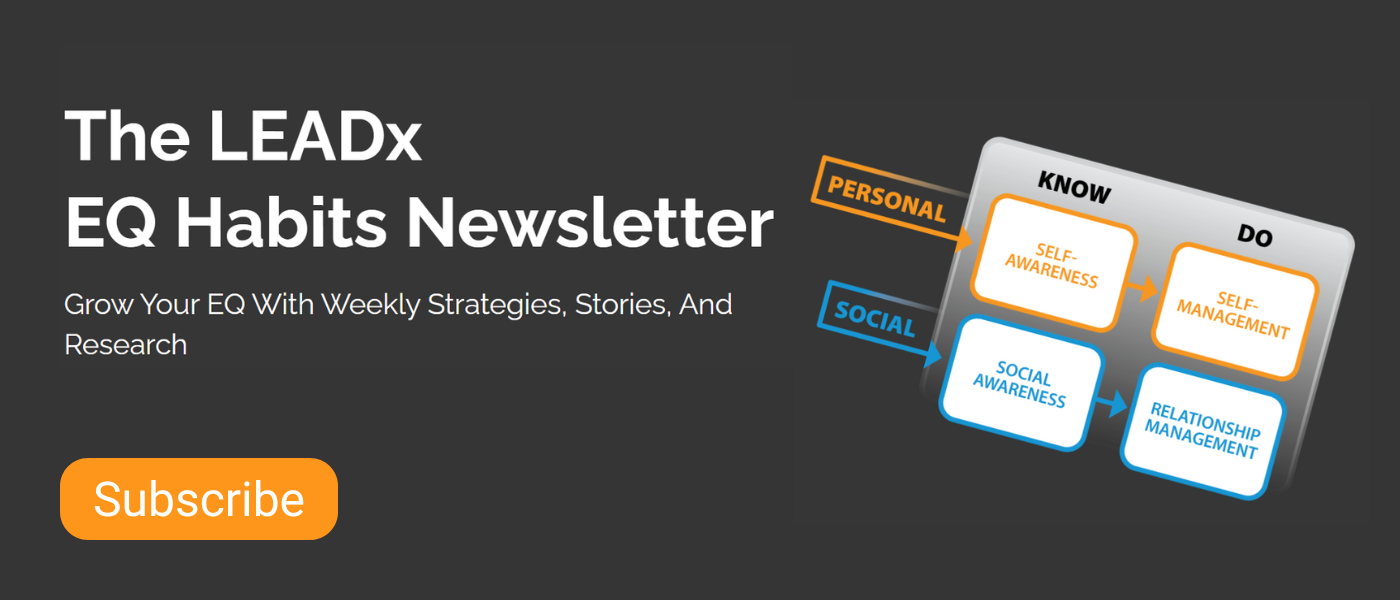
The results then form the foundation for individual development plans, which Ortiz describes as “targeted roadmaps pinpointing gaps in self-awareness, self-management, social awareness, and relationship skills.” Participants go through workshops to learn about emotional intelligence skills, then they’re paired with certified internal coaches who serve as trusted sounding boards. “When they encounter issues or problems and aren’t sure how to handle them, they have that coach there to help them navigate,” Ortiz explains.
What makes the program stand out is its sustained focus. Leaders re-test, practice, and go through coaching every time they are promoted, tracking how their emotional competencies mature with time.
This in-depth approach of assessment, workshop, practice, and coach has now reached roughly 4,000 leaders.
Lessons Every Organization Can Apply in Their EQ Training
After years of experimentation with emotional intelligence training, Ortiz and his colleagues have identified several lessons that apply to anyone trying to launch or revamp their emotional intelligence training initiatives.
1. Lead with humility. “The biggest barrier to emotional intelligence growth isn’t intelligence. It’s ego,” Ortiz says. “Sometimes you think you’re further along than you really are.” Psychologist Daniel Goleman wrote about the same observation in Working with Emotional Intelligence. He pointed out that the most successful leaders are those who embrace humility as the foundation of adaptability and growth.
2. Create space for self-reflection. Ortiz and his team encourage leaders to pause before reacting. “My favorite strategy,” Ortiz said, “is taking things in without reacting right away. Give yourself time to process before formulating your response.” The strategy is simple in concept but makes a world of difference when an organization’s leaders all start to implement it.
3. Make learning continuous. Leaders here aren’t certified and sent on their way; they’re re-tested, re-coached, and re-challenged as they advance. “People call it emotional intelligence,” Ortiz says. “I call it maturity.” His point being (and there’s ample research to back this), emotional intelligence naturally progresses through time and life experience. The goal of the trainer then is to accelerate this process.
The Future of Emotional Intelligence Training: In-Depth and Intensive
When asked to imagine the future of EQ training, Ortiz doesn’t hesitate. “I’d run a six-week emotional intelligence bootcamp. You’d live there, eat there, breathe emotional intelligence, and you’d come out an emotional intelligence machine.” It’s a bold idea, but one that reflects the gravity this skillset deserves. Let’s not forget, after all, that over 60% of first-time leaders fail within two years. If companies knew they could reverse this number with an intensive bootcamp, most would jump at the opportunity.
As Ortiz said, “The most technically skilled person doesn’t always make the best leader, but with emotional intelligence, they can become one.”