

The café hums with energy, a steady rhythm of voices and clinking cups. The line stretches to the sidewalk, a clear sign that lunchtime had arrived. Inside, the air is thick with the scent of fresh coffee and the quiet urgency of a busy day.
At the register, a customer is asking questions about the ingredients in a sandwich while nearby, a new team member is learning how to make a latte while a coworker helps. People are waiting, and the pressure is starting to build.
It’s the Assistant Manager who manages to keep the whole moment from tipping over. She smiles and reassures waiting guests: “We’ll be right with you.” She trusts her teammate to support the new hire at the espresso machine while she takes customer orders at the register. She stays calm, steady, patient, and helpful.
Scenes like this play out every day in food service. What often looks like “grace under pressure” is emotional intelligence (EQ) in action. And research shows it matters: when service providers display high emotional intelligence, customer satisfaction increases even in complex, high-demand situations.
It’s exactly why emotional intelligence sits at the center of leadership development at Grand Central Bakery, an artisan bakery in the Pacific Northwest with 430 employees across 12 cafés, bread production, and commissary facilities in Seattle and Portland. Grand Central is a certified B Corp and a values-driven employer. To learn more about how they’re training emotional intelligence to their leaders, I had the chance to interview the company’s Head of People, Samantha Kennen.
“Emotional intelligence kept coming up again and again as foundational at Grand Central,” Kennen told me. “The ability to understand how you’re feeling—and act appropriately on it—is essential in our work.”

Why Emotional Intelligence Is A Critical Leadership Skill at Grand Central Bakery
Kennen and her team spent the past year asking frontline supervisors, managers, and senior leaders a simple question: What do our people need most to succeed?
The answers: self-awareness, self-management, the ability to stay calm under pressure, and human connection. All signs pointed to emotional intelligence. “EQ really is the foundational piece of leadership,” Kennen said. “Once you start managing teams, it shapes every conversation you have.”
Grand Central operates two distinct lines of business:
Retail Cafés: Fast, unpredictable, high customer contact. “Retail work is incredibly unpredictable. We need to give people skills to be present in the moment and feel confident they can address anything thrown their way,” Kennen explained. These leads and assistant managers spend their days:
- Navigating a rush of customers
- Handling complaints or confusion about orders
- Training new employees
- Regulating their emotions to stay calm and provide outstanding customer service
Wholesale Production: Long-term emotional dynamics and relationship building. Production teams are small, often 8–10 people, who work closely together for years. “If there’s conflict, you’re going to see that coworker again the next day,” Kennen said. “You need to be able to name emotions, reflect on them, and move forward with mutual respect.” Essential emotional intelligence skills include:
- The ability to name emotions and frustrations out loud
- Navigating difficult conversations
- Building long-term relationships
- Setting team norms and holding each other accountable in a gentle, respectful way
Inside Their Emotional Intelligence Training: Practical By Design
Kennen and her team deliver emotional intelligence training in their Introduction to Leadership course, which is aimed at folks early in their leadership career at Grand Central. Every participant receives a copy of Travis Bradberry’s The New Emotional Intelligence and his Emotional Intelligence Test. “Bradberry’s book is almost like a choose your own adventure,” Kennen said. “If someone’s struggling with self-management, for example, they can flip to that section and pick from over a dozen emotional intelligence strategies to find the one that fits how they’re looking to develop.”
During this course, Kennen employs several thoughtfully designed emotional intelligence exercises. A few she shared include:
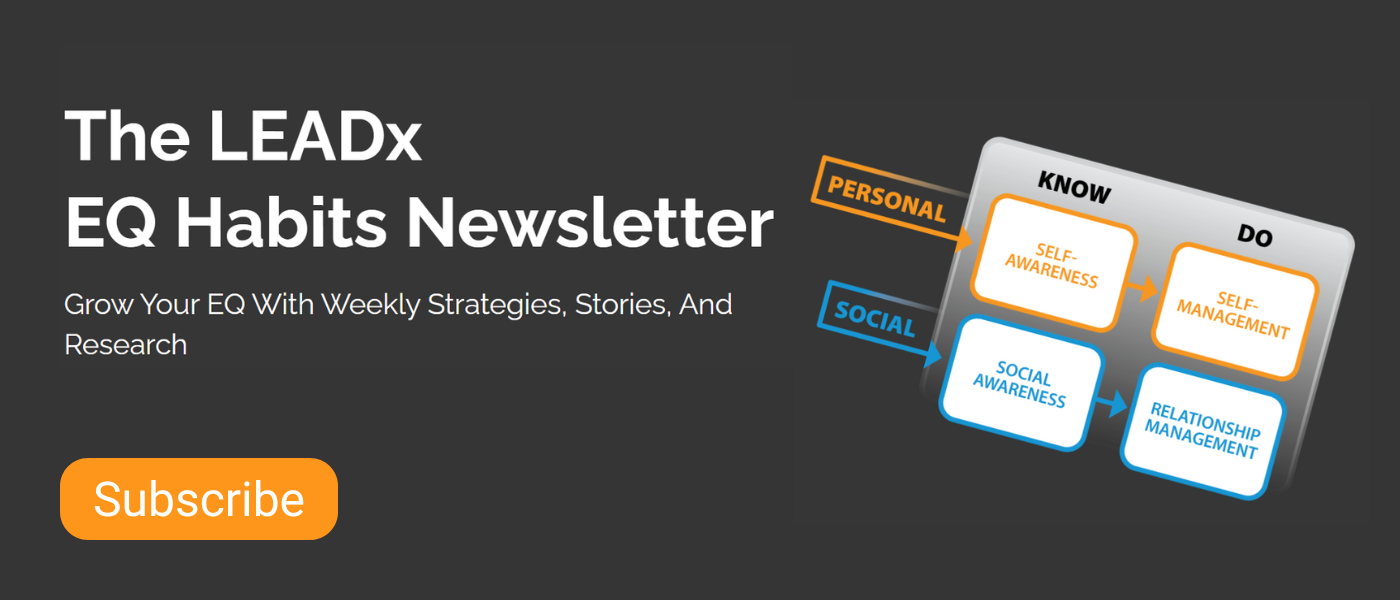
- Graphing Out Scores across the Four Quadrants. At the start of each workshop, Kennen places four giant posters on the wall, one for each of the four core emotional intelligence skills. Participants place colored sticky notes corresponding to their highest-scoring area on the assessment. “For our retail workers, relationship management almost always tops the chart as a strength,” she said. “Seeing this mapped out as a group opens the door to great conversations.”
- The Emotion Identification Drill. Each person receives an emotion on a notecard: frustration, excitement, disappointment, irritation, and so on. In partners, one person says a neutral phrase using that emotional tone while their partner tries to guess the emotion via their tone. “Frustration and anger can be indistinguishable without good awareness,” Kennen noted. “The exercise shows just how hard it is to accurately read someone else.”
- Coaching With Emotional Intelligence: See-It-Say-It, The Two-Minute Challenge, and GROW. Kennen’s team trains several frameworks to help leaders coach their team members. These include:
- See It / Say It, which simply says if you see someone doing great work, you should call it out.
- The Two-Minute Challenge is a method to help leaders engage their team members in a micro-coaching moment by reminding them of an expectation and leaving them the space and time they need to suggest a solution on their own.
- The GROW Model stands for Goal, Reality, Options, and Will. And it’s essentially a structure new leaders can follow to help them guide important coaching conversations.
For early leaders, these coaching frameworks help make leaders more confident in holding coaching conversations until the models become second nature.
Samantha’s Personal EQ Journey
Early in her career in her 20s, Kennen struggled with a problem many can relate to: She took every piece of constructive feedback personally. “When I received constructive feedback, I would usually think my job was in jeopardy,” she said. “Twenty-year-old me was always worried.”
Her introduction to emotional intelligence changed that. She realized after taking an emotional intelligence assessment that how she received and responded to feedback was an important part of how she was perceived by others. And most importantly, she realized that EQ was a developable skill that she could improve with practice. “I realized that these EQ numbers don’t define who I am, and that they’re not fixed,” she said.
Her go-to strategy today is daily reflection and journaling. Each day she writes simple notes on one positive thing, one hard thing, why her day felt the way it did, and what she wants tomorrow to look like. It’s a grounding practice and one that she can look back on to find patterns in her emotional intelligence.
3 Pieces of Practical Advice For Anyone Beginning EQ Training
Based on her experience delivering emotional intelligence, Kennen’s guidance for others is straightforward:
- Start with self-awareness. It’s the easiest entry point and the most foundational skill.
- Use simple, no-cost exercises. Tone, body language, and emotion naming. Exercises in these areas are accessible and make up the foundation of EQ skills.
- Don’t overwhelm people. EQ includes an extensive body of academic work and theory. Start small. Simplify for your audience and layer in new skills over time. “There’s so much there that you can get overwhelmed fast,” Kennen said. “Start with the basics. Keep it simple. Then build.”
Emotional Intelligence: The Hidden Advantage for On-The-Floor Leaders
Grand Central Bakery is an organization driven by a commitment to delivering outstanding customer service and delicious products, which requires strong teamwork and adaptability. In comes emotional intelligence. EQ training helps leaders develop their capacity to recognize, understand, and manage their own emotions (self-awareness and self-management), and to recognize the emotions and needs of others (social awareness). These skills enable teams to work effectively together and create exceptional experiences for every customer.