

The Ultimate Guide to Daniel Goleman's Emotional Intelligence Test
AI is rapidly automating routine knowledge tasks. What remains unmistakably human is how you show up. Your presence under pressure, your ability to read a room, and how your behavior lifts others up and inspires them. In other words, your emotional intelligence (EQ). Daniel Goleman has long called emotional intelligence the sine qua non of leadership, and in an AI-saturated workplace that EQ edge only grows. Perhaps that’s why EQ certification programs are rising in popularity for L&D professionals and coaches.
Note: You’ll see different emotional intelligence tools online. This guide refers to the LEADx Emotional Intelligence Test™, built on Daniel Goleman’s four-box model and designed for measurable improvement with habit coaching and free re-tests.
Introduction to Daniel Goleman’s Emotional Intelligence Appraisal
In Daniel Goleman’s framework, emotional intelligence is the capacity to recognize emotions in yourself and others and to use that awareness to guide your actions and relationships. The model organizes into four core skills—self-awareness, self-management, social awareness, and relationship management—that translate cleanly from theory to daily leadership behavior.
The four-box model at a glance:
- Self-awareness: noticing and accurately labeling your emotions so you can choose a response.
- Self-management: regulating impulses, staying composed under stress, and turning insight into productive action.
- Social awareness: reading context and practicing empathy to understand others.
- Relationship management: influencing with care, resolving conflict, and strengthening trust over time.
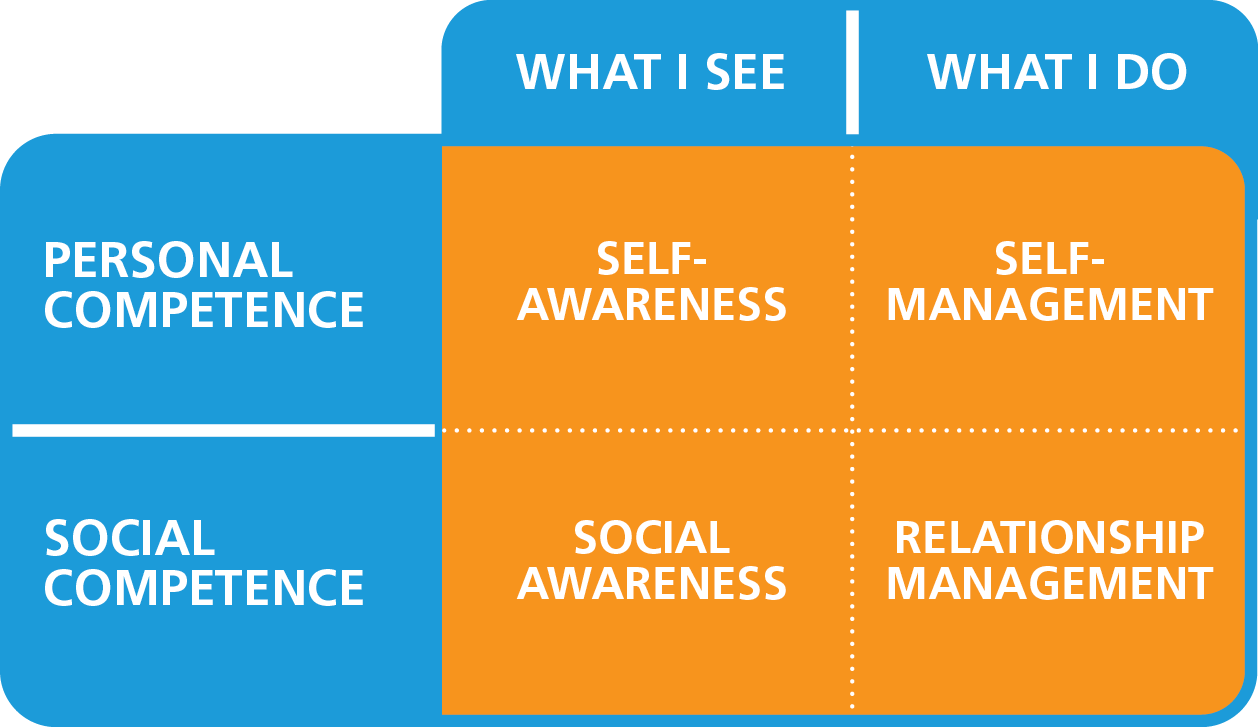
Goleman emphasizes that each of these core skills is learnable. They aren’t fixed traits. You can build them with deliberate practice. That’s exactly why a practical appraisal is so valuable: it gives you a baseline, language for your strengths and gaps, and a roadmap for targeted improvement.
Why keep it to four? Many assessments sprawl into dozens of traits that are hard to remember and even harder to coach. The four domains create a shared language leaders actually use. They also align with how people build habits: simple targets, practiced consistently.
As Daniel Goleman has noted, organizations now have years of evidence connecting emotionally intelligent leadership with performance: there’s a direct correlation between emotional intelligence at all leadership levels and how the organization performs, by nearly any metric.
Overview of the LEADx Emotional Intelligence Test™
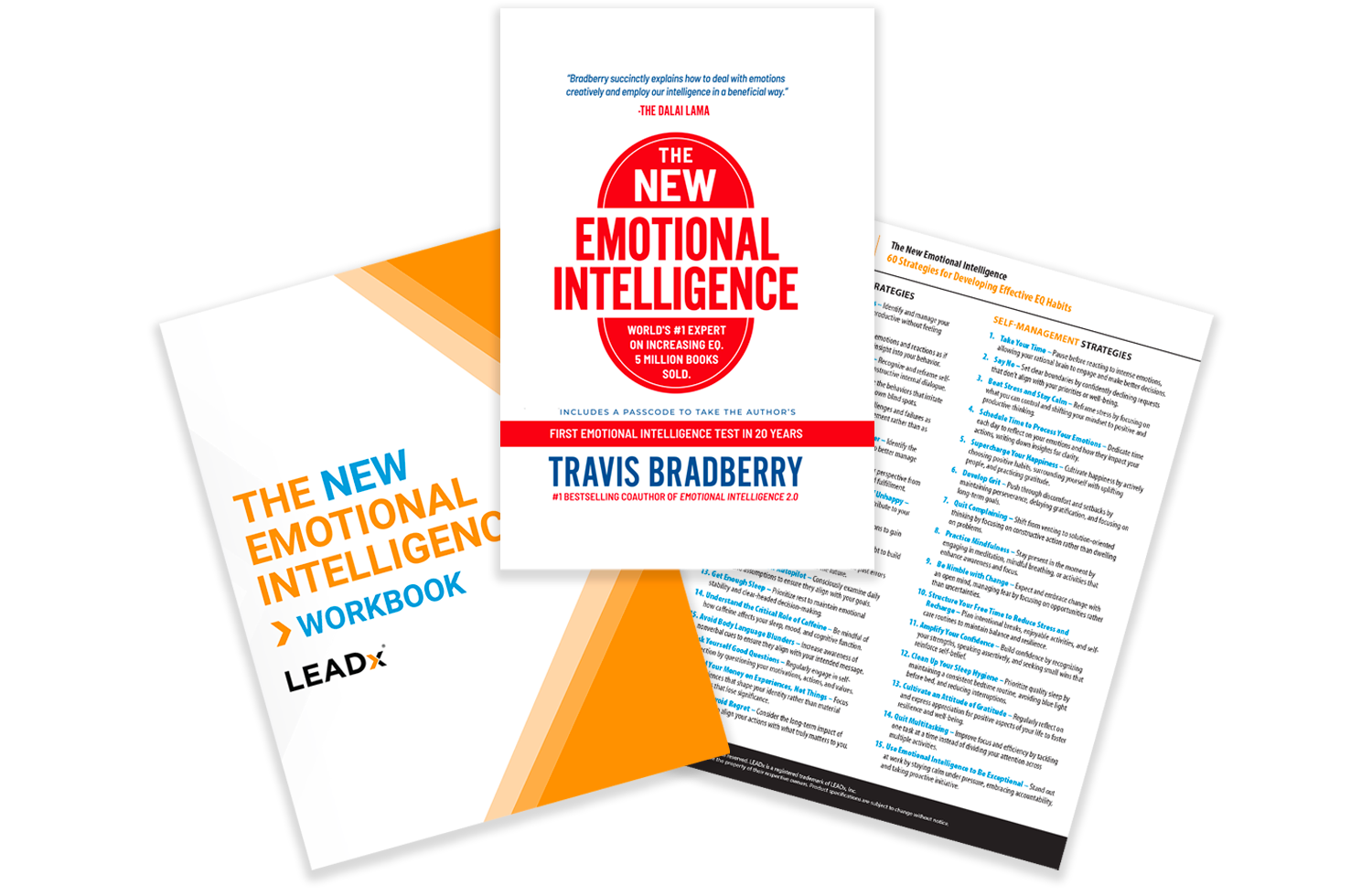
The LEADx Emotional Intelligence Test™ is aligned with Goleman’s four domains and designed by Dr. Travis Bradberry. It provides an overall EQ score and sub-scores for each of the four core EQ skills, along with guidance that turns insight into daily habits. After nearly 20 years of feedback and millions of users on his previous assessment, Dr. Travis Bradberry designed the Emotional Intelligence Test with several key ideas top of mind:
- Built for development. Your report includes a coaching plan that shows each skill in action, so you can connect results to specific behaviors.
- Right length, real behaviors. The assessment has 45 items (takes about 10-15 minutes to complete) and is focused on work-relevant behaviors across the four boxes. The test is long enough to cover 45 different behaviors, but also short enough to finish between meetings.
- Hard to game. Scale design encourages candid answers, giving you a trustworthy baseline for improvement.
- Validated and normed. Scores are compared to a large sample so you see where you stand.
- Close the loop. You can re-test after practice to track gains and receive updated recommendations.
Bottom line: leaders don’t need a 19- or 30-dimension maze. Start with the four boxes, measure the behaviors that matter, then train the habits.
Bonus note: For the most accurate, in-depth picture of your emotional intelligence, consider taking or administering a 360 version. By having other people rate you on each emotional intelligence behavior, you’ll get a much fuller, more accurate picture of where you stand.
Goleman’s Four Domains at Work (Skimmable Table)
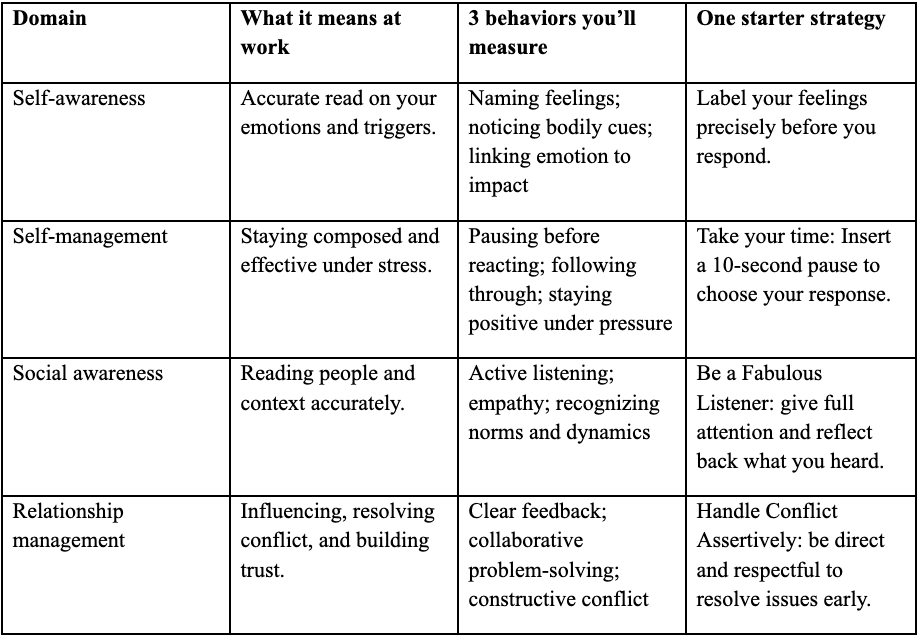
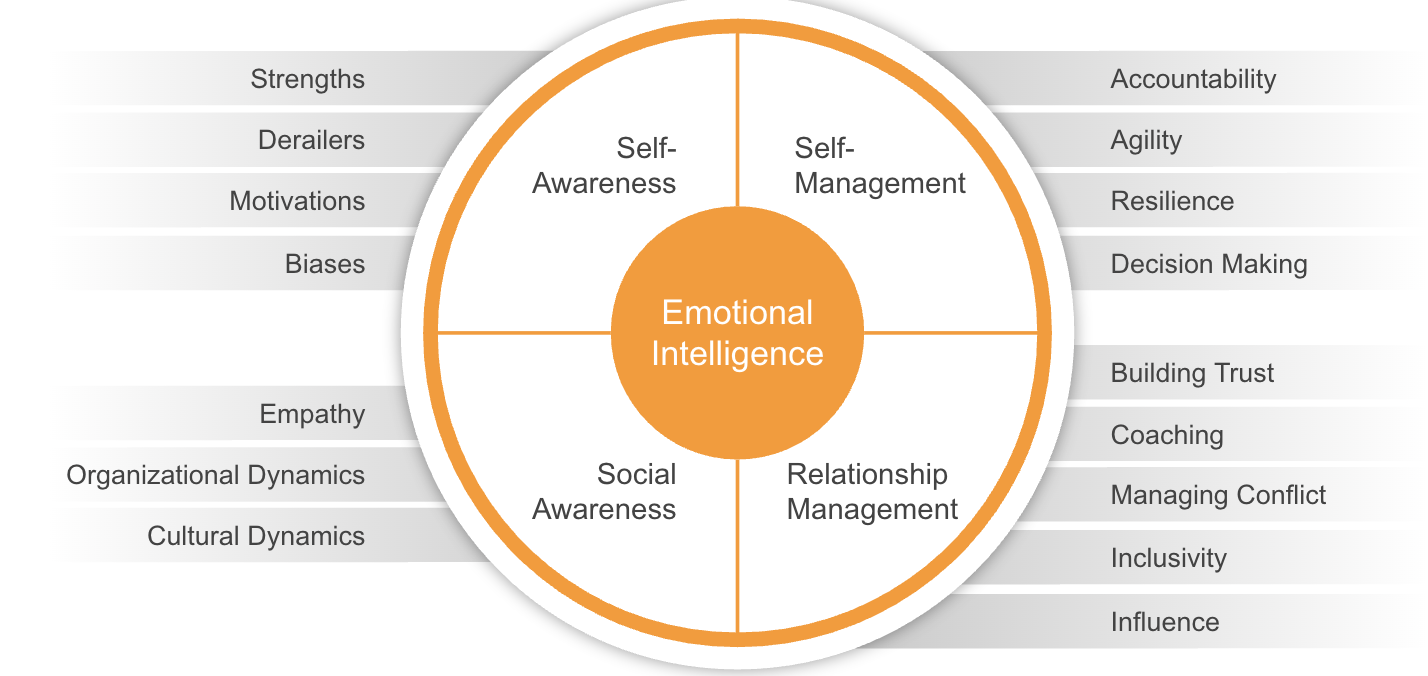
And remember, your practice on each of the four domains impacts a number of essential skills:
How to Take the Test (How‑To)
- Block 15 minutes.
- Answer from specific recent situations, not wishful thinking.
- Be candid—development beats “perfect scores.”
- Review your coaching plan and pick three habits to practice.
- Practice for 3–6 months, then re-test to track gains.
Understanding Your Results: From Scores to Daily Habits
Your profile shows overall EQ and the four core skills. Start with your lowest skill as the first focus area (with one strategic exception: if all scores are low and relationship management is lowest, build the other three first). Choose three strategies to practice until they’re automatic, ideally with an accountability partner who gives you live feedback.
Neuro-wise, this is how change sticks. As Bradberry writes in The New Emotional Intelligence, “neurons that fire together, wire together.” Repetition turns the right behaviors into your default. Each time you practice a strategy, you emphasize that new, better path in your brain. Each time it gets a little bit easier and more automatic.
Strategies for Improvement: 12 Strategies You Can Use Today
Below are three high-leverage strategies per core skill pulled from LEADx’s library of 60 EQ strategies. Use these to get started, then let your report recommend the next set.
Self-Awareness
- Label Your Feelings: name emotions precisely to reduce noise and choose your response.
- Defeat Negative Self-Talk: catch and reframe distortions before they drive behavior.
- Develop a Growth Mindset: treat setbacks as data for improvement.
Self-Management
- Take Your Time: insert a pause so your rational brain can engage.
- Practice Mindfulness: build presence with brief breathing or awareness drills.
- Quit Multitasking: single-task to increase control and reduce errors.
Social Awareness
- Be a Fabulous Listener: give full attention and reflect back what you heard.
- Read Body Language with Precision: align nonverbal and verbal signals.
- See the World Through Their Eyes: ask questions to surface motivations.
Relationship Management
- Handle Conflict Assertively: be direct and respectful to resolve issues early.
- Express Appreciation Often: let people know how you feel about them to strengthen trust.
- Use Repairs: when things go sideways, take responsibility and reset the tone.
Case Examples (Evidence-Based Approaches That Work
Countless studies have linked emotional intelligence to improved performance. There’s no one way to use the emotional intelligence test. Below are three different training recommendations from Daniel Goleman in a recent LEADx interview about his latest book, Optimal.
Ideal‑Self Mapping at Case Western: Leaders start by crafting a vivid picture of who they hope to be in five years. They gather honest multi‑rater feedback, compare it to that vision, then run small, coached experiments. This Intentional Change Theory approach shows durable gains because it links purpose to daily practice.
Leader Learning Circles: Cross‑company groups meet monthly to workshop a live challenge. The format—story, parallels, practical next moves—builds listening, perspective‑taking, and calmer decision‑making through repetition and social accountability.
Competency Sprints with Daily Reps: Teams rotate through the four domains, one per session, with short daily exercises between meetings. Spaced, specific practice improves skills faster than one‑off workshops.
FAQs about the Emotional Intelligence Appraisal Test
Can I take Daniel Goleman’s emotional intelligence appraisal test online?
Yes. The LEADx Emotional Intelligence Test™ uses Goleman’s four-box model and takes about 15 minutes. You’ll receive a report plus a coaching plan and can re-test indefinitely for free.
Is emotional intelligence fixed or learnable?
Learnable. The four domains map to behaviors you can practice. The test pairs results with specific habits to build each skill.
How often should I re-test?
Assuming you’re practicing, you can re-test every 3–6 months. Practice targeted strategies, then re-test to track gains and update your plan.
Next Steps
Curious which EQ assessment fits your team? Set up a strategy call to learn more.