
Few industries have faced more turbulence in the last two decades than hospitality. From the Great Recession of 2008 to the COVID-19 pandemic and the growing frequency of natural disasters, hotels and resorts have been tested by fear, loss, and uncertainty.
 Numerous studies prove what great hospitality leaders have long known: emotional intelligence makes all the difference. According to Dr. Travis Bradberry, “Emotional intelligence (EQ) is your ability to recognize and understand emotions in yourself and others, and your ability to use this awareness to manage your behavior and relationships.” Multiple studies link frontline staff’s EQ to improved service quality and guest satisfaction. For example, one field study collected data from 63 hotel employees and 326 customers and found that a service employee’s EQ positively influences customers’ evaluations of service quality to a large degree. In a 2024 study, data showed that employees high in EQ reported stronger levels of employee engagement and had less turnover.
A Living Legacy in the Blue Ridge Mountains
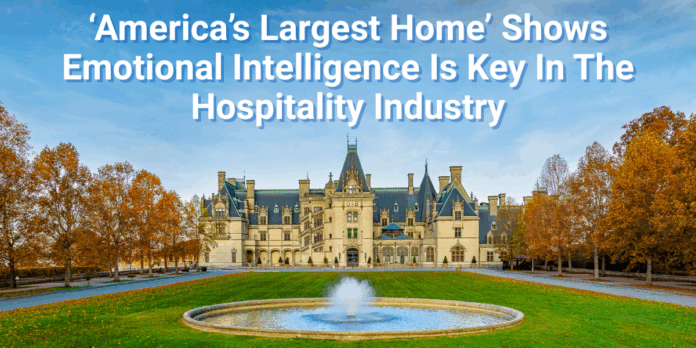
A great example of EQ in action comes from one of America’s most historic properties: the Biltmore Estate in Asheville, North Carolina. Built in 1895 by George Vanderbilt, the 250-room French chateau anchors an 8,000-acre working estate with gardens, farmland, and a renowned winery.
Still owned by descendants of the Vanderbilt family, Biltmore’s mission is “the preservation of Biltmore as a privately-owned, profitable, working estate.” That mission continues to guide its 1,700 employees and serves as a compass during times of uncertainty.
Emotional Intelligence As Everyday Culture
At Biltmore, emotional intelligence is woven into the daily fabric of the business. Anna Sullins, the company’s Director of Learning and Development, said, “Considering we are in the hospitality industry, emotional intelligence is just integral to what we do. It’s got to be part of our culture.”

The foundation of all emotional intelligence is caring and respect. That belief shapes how people interact across the estate, from the front line to the executive suite. Employees even refer to one another as internal guests. “We want to treat people like they’re guests in our home—with that kind of care and intention,” said Sullins.
Teaching EQ From the Top
At Biltmore, emotional intelligence training isn’t just another HR initiative—it’s a leadership imperative. The company offers an eleven-course leadership series for managers and directors that builds both skills and self-awareness. What makes it stand out is that one of the cornerstone courses, Social and Emotional Intelligence, isn’t led by HR or an outside consultant. It’s personally taught by the company’s Executive Officer, Stephen Watson.
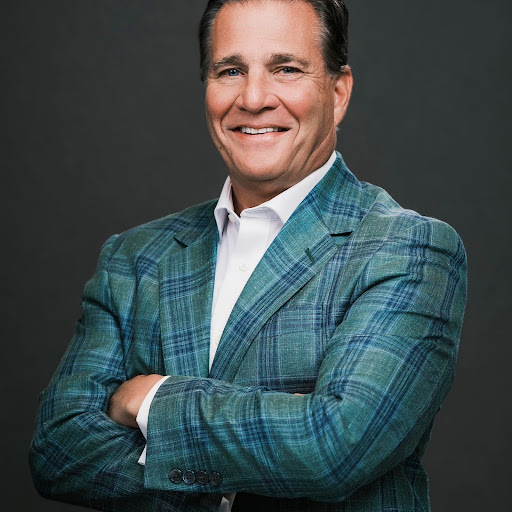
That level of executive involvement is rare. Few organizations have a senior leader step out of the boardroom to personally guide colleagues through the principles of self-awareness, self-management, social awareness, and managing relationships. “I’ve been teaching it for 15 years,” said Watson. “I absolutely love it.” His presence in the classroom sends a clear message: EQ isn’t optional. It’s central to performance, culture, and the company’s mission.
Watson draws from real-world experience rather than theory. “We use real examples like the Great Recession, the pandemic, and Hurricane Helene,” he said. “During the pandemic, the principal emotion was fear. We were all afraid—afraid of getting sick or harming someone else. So we talk about fear, and we also talk about faith—not in a religious sense, but a positive view of the future.” His credibility and candor give the training weight, showing leaders how emotional intelligence can steady a team through uncertainty and help them preserve both profit and purpose.
He keeps the sessions highly interactive, using the Socratic method instead of long lectures. “The class used to be four hours, and you’d see people in the back nodding off,” Watson joked in our conversation. Now he minimizes his teaching time and breaks participants into small groups of four or five. Each group discusses real scenarios and presents their insights to the class. This approach transforms the workshop from a lesson into a dialogue—one where employees connect Biltmore’s values to their own emotions, decisions, and leadership challenges.
Calm Is Contagious
Watson believes the most important emotional intelligence strategy is to remain non-reactive, especially in times of crisis. “I refuse to show any emotion. I refuse to speak until I can think about it,” he said. “If the worst news in the world hits you, just be quiet. See the problem as it is—no worse, no better. Then come back and ask, how can this benefit?”
That discipline helped the organization navigate the pandemic with remarkable results. “We were shut down for nine weeks,” Watson said. “I thought we were going to be destroyed. But we cut our throughput to one-fourth and actually became more successful. The pandemic years ended up being our best years ever, and it prepared us financially for the hurricane.”
A Culture Rooted in Connection
At Biltmore, emotional intelligence is more than a leadership topic. It’s the system that sustains a century-old mission. “Every single employee really understands our mission statement,” Watson said. “It’s to keep Biltmore open to the public, in pristine condition, and owned by the descendants of George Vanderbilt.”
That purpose unites the team and powers the culture of care that has kept the estate thriving through recessions, pandemics, and hurricanes. In a world where technology changes faster than people do, Biltmore’s quiet advantage remains timeless: leading with emotional intelligence.