
Imagine your company has a new hire on one of your mining sites. He’s walking the grounds when he notices an unusual object in the sand. It appears to be a pottery shard, which means it could be an Indigenous artifact. He’s not sure, though, and he’s new. He also knows that pointing out a potential artifact will halt production. Does he speak up and point it out?
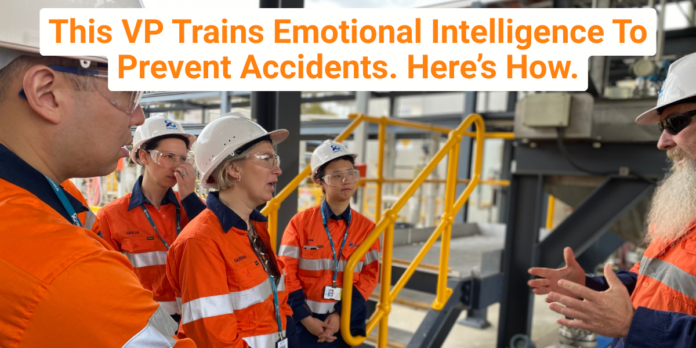
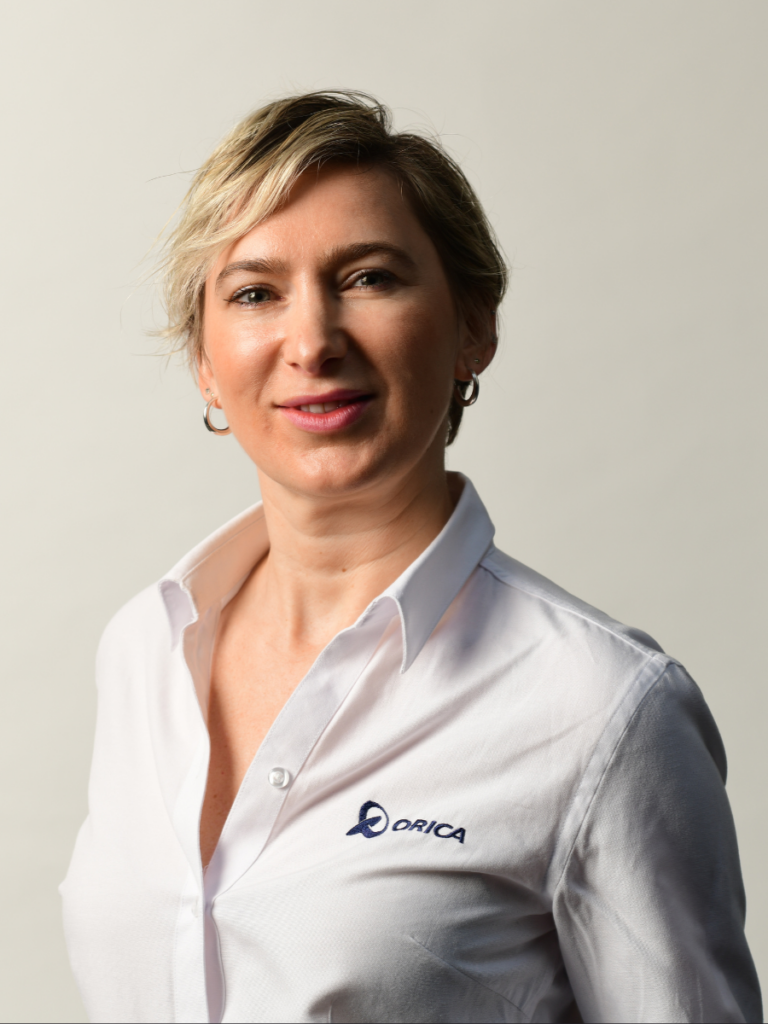
For Sarah Van Helden, Vice President of Organizational Capabilities at the mining and infrastructure solutions company Orica, this hypothetical moment captures exactly why emotional intelligence (EQ) isn’t a “nice to have” or a “soft skill.” EQ helps create an environment where people are comfortable speaking up. EQ helps individuals assert themselves and their values. And EQ drives quality decision-making even in moments of high pressure.
“The question isn’t whether we have safety policies,” Van Helden says (because of course, they do). “It’s whether someone feels safe enough, confident enough, and clear enough in that moment to say something and stop work from happening.”
That’s where emotional intelligence (EQ) comes in. Research in manufacturing settings shows that emotional intelligence training for leaders has been linked to a 50% reduction in lost-time accidents, dramatic drops in formal grievances, and meaningful productivity gains.
At Orica, Van Helden and her team have built an approach to emotional intelligence that starts with that reality top of mind. Emotional intelligence is treated as core infrastructure for safety and decision-making.
EQ From New Hire Onward: Orica Embeds EQ End-to-End
To establish emotional intelligence as a core piece of infrastructure for safety and decision-making, Van Helden and her team have embedded it into every aspect of a person’s journey through the organization.
It starts in talent acquisition, especially at the senior leader level. Because of their high-stakes environment, Orica’s hiring assessment looks at how senior leaders are inclined to behave under pressure. The assessment results help hiring teams glean a fuller picture of how candidates respond in ambiguous and tense moments. “We’re looking at how people actually behave when there’s pressure,” Van Helden explained. “Because that’s when safety and judgment matter most.”
From there, Van Helden’s team reinforces EQ throughout the development journey. They don’t introduce it as an abstract concept. It’s one of their core five leadership values. Leaders complete 360 evaluations of their emotional intelligence and track their progress on key behaviors. “The 360 gives people very real feedback on how they show up,” Van Helden told me. “And that awareness becomes the jumping off point for development.”
Those insights are supported through workshops and, just as importantly, through peer accountability and mentorship programs.
Because EQ is embedded to this extent, it acts as a kind of shared framework and vocabulary across the organization. Van Helden is intentional about what she calls the “democratization” of emotional intelligence. “Emotional intelligence can’t just live at the top,” she explained. “If EQ is how we stay safe and make good decisions, then everyone needs access to it, and everyone needs to be held to it.”
Emotional Intelligence as Risk Management in Action
Orica workers operate in challenging environments, often facing extreme temperatures and remote locations. Data shows most incidents stem from situational factors, not communication or cultural issues. Emotional intelligence helps teams handle stress and hesitation, supporting Orica’s strong safety culture.
Emotional intelligence helps people navigate those complex moments with more intention. “When leaders can regulate themselves, especially under stress, it completely changes what other people are willing to say,” Van Helden said. She pointed to how a leader’s response in a potentially dangerous situation can determine whether future concerns surface at all. Leaders can set a completely different tone when they show curiosity instead of defensiveness, calm instead of urgency, and ask questions instead of judging.
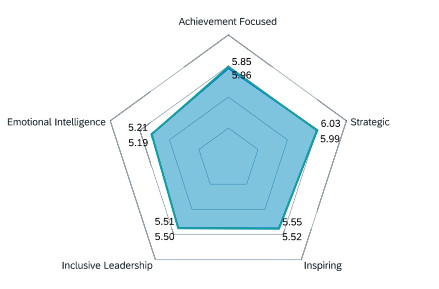
As a company, Orica has been measuring the emotional intelligence of all of their leaders using a yearly 360 assessment. With their tactic of hiring, measurement, training, and learning reinforcement, they consistently see their emotional intelligence scores exceed the industry standards in both Manufacturing and Mining.
EQ for the AI Era
Van Helden summed up the state of EQ in the AI Era nicely by simply saying, “It’s now finally cool to talk about EQ.” Her point? Emotional Intelligence is being called out in numerous frameworks as the key skill for the future alongside other enduring human skills like creativity and critical thinking. “It is part of our AI workforce transformation strategy to keep the focus on the leadership traits that include these human skills alongside digital fluency skills,” Van Helden explained. “Human and digital can only lead to amplified impact when leveraging each other.”
As Orica continues to scale its EQ development, Van Helden sees AI playing a very specific supporting role. The challenge with democratizing emotional intelligence development, she pointed out, isn’t belief that it works. It’s access to quality opportunities to practice and get support.
“People don’t want to click five times and then go read something,” she said. “They want to be able to talk directly to Copilot. They want personalized support in the moment.” Used well, she envisions AI acting as a low-friction coach, helping leaders prepare for difficult conversations, reflect on interactions, and reinforce learning between workshops.
“EQ only works if people can actually practice it,” Van Helden explained. “And anything that helps remove barriers to practice helps a lot.”
Emotional Intelligence Builds Relationships Across Job Types, Cultures, and Customers
Orica has job architecture of 793 different positions, filled by 14,000 people across more than 50 countries. “As a diverse, matrixed organization, relationship building is the key to orchestrating success both internally from team to team around the world, and externally with our customers,” Van Helden explained.
Van Helden’s 3 Lessons on Developing Emotional Intelligence
After more than five years of work building EQ into a complex, global organization, Van Helden is clear about what actually makes EQ training work.
First, it has to fit your context. For Orica, that context is safety and decision-making. Van Helden recommended asking one brilliant question to get at the heart of your context: “What would go wrong if emotional intelligence isn’t supported?” She elaborated on this question saying, “If you can’t connect EQ to the real risks and realities of the business, it won’t stick.”
Second, it has to be democratized. Emotional intelligence can’t be reserved for high potentials or senior leaders. It has to become a shared language that shows up in feedback, performance conversations, and day-to-day decisions. “When everyone understands and is measured on what good emotional intelligence looks like, it creates consistency across the organization,” she said.
Third, people need the capacity to practice. Leaders need time, reinforcement, and psychological permission to try new behaviors, get it wrong, and improve, she explained. “One-off training doesn’t change behavior,” she said. “Practice does.”
What Happens When You Tie EQ to What Truly Matters
The mining-site scenario of finding an artifact on site is hypothetical, but the type of high-pressure, uncomfortable decision it represents is real and repeated every day across industries like manufacturing, health care, first responders, and many others.
For organizations, the takeaway here is practical. When you train emotional intelligence, or any other major skill set for that matter, the real magic happens when you explicitly connect it to a clear business result that you care about. In Orica’s case, that impact is primarily on safety and decision-making. Start with that context, and the buy-in will follow.