
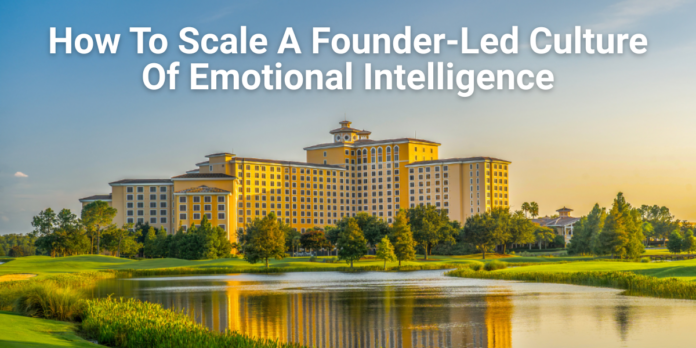
When the late Harris Rosen walked his hotel properties, he didn’t do so from behind a velvet rope. He moved through the lobby and hallways, stopping to talk with housekeepers, engineers, front-desk associates, and guests. If he spotted a cigarette butt or a tiny scrap of paper, he bent down and picked it up himself. It wasn’t a performance. It was how he led, walking the floor and caring about his people.
Now, Rosen Hotels and Resorts’ leadership team continues to instill Rosen’s people-first philosophy throughout the company. Emotional intelligence is in the company’s DNA, but how does that translate to actionable training strategy? Leading the charge are Dorea Mays, Vice President of Human Resources, and Kim Carson, Senior HR Manager of Training and Development.

Model Emotional Intelligence Internally, Externally, and Top to Bottom
Ask Mays and Carson why Rosen invests so heavily in emotional intelligence (EQ), and they both start in the same place: with people.
“We’re in hospitality,” Carson explained. “Not everyone comes in with that mindset. We need leaders who genuinely care about their people, and that care translates to our guests.”
Mays adds the HR perspective. Over her 25 years with Rosen, she’s watched workforce expectations, generational diversity, and workplace complexity all intensify. Emotional intelligence, she says, is “at the heart of navigating this complexity” when it comes to handling tough conversations, preventing grievances, and navigating difficult or touchy moments.
Caring for people is grounded in Harris Rosen’s own example. He’s known for lowering hotel prices and allowing pets during hurricanes (while many hotels raise their rates), investing millions into low-income communities through his Tangelo Park and Parramore education programs, and offering scholarships to Central Florida’s future hospitality leaders.
Leadership Development: Power Hour Workshops and Emotional Intelligence Deep Dives
Rosen Hotels leadership development has evolved from long-form management courses to targeted, high-impact experiences that respect leaders’ time and focus on applying EQ on the job.
Power Hour Leadership Series. The company’s flagship Rosen Power Hour is a series of one-hour leadership courses offered in a hybrid format, allowing leaders across their hotel properties to participate. The program is just a couple of years old, and already 400–500 leaders and aspiring leaders learned from the Power Hour courses last year alone. Two of the most popular sessions are:
- “What Is Rosen Leadership?” This workshop distills 50 years’ worth of lessons from Harris Rosen’s leadership into core traits and strategies their leaders can apply in their own work.
- “Inspiring Leadership Through Emotional Intelligence.” This is an introductory EQ course, followed by a deeper Level 2 session. The series moves beyond defining EQ to provide practical strategies for applying it in day-to-day decision-making. Critically, this approach distinguishes simple ‘managing’ from ‘inspired leading,’ a distinction rooted entirely in emotional intelligence.
Two-Level EQ Curriculum. Rosen’s emotional intelligence content spans two levels:
- Level 1: Their workshop covers topics like what emotional intelligence is, what kind of leader you’ve had vs. what kind of leader you want to be, and how EQ shows up in everyday interactions.
- Level 2: This workshop offers a deeper dive using a comprehensive emotional intelligence compendium of articles, and it entails more reflection work and self-awareness insights.
From Insights to Action: Applying These Skills on the Job
Formal courses are one key part of the strategy. To keep emotional intelligence and other leadership skills visible and practical, they also leverage:
- A monthly virtual “Hot Topic” lunch-and-learn that tackles real leadership challenges in 30–60 minutes, from holiday blind spots to policy changes. Sessions are recorded and stored in a library, so HR can send links whenever those issues arise in the business.
- “Rosen Reads,” an internal book club, where they select titles aligned with the leadership culture they want to reinforce, then give leaders space to reflect together.
- Every course includes a clear call to action, a specific behavior participants commit to trying back on the job. Their professional development manager follows up to ask what they did, what changed, and what stories they can share.
“Unless they put it into practice, we haven’t done our job,” Carson emphasized. “We don’t want people just walking in and walking out with some new vocabulary. It has to connect to how they lead their teams.”
3 Keys to Scaling a Founder-Led Culture of Emotional Intelligence
So, how do you scale a founder-led culture of emotional intelligence? The Rosen Hotels example shows that it comes down to three key parts.
First, model it. Leaders set the emotional tone, positively or negatively. If you want empathy, presence, and respect to spread, leaders must demonstrate it daily, from top to bottom.
Second, teach it. Emotional intelligence isn’t a soft skill people absorb by osmosis. Create short, focused learning experiences with clear behaviors to apply.
Third, reinforce it. Reinforce learning topically (for example, with book clubs and lunch-and-learns) and behaviorally (for example, with calls to action reinforced by check-ins). Make it part of the discussion.
When you model EQ, teach it, and reinforce it, it doesn’t stay with the founder. It becomes the culture. As Mays put it, “If we can’t lead with compassion in a tough world, we can’t have happy people. And if we don’t have happy people, we can’t happily serve our guests.”