
The quotations in this article by Winsome L. Culley do not reflect the official policy or position of the Department of Defense or the United States Air Force.
In 2018, while stationed in Greenland, Senior Master Sergeant Winsome L. Culley asked the Chief Master Sergeant of the Air Force a simple but profound question during a radio interview:
“Will emotional intelligence ever become a formal part of leadership training?”
“We’re looking at that moment right now,” he replied.
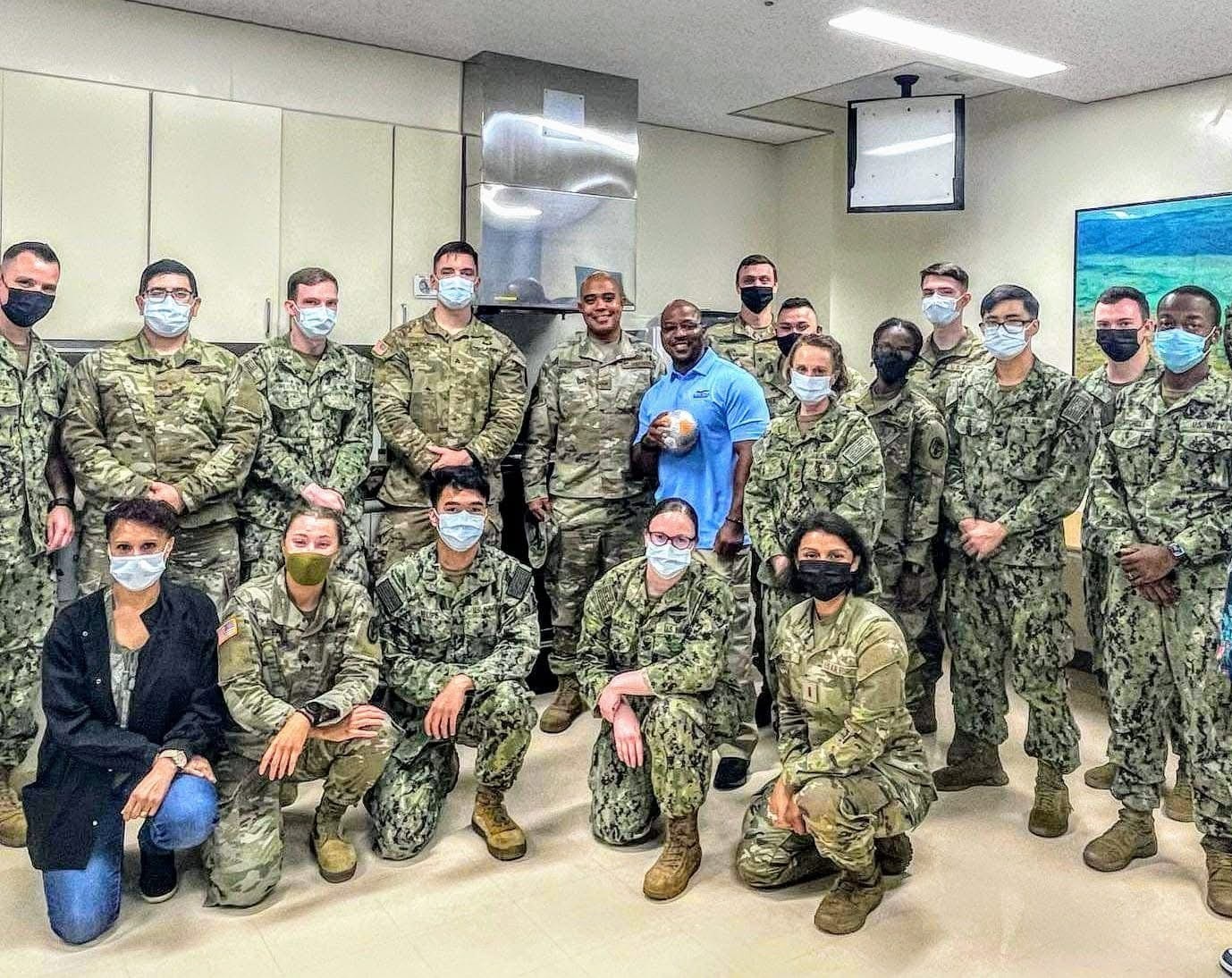
 Since then, Culley has played a key role in advancing emotional intelligence (EQ) from a niche concept to a graded leadership requirement for Air Force personnel across the Asia-Pacific region and bases worldwide, including within the United States. As the Air Force’s Senior Development Advisor for the Pacific, Culley oversees leadership growth and development programs for more than 36,000 Total Force personnel, both military and civilian. He has personally led EQ training for over 11,000 members, delivering impactful sessions in both large-scale and small group settings. In addition to his advisory role, Culley directs the region’s leadership coaching program, hosts a local radio show, and frequently appears on the American Forces Network (AFN-Okinawa) as a trusted voice on leadership and development.
The Air Force’s evolution mirrors what leadership research has shown for decades: EQ is one of the strongest predictors of performance and resilience. As Daniel Goleman wrote in Harvard Business Review, emotional intelligence is “the hidden driver of great performance” and accounts for as much as 80% of what separates outstanding leaders from the average. Modern studies confirm that leaders who score higher in emotional intelligence create more engaged and collaborative teams.
Transforming EQ from a Buzzword into a Leadership Standard
When Culley speaks to Air Force audiences, he often opens with a deceptively simple exercise. “How many of you rated yourselves highly on emotional intelligence in your performance brief?” he asks. Almost every hand goes up. Then comes the follow-up: “Without Googling, name the four core skills of emotional intelligence.” The room usually falls silent as very few can answer.
“Before the shift, emotional intelligence had become more of a buzzword than a skillset,” Culley recalls. “The training materials in use were mostly recycled slide decks built around Daniel Goleman’s early work.” Recognizing the gap, Culley saw both a challenge and an opportunity. He began by introducing EQ in practical, actionable ways—starting small with local units. The response was immediate. What began as informal sessions quickly gained traction, eventually evolving into formal programs that continue to grow today.
Self-Awareness is the Foundation of Leadership
At its core, the Air Force has provided in-depth courses for decades focused on leadership. Culley emphasizes that emotional intelligence fills critical gaps by strengthening self-awareness, confidence, character, emotional agility, focus, empathy, and team collaboration. His vision for EQ training is rooted in connection. Leaders must first connect with themselves by developing self-awareness skills to understand what drives them, where their strengths lie, and what blind spots may hold them back. Only then can they authentically connect with their teammates and create the conditions for units to thrive. Through this self-awareness, teams shift from internal competition to a culture that values collaboration. As Culley explains, “As a leader, how can you expect to lead others if you cannot master the ability to lead yourself first?”
Rolling Out Emotional Intelligence to Thousands of Leaders
Culley leads a team of 49 ICF-accredited leadership coaches, who focus on behavior change rather than one-time lectures. The system is structured to build sustainable, on-the-job habits. Most engagements begin with an assessment, followed by six formal coaching sessions designed to unpack results and translate insights into daily practice.
Culley’s workshops are designed with intention and purpose. One of the flagship offerings, Know Yourself, Grow Yourself (Self-Awareness), equips leaders to recognize their own tendencies, blind spots, and strengths before moving on to the complexities of leading others. Additional cornerstone programs are included in Culley’s Leadership Impact Series, where participants dive into how emotional intelligence shapes decision-making, communication, and team dynamics. These sessions are not abstract or overly theoretical—they are grounded in the real challenges military members face every day, from managing stress before briefing a commander, to building cohesion within diverse units, to navigating conflict across teams.
Measurable Impact Across Units
Culley has seen measurable impact across teams, units, and bases that embraced the workshops and coaching sessions. Data tracked by installation prevention statisticians shows that units participating in the EQ workshops consistently report improvements in self-awareness, communication, empathy, and conflict management. Breakdowns in communication and toxic dynamics decrease, while feedback, trust, and team cohesion strengthen. The results are clear: when units and teams embrace emotional intelligence, they avoid repeat problems and build lasting camaraderie.
Qualitatively, of the 52 units under his immediate purview in Okinawa, Japan, he estimates that 32 regularly request EQ sessions. “These units,” he points out, “are consistently the ones most often recognized for their notable teamwork, cohesion, and growth.”
Winning Over EQ Skeptics: ‘Show Don’t Tell’
A common challenge in emotional intelligence training is overcoming skepticism from leaders who may view EQ as unnecessary or secondary to technical skills. This hesitation often stems from training fatigue or the misconception that “soft skills” do not drive mission success. Yet, winning over these skeptics can be a turning point for an entire unit. As Culley explains, “Leaders who underestimate the value of emotional intelligence often miss how it transforms communication, trust, and performance across their teams.”
Culley’s approach to overcoming resistance is simple yet effective: he focuses on demonstration over debate. Rather than argue the merits of emotional intelligence, he invites skeptical leaders to observe classes, engage in assessments with their teams, and witness the impact of the sessions for themselves. More often than not, they walk away not only convinced but requesting additional sessions from Culley’s growing catalog of EQ Impact offerings.
Emotional Intelligence Belongs at the Core of Leadership Training
As Culley puts it, “If we are not teaching our people to be self-aware, to manage their emotions, to understand others, and to build strong relationships, then what are we really doing?” It is a powerful reminder that leadership is never just about rank or technical skill—it is about character, connection, and the lasting impact you have on those you lead.
Disclaimer: The interview quotes expressed by Winsome L. Culley in this article do not reflect the official policy or position of the Department of Defense or the United States Air Force. Reference to any commercial products or programs or emotional intelligence training does not constitute an official endorsement by the Department of Defense or the U.S. Air Force.