
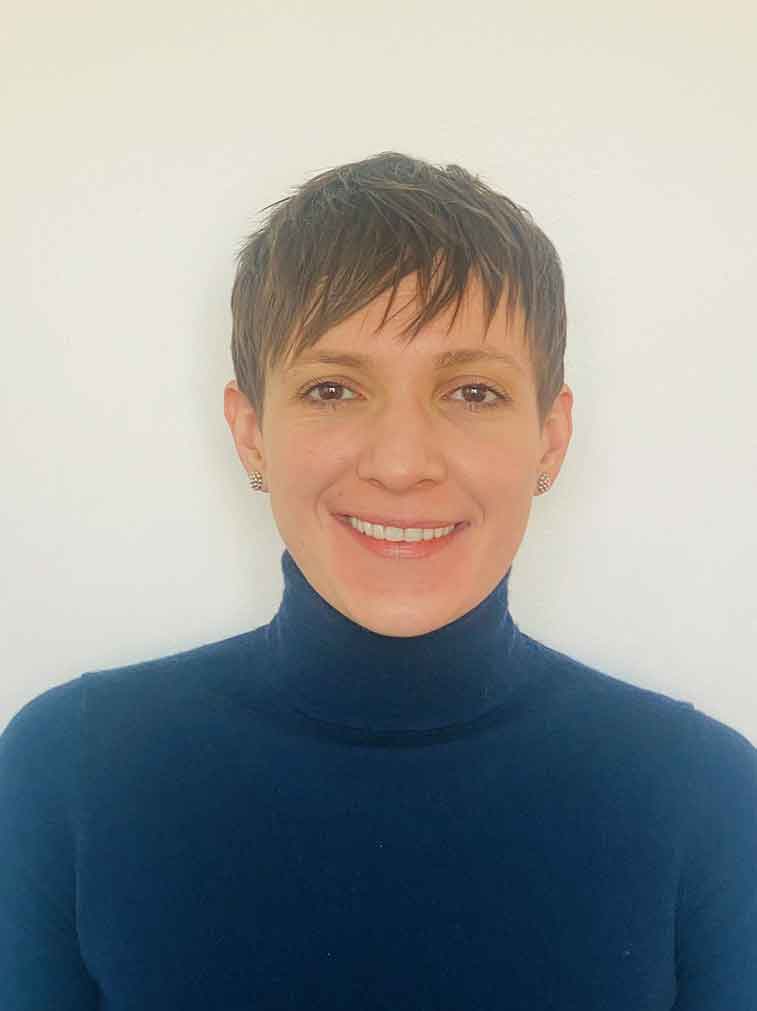
At 21 years old, Mariana Rai cofounded a property development company where she hired and led contractors twice her age. Full of technical knowledge but very little leadership experience, Rai needed to find a way to influence seasoned tradespeople who had been doing their work for longer than she’d been alive.
“That age gap was the wake-up call,” she explained. “Technical know-how wasn’t enough to earn trust or drive results. I had to rely on connection, influence, and interpersonal skills to move projects forward.” In other words, she needed emotional intelligence (EQ) skills. Research on the EQ skills of leaders backs this up. Those who score higher in EQ create stronger trust, manage stress better, and are more effective at navigating cross-generational dynamics.
This lesson proved formative for Rai who would go on to build her career around understanding not just what makes leaders effective, but how they grow. Today, as one of the People Development Partners at The Trade Desk, Rai helps leaders deepen their emotional, cognitive, and relational capacities.
From Emotional Intelligence To Developmental Intelligence
Rai didn’t start her career with a formal language for emotional intelligence. What she had instead were hundreds of interactions in property development and consulting—many of them painful or challenging—that kept pointing her toward the same question: Why do some people and teams flourish while others flounder, even with the same strategy?
“I initially believed success hinged on sharp analysis and technical expertise,” she explained. “But over time, what struck me most wasn’t the brilliance of the strategies, it was how often people and teams failed when the human side was overlooked.”
Her interest in EQ broadened when she joined The Trade Desk, where she was introduced to the field of adult/constructive development, an area of research focused not only on how leaders behave but on how they make meaning. It takes into account the filters, assumptions, and mental models that silently drive every decision a leader makes.
“In today’s AI-driven world, emotional skill alone isn’t enough,” Rai said. “Leaders need to integrate emotional, cognitive, and moral complexity to meet the accelerating pace of change.”
How Leaders Grow: Tools That Reveal Blind Spots
Much of Rai’s and the People & Organizational Development team’s work centers on creating conditions for leaders to grow vertically rather than horizontally. Horizontal development adds new skills, while vertical development expands how leaders make sense of reality. Two tools, in particular, sit at the center of their work.
1. The Leadership Circle Profile (LCP): Developed by Bob Anderson, the LCP is a 360-degree assessment that links leadership behaviors to underlying mindsets. It scores behaviors that fall under Creative Competencies—such as collaboration, systems thinking, or purpose—and Reactive Tendencies—like over-controlling, perfectionism, or approval-seeking. “The LCP acts as a mirror,” Rai explained. “It reveals how others experience your leadership—and the assumptions driving your patterns.” This helps leaders see the “internal operating system” behind their choices.
2. Immunity to Change (ITC) Maps: Developed by Robert Kegan and Lisa Lahey, the ITC framework helps leaders understand why certain patterns persist even after they’ve been identified. While the LCP helps reveal leadership patterns, ITC uncovers the hidden beliefs that keep those patterns in place. “Resistance isn’t about lacking discipline,” Rai said. “It’s about unconscious beliefs designed to protect us, even when those beliefs no longer serve a productive purpose.” ITC maps surface competing, or hidden, commitments and assumptions that can derail progress. Once those are made visible, one can begin designing small, real-world experiments to test new behaviors and challenge beliefs.
EQ Development Through Experimentation
“Our most powerful development strategy isn’t a tool, it’s a mindset of experimentation,” Rai said. “Leaders at The Trade Desk design small, real-world experiments that test new ways of thinking and leading.”
These experiments often look simple:
- Asking a quiet team member to share their perspective first.
- Practicing curiosity instead of defending a position.
- Delegating a decision that they usually take on themselves.
But the impact is significant. “Experiments turn awareness into action. They create real evidence that expands a leader’s capacity, not just their knowledge,” she said.
Over time, these micro-experiments compound. Leaders become more self-authored, less reactive, and more capable of navigating complex systems.
3 Lessons in EQ Development
Rai has spent years helping leaders grow and, in that time, she’s learned a lot about what effective EQ development looks like. She shared three key takeaways:
1. Development begins at hiring. “We look for attributes like openness to learning, feedback, and growth,” she said.
2. Data should lead to action, not just insight. Many organizations collect engagement data, leadership survey data, or 360 feedback—but then stop at awareness. “Insight is only powerful when it’s acted on. We turn themes into targeted experiments and coaching moments,” Rai shared.
3. Leadership development is a community sport. “Development is continuous and collective. It’s sustained through coaching, peer learning, and cycles of experimentation and reflection,” Rai said.
The Future Of EQ Training: Continuous, Personalized, and AI-Supported
When asked what the future of emotional intelligence development could look like, Rai doesn’t hesitate. “If I could wave a magic wand,” she says, “development wouldn’t live in workshops. It would be a continuous, personalized practice embedded in the flow of work.”
Her, and The Trade Desk’s, vision includes:
- Real-time reflective nudges from coaches or technology.
- VR or simulation-based training for practicing conflict, pressure, and ambiguity.
- AI-assisted coaching that helps people pause, reflect, or reframe in the moment.
- Team-level development maps that reveal collective blind spots.
- Peer-powered learning ecosystems that normalize growth as a social process.
Success wouldn’t be measured by course completion but by observable shifts in adaptability, relational capacity, self-awareness, and the ability to navigate complexity. “The goal isn’t just skill-building. It’s expanding the capacity to handle complexity, ambiguity, and change.”
EQ Might Be Your ‘Missing Link’
Reflecting on her career, Rai often returns to that moment at 21 when she realized emotional intelligence—not technical expertise—was what moved a team toward their goals. Once she recognized that “missing link,” everything else began to fall into place.
Now, as AI continues to accelerate the need for enduring human skills, creativity, and critical thinking, EQ will continue to play a central role in our ability to grapple with an ever-increasing load of complexity and change.