
AI is swallowing routine work. What remains—and what now differentiates leaders—are enduring human skills. Skills like judgment, communication, and the ability to move people toward better outcomes, even when the path is ambiguous. Recent analyses back this up. As AI adoption accelerates, the World Economic Forum’s 2025 Future of Jobs report predicts rising demand for human-centered skills like resilience, flexibility, and leadership.
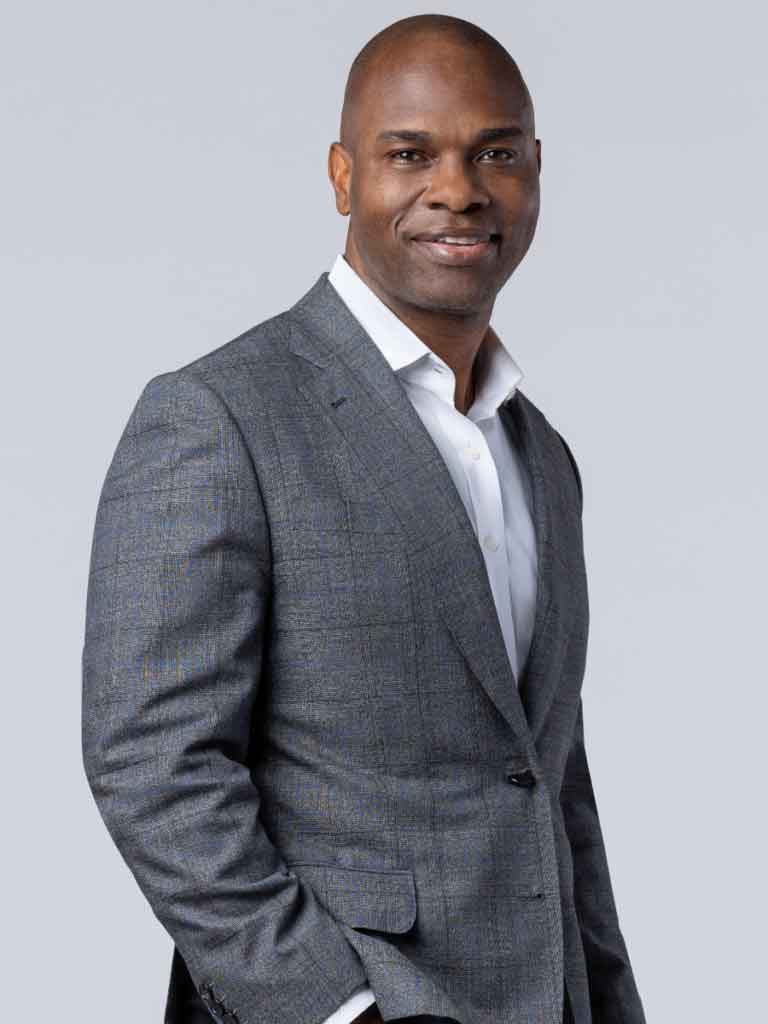
That’s exactly where Andrez Carberry, Executive Vice President and Chief Human Resources Officer at Phillips 66, is focused: building “future-ready” leaders who can navigate ambiguity, earn trust, and coach teams to clear results. In our recent conversation, he framed leadership not as a title but as a daily practice. A way of working that makes progress possible when the path isn’t obvious.
How Playing Sports Sparked Carberry’s Passion for Emotional Intelligence
As a young teen, Carberry joined a neighbor’s cricket team, full of much older players. Because he was so much younger, the dynamics of the team really imprinted on him. “There were some players who needed specific motivation, some were big contributors over the years, but the manager was developing other players and sought to surgically evolve the skills on the team,” Carberry recalled. “They had to navigate that situation thoughtfully – evolving the playing style and needs of the team, while keeping all players focused because they all had to be available if the situation called for their skills at different points in a game or the season. And I thought it was interesting to just see that being orchestrated. I didn’t know what it was at the time, but I knew I was watching something important.”
That “something” became a template for Carberry’s leadership lens. Great leaders treat people with respect, care, individualize their approach, and navigate complexity with grace.
Defining “Future-Ready” Leadership
In practice, Carberry resists buzzwords. Instead, he starts with specific leadership behaviors. His definition of “future-ready” blends key skills like agility, navigating uncertainty, judgment, and how to motivate and leverage teams.
He traces this definition to his mentors who invested in him early, first in his early career as a lawyer, then later as an HR leader. “I don’t lose sight of how many people invested in me in ways I couldn’t have imagined.” That generosity shaped how he thinks about leading through ambiguity: listen first, set direction, and coach to the outcome.
The System for Future-Proofing Your Leaders: Strategic Direction – Values → Behaviors → Competencies
To guide the organization, Phillips 66 begins with a clearly defined strategy, a shared set of values: Safety, Honor, Commitment. All employees are grounded in a set of specific behaviors that enable them to live those values out each day: work for the greater good, cultivate an environment of trust, seek different perspectives, and pursue excellence. From there, leadership expectations are framed in three plain-English pillars: Exemplify, Empower, Execute.
“We talk about three pillars—exemplify, empower, and execute,” Carberry explained. “This trio makes EQ tangible: model the standard, enable others to meet it, and deliver.”
Crucially, the company treats leadership as influence, not job title. “We are all leaders whether we lead a team or not,” he said. To make that real, they built an Aspiring Leader path to help individual contributors practice foundational leadership and influencing skills.
From Aspiration to Action: Practice, Transparency, and a Focus on Impact
When it comes to adopting these values and behaviors, Phillips 66 structures their learning in a continuous and layered manner. For example, they have a Month of Learning that reaches both field and corporate employees.
“You can’t have continuous improvement if you don’t have a learning mindset in the organization,” Carberry said.
Carberry is quick to point out that development only works when it moves from classrooms into real moments of work. “It’s not about checking a box,” he said. “It’s about creating opportunities for people to apply what they learn right away.”
That’s why the company’s leadership journey is structured as a series of experiences, not events—from the Aspiring Leader sessions at the front line to executive cohorts in their GOLD Program built around strategic capstone projects.
Each layer is designed for practice: managers step into scenarios, reflect with peers, and come back to try again. “We want people to have a safe space to practice,” he said, “because the work environment is dynamic. Things shift daily.” That iterative rhythm reinforces the same lesson he learned as a teenager on the cricket field: leadership is an ongoing act of orchestration, not a fixed playbook.
It’s also rooted in transparency. Carberry encourages his teams to “treat adults like adults”—to give real, timely feedback and trust employees to use it. In performance conversations, he encourages leaders to talk about impact, not activity. “People will tell you how busy they are,” he said, “but the real question is, busy doing what? What impact are we having? Are we focused on the highest value work or mired in complexity? Does this work drive shareholder value or key business outcomes?”
And as AI automates more administrative tasks, that clarity will only grow in value. “I heard someone say recently….AI can do work,” Carberry said. “It can’t replace skills. It can’t replace relationships. I fully agree” The challenge for every leader, he added, is to make space for the human side of performance—to connect, to coach, and to turn learning into lasting impact.
Carberry’s Two Favorite Emotional Intelligence Strategies
When conversations get tense or the stakes run high, Carberry returns to a deceptively simple practice: pause and listen. “The first thing I seek to do, is stop and ask myself, ‘What’s actually happening here?’” he said. “Am I reacting, or am I trying to get to the right outcome?” That pause is contagious. Leaders who practice it, he said, “create a culture where people feel safe to think out loud.” And that safety is what allows people to take the next step forward.
He’s also deliberate about being authentic and consistent. “I tell people all the time: don’t make people guess how to work with you,” he said. “Be yourself and try to be consistent in how you show up. That’s how you build trust.” It’s not a technique he learned in a workshop; it’s a pattern repeated through sports, law, and leadership: slow down, notice emotion, decide with intention.
Human Energy in the Age of AI
Carberry ties his team’s impact back to his company’s purpose: Providing Energy. Improving Lives. For Carberry, that purpose includes human energy—the energy people bring to their work, their colleagues, and their communities. “Culture is what we repeatedly do, reward, and permit to exist in our company,” he said. “It’s how we execute and make decisions when no one’s in the room.”
And in an era where algorithms can automate knowledge faster than people can process it, that human energy may be the ultimate competitive advantage. As the World Economic Forum reminds us, the future belongs to leaders who pair technical literacy with emotional literacy.