
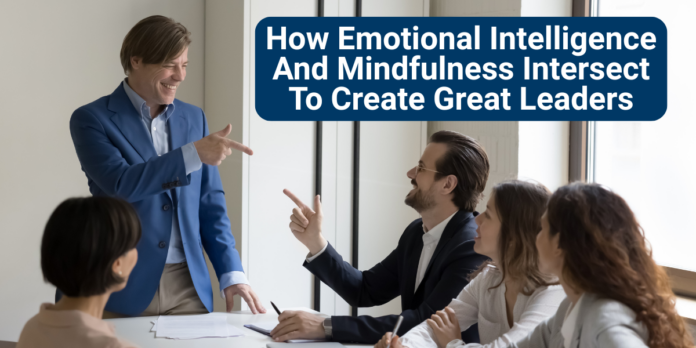
Everyone has felt it: a conference room buzzing with side conversations, weekend stories, and light energy. Then the leader walks in, shoulders hunched, clearly in the middle of a tough day. Conversations stop. People retreat. The emotional temperature drops ten degrees.
Renny Bloch, Director Global Learning and Leadership Development at Regeneron, uses this relatable moment as an access point in his emotional intelligence training.
That instant is what researchers call emotional contagion, a concept Daniel Goleman, Richard Boyatzis, and Annie McKee popularized in their classic Harvard Business Review article Primal Leadership. Their argument: a leader’s mood acts like wi-fi, their team members picking up on the emotional signal of their leader and taking on that emotion as their own.
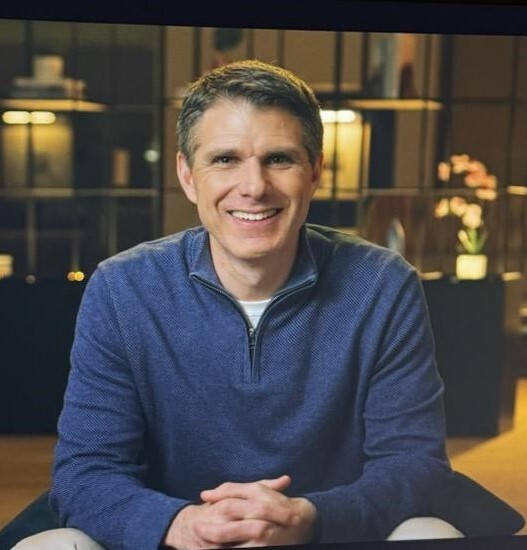
For the past 11 years, Bloch has spent his time developing the emotional intelligence of leaders at Regeneron. The 35-year-old biotechnology company owns the entire journey of their medicine from research to discovery, development, and commercialization. Bloch’s work sits at a unique and vitally important intersection: helping scientists, engineers, and technical experts strengthen the human skills necessary to enable great science.
Across over 20 interviews with L&D leaders responsible for emotional intelligence training, this is this first one to really dive into emotional intelligence and mindfulness.
Inside Regeneron’s Approach to Human-Centered Leadership
“In a scientific environment like this, IQ is the price of admission,” Bloch said. “And so often EQ is what separates the average leader from the exceptional one.”
His team designs and delivers leadership development experiences for people at every level: workshops for individual contributors, coaching for managers, and an eight- to nine-month cohort for vice presidents and above. “We offer EQ in many forms,” he said. “Sometimes it’s explicitly called emotional intelligence. Other times it’s embedded through how we teach conflict, storytelling, influence, or team dynamics.”
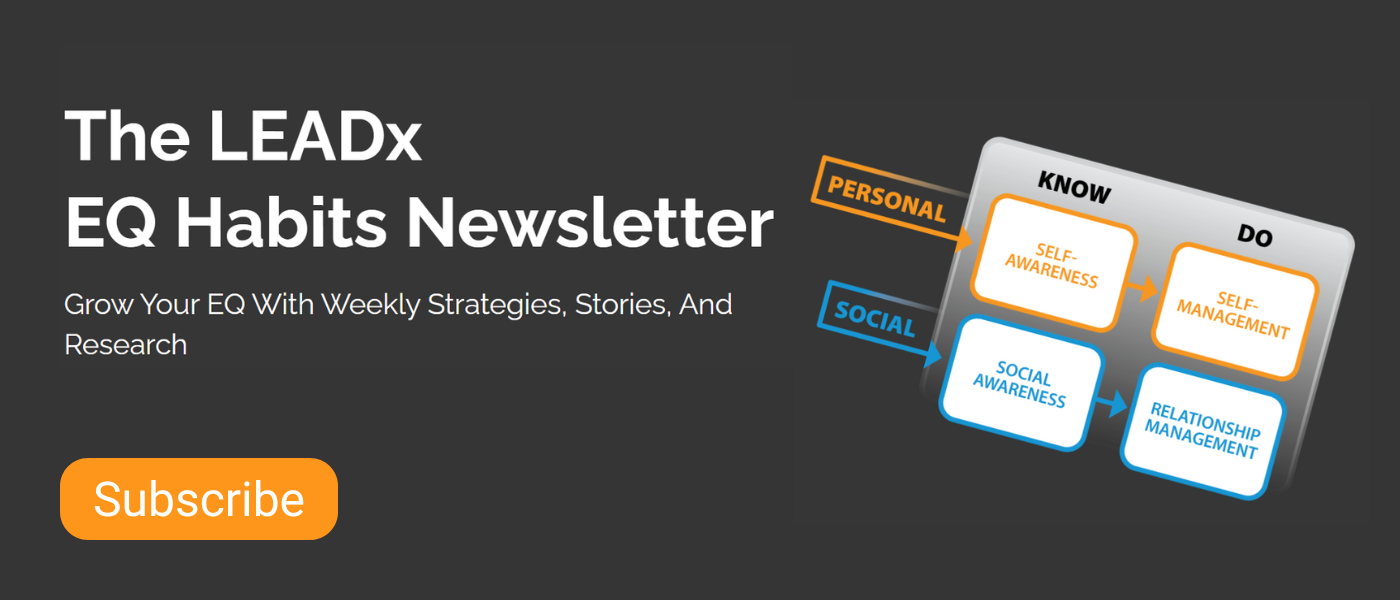
The EQ pathways begin with the fundamentals: What EQ is, why it matters, and the four domains. Then, they move into deeper layers like emotional literacy and discernment, conflict navigation, and relationship management. Advanced sessions connect skills like empathic listening, storytelling and mindfulness to emotional intelligence.
The Mindfulness-EQ Connection
Bloch shared one story that really shifted the trajectory of how he thought about and trained emotional intelligence. “I’d come home from work exhausted at night, and my kids would run up—‘Dad, you’re home!’—and I’d say, ‘Girls, I need a minute.’ And I’d push them away without realizing in the moment what I was doing,” he said.
When a mindfulness teacher introduced him to a practice called “a minute to arrive,” his perspective shifted. By simply taking a brief pause before entering his home, a meeting room, or a Zoom meeting, he could gather himself and show up more intentionally and present.
This practice became a bridge between mindfulness and emotional intelligence for Bloch, and he began to incorporate mindfulness training in tandem with emotional intelligence skills. Both for himself and in his training, he noticed improvements: People listened. Stress responses softened. Paying attention to the present moment with more openness and less judgment.
“Meditation trains your mind to notice when it wanders and to bring it back. That’s the same muscle you need for listening and the same muscle you need to improve your emotional intelligence,” he explained. “Every time you bring your attention back, you’re also building emotional intelligence.”
What Most Organizations Get Wrong About EQ Training
Bloch has seen many companies lean too hard on the theory behind emotional intelligence and underestimate the practical and experiential side. With this in mind, his advice for anyone looking to roll out emotional intelligence for the first time was as follows:
- Start with the research: “Start with the research,” he advises, “because there’s so much scientific evidence behind EQ.” Then, connect this to what EQ feels like by leaning on stories and real-world examples.
- Do a “Best Leader” Exercise: One of his favorite exercises is deceptively simple: Think of a leader you deeply admire. Gather six to ten adjectives that describe them. Then, as a group, the workshop places each adjective into one of four buckets: EQ, IQ, technical skill, or other. The results are consistent. “A very high percentage cluster under EQ,” Bloch said. “It’s one of the most compelling cases you can make.”
- Use Real-World Examples: “You have to meet people where they are,” he noted. “Once they feel the relevance, they lean in.”
Three Practical Strategies to Bring to Your Organization
If one skill rises above the rest at Regeneron, it’s self-awareness. “All the research indicates that most people aren’t self-aware,” Bloch said. “And yet, most people think they are self-aware.” To combat this gap, Bloch recommended three different self-awareness and self-regulation strategies that he uses for himself and trains to leaders at Regeneron:
- Practice self-compassion. “People are incredibly hard on themselves,” Bloch said. “EQ includes giving yourself permission to take a break or say, ‘I don’t know.’”
- Take one intentional breath. “One breath lowers cortisol, activates the parasympathetic nervous system, and buys you a moment to respond instead of react,” he said. “It’s the most accessible EQ strategy there is.”
- Remind yourself that no one can truly make you feel any particular way. “You get to choose how you respond,” Bloch elaborated. And as simple as that might sound in concept, the unlock lies in habitually reminding yourself that this is the case.
Team Emotional Intelligence: How EQ Works on the Group Level
At the executive level, Bloch and his team train team emotional intelligence, exploring how EQ operates a bit differently within the dynamic of a team than it does for individuals. For example, you could have a team of people in which each person is high in emotional intelligence, but that won’t necessarily equate to a highly emotionally intelligent team. That’s because group-level emotional intelligence depends on cohesion and overall team effectiveness.
Emotionally intelligent teams:
- establish and enforce norms
- stay aware of and manage emotions on the group level
- foster and sustain relationships both internally and externally
Why EQ Matters In The Life Sciences
If there’s one message Bloch hopes leaders take away, it’s that emotional intelligence is not innate. “Unlike IQ, these skills are learnable,” he told me. “With intention, time, attention, and practice, you can get better at all of them.”