
In a world where artificial intelligence is reshaping nearly every job, expertise and analytical ability are no longer enough. The World Economic Forum’s 2025 Future of Jobs report projects that 40% of core skills will shift by 2030, tilting toward self-awareness, adaptability, and the ability to connect with others. In other words, emotional intelligence (EQ) skills will matter more than ever.
Few organizations understand this better than Boys & Girls Clubs of America. With more than 5,500 clubs serving over 4 million young people each year, the nonprofit relies on nearly 600 staff at its national office and more than 75,000 employees across its federated model. Their mission is to empower the next generation to thrive, and to do that, they need emotionally intelligent leaders at every level.
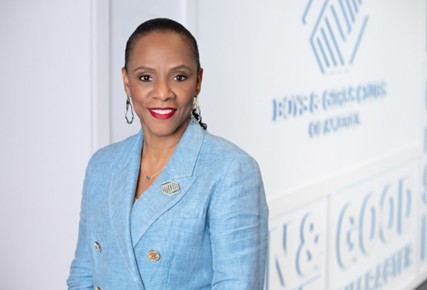
 Felicia Robinson, Chief Human Resources Officer at Boys & Girls Clubs of America, has made EQ development a cornerstone of the organization’s culture and learning strategy. “We’re committed to a people-first culture,” Robinson explained. “It doesn’t mean that people are always going to get their way, but what it does mean is we’re going to be intentional in every interaction to making sure our people feel supported, that they feel like they can grow and develop, and they feel that the work that they do every day is helping to advance the mission.”
Caring as the Foundation of EQ, and Boys & Girls Clubs of America
High EQ is built on a foundation of caring. When you care about others, everything else gets easy: being patient, being curious about others, and building relationships. Boys & Girls Clubs of America literally values caring and reinforces it on a daily basis. The organization uses a values framework known as “I CARE”: Integrity, Collaboration, Accountability, Respect, and Excellence.
The values are not empty words on hallway posters. They’re practiced at the very top of the organization. Robinson and CEO Jim Clark both begin their meetings with an activity that brings them to life. “My CEO starts every meeting with our values. He’ll pick one and start with his own example…then each leader talks about how those values have manifested themselves in the last week or two.”
By embedding the I CARE framework into their daily routine, Boys & Girls Clubs of America turns caring and EQ into a shared way of working.
Building Self and Social Awareness with Assessments
Two of the super skills of emotional intelligence are self-awareness and social awareness. Self-awareness is the ability to understand one’s own patterns and triggers. Social awareness is the ability to recognize and adapt to the needs of others. To strengthen both, they use the Herrmann Brain Dominance self-assessment (HBDI).
The HBDI framework describes four primary thinking preferences: analytical and data-driven (blue), practical and structured (green), relational and people-focused (red), and experimental and big picture oriented (yellow). Insights into each of these preferences help clarify how you process information and make decisions (self-awareness). And when your team members take the assessment, it helps you understand how to best interact with each other and collaborate (social awareness).
More than three-quarters of employees in the national office have voluntarily completed this assessment. This, of course, includes Robinson, who shared how it shaped her own leadership style. She naturally leads with blue thinking (i.e., strongly analytical), while many of her team members are more big-picture oriented (i.e., yellow thinkers). With the HBDI insights, she said she was able to “retrain my brain to see beyond just the data and to recognize when the data was not going to give me the lift that I thought, especially when working with someone who is predominantly yellow.”
A Three-Month Learning Journey through EQ Skills
In addition to self-assessment, leaders can enroll in a three-month learning program called “Ability to Execute (A2E)” developed by McKinsey. The curriculum covers ten core leadership principles, and many map directly to the core dimensions of emotional intelligence.
- Look in the Mirror emphasizes self-awareness, reflecting on one’s behaviors, triggers, and the impact they have on others.
- Embrace the Chaos explores self-management, learning to regulate emotions under stress, reframe fear, and respond constructively instead of reactively.
- Create the Space focuses on social awareness and relationship management, encouraging leaders to build psychological safety, demonstrate empathy, and foster trust so that others feel comfortable contributing.
- Help Others Shine speaks directly to relationship management: recognizing, encouraging, and developing people’s strengths to boost team motivation and growth.
The program combines digital learning with cross-functional peer learning teams and capstone events, creating opportunities to apply these principles in real-world situations. The entire senior leadership team served as champions for this program and formed their own peer learning group, modeling vulnerability and setting the tone for the rest of the organization.
Curated Learning Playlists Drive Commitment to Skill Development
To build a true culture of learning, Boys & Girls Clubs of America recently launched a new initiative: monthly curated playlists. Each month, the HR team selects a theme (future themes will cover emotional intelligence, organizational resilience, and change leadership). They pull together the best short digital learning modules around that theme into a focused playlist.
Robinson explained why these playlists resonate so well, saying, “Most of the sessions are 15 minutes or less.” That makes the program easy to engage within the flow of work, while still offering meaningful development.
Though still new, the program is already seeing impressive results. Engagement is nearly three times higher than industry benchmarks for open-catalog online learning platforms. Robinson sees it as a promising step “moving from compliance to commitment,” where employees are motivated to build skills because they want to, not because they have to.
Future Focused: America Needs Club Kids
As Robinson put it, what some still call “soft skills” are now the hard skills of leadership. People are complex, she explained, and the ability to connect, empathize, and inspire is what determines whether employees want to stay and do their best work.
For Robinson, doing the best work is also personal. “What excites me most is that I’m a product of this organization. I’m actually a former Club Kid, me and my husband as well. And so I feel the universe has called me to this role for a time such as this.”
And her enthusiasm for the mission has never been higher. “The momentum that we’re building now around our new campaign, America Needs Club Kids…if you’ve ever interacted with any of these wonderful young people who are in our clubs, you want to say, can they just take over the world? Because they are amazing.”
The America Needs Club Kids campaign shifts the narrative from “helping young people is charity” to “helping young people is a strategic investment in the country’s future.” For every $1 invested in Boys & Girls Clubs of America, an average return of $10.32 flows back into communities through improved outcomes in education, health, employment, and public safety.
Boys & Girls Clubs of America proves that emotional intelligence shapes culture, inspires teams, and fuels the mission. By cultivating caring and self-aware leaders, they extend their impact far beyond the workplace and into the lives of millions of young people it serves.